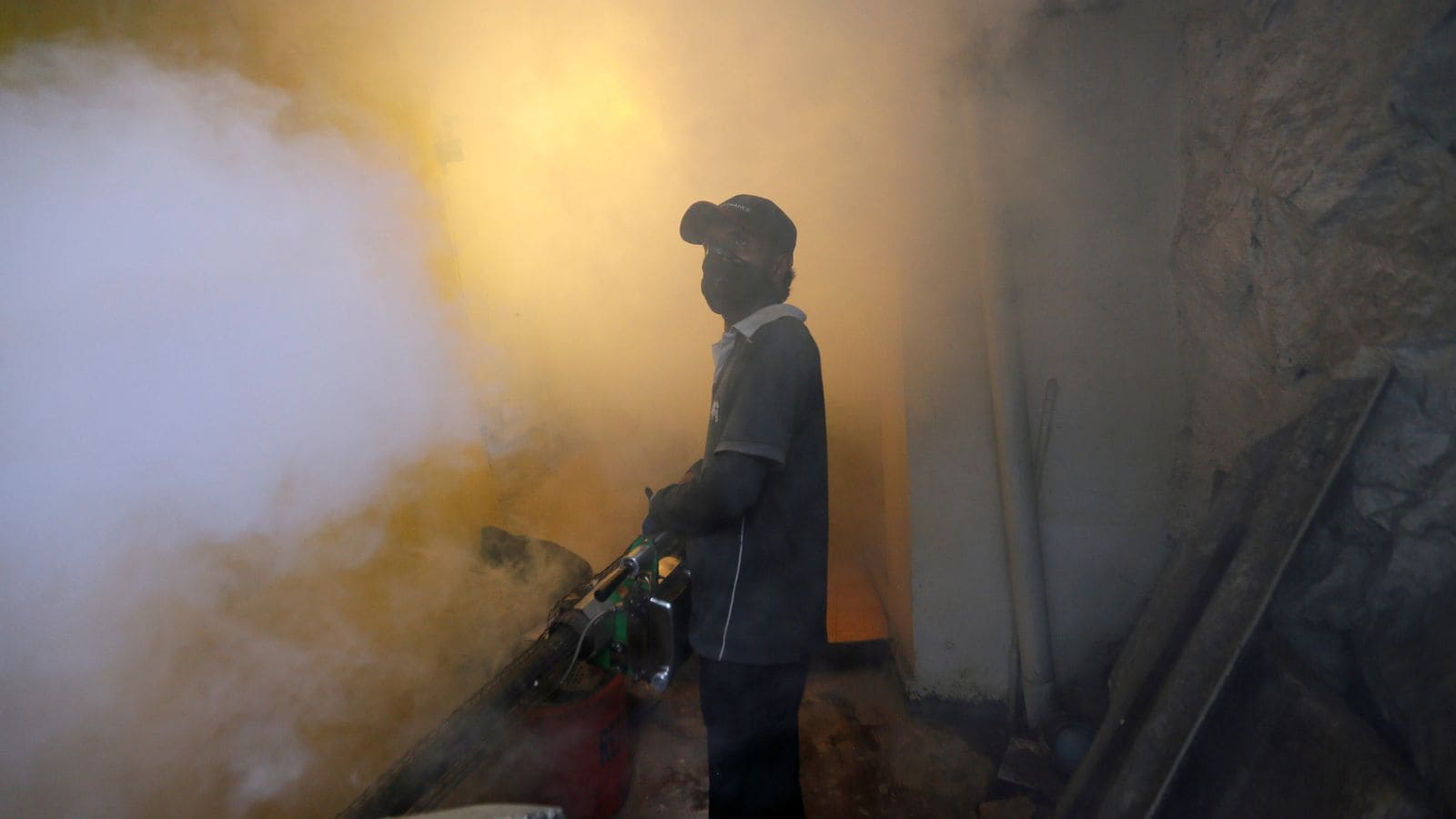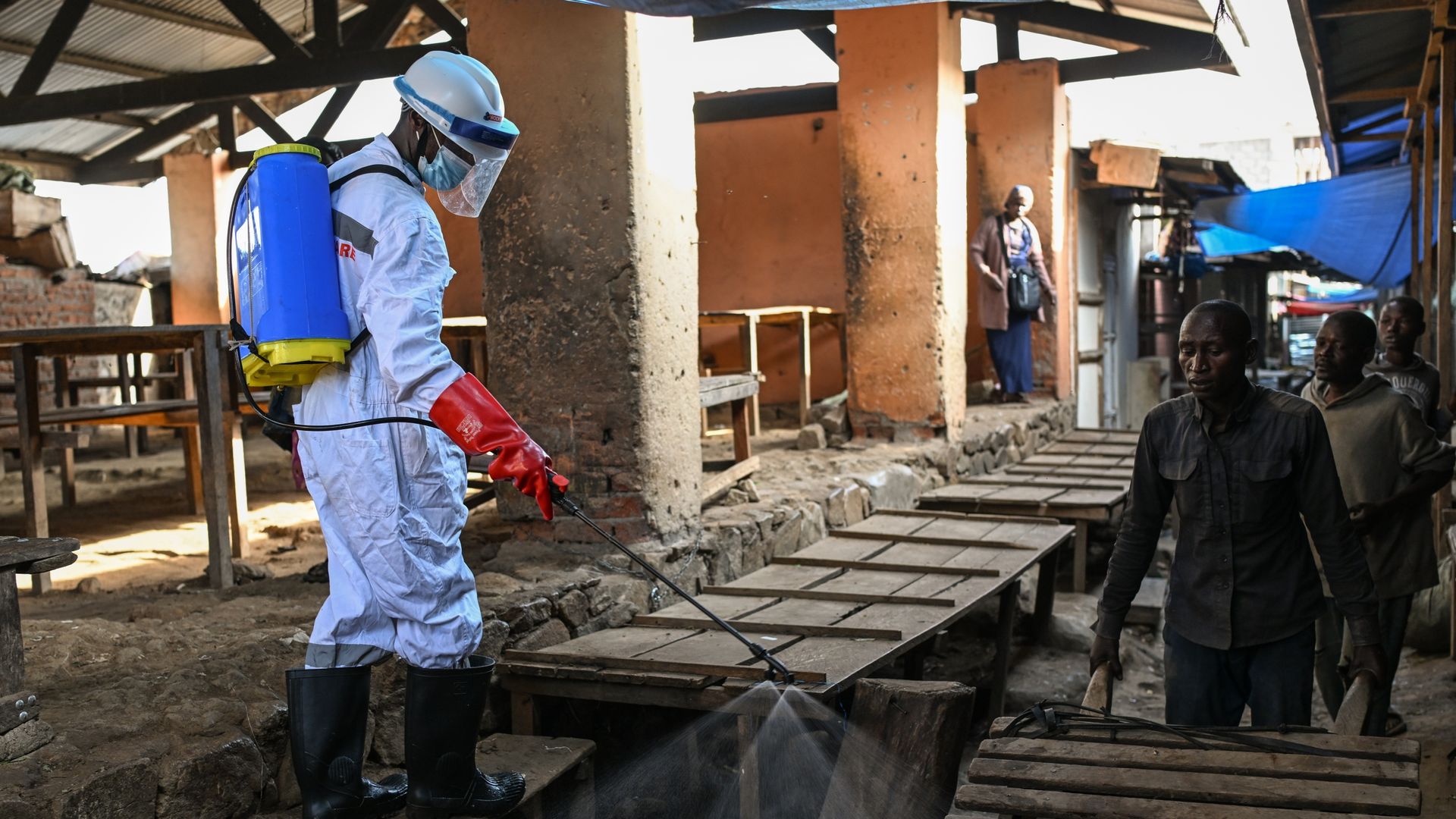
The jump to 900 suspected cases of Ebola virus disease (EVD) in the Democratic Republic of Congo (DRC) is not a linear progression of infection; it is a systemic failure of containment protocols under high-friction conditions. When case counts cross this threshold in a conflict zone, the crisis shifts from a medical challenge to a logistics and security bottleneck. To understand the trajectory of this outbreak, one must analyze the interplay between viral transmission dynamics, community resistance, and the operational breakdown of the Ring Vaccination strategy.
The Transmission Calculus in Conflict Zones
Ebola outbreaks are typically managed through a mathematical objective: reducing the basic reproduction number ($R_0$) to less than 1. In stable environments, this is achieved through isolation and contact tracing. However, the North Kivu region presents a "friction coefficient" that artificially inflates the effective reproduction number ($R_e$).
- Geographic Fluidity: High population mobility across the borders of Uganda and Rwanda creates a transmission net that exceeds the reach of localized health outposts.
- Security Vacuums: Active conflict prevents the consistent monitoring of "red zones," leading to unobserved chains of transmission.
- The Latency Gap: The time between symptom onset and laboratory confirmation currently exceeds the window required for effective ring vaccination.
When suspected cases reach 900, the surveillance system is likely capturing only the tip of a broader epidemiological curve. The delay in reporting suggests a high volume of "community deaths"—individuals who die without entering the formal healthcare system. These instances are high-risk events because traditional burial practices involve direct contact with the deceased, who carries a peak viral load.
Structural Failures of the Ring Vaccination Model
The World Health Organization (WHO) relies on the rVSV-ZEBOV vaccine, deployed via "Ring Vaccination." This method targets the primary contacts of a confirmed case and the secondary contacts of those individuals. While clinically effective, the strategy collapses under three specific pressures observed in the DRC.
1. The Identification Bottleneck
For a ring to be formed, a primary "index case" must be identified. In the current outbreak, the "lost to follow-up" rate—contacts who vanish before their 21-day monitoring period ends—is increasing. This creates "ghost rings" where the vaccine is deployed to a partial network, leaving the most mobile (and thus most dangerous) vectors unprotected.
2. The Trust Deficit and Tactical Resistance
Aggressive public health interventions often clash with local socio-political realities. In North Kivu, health workers are frequently perceived as external agents or political tools. This manifests in:
- Case Hiding: Families concealing sick relatives to avoid the perceived stigma or the perceived "danger" of Treatment Centers (ETCs).
- Direct Obstruction: Attacks on health infrastructure that force the suspension of vaccination programs.
3. Logistic Decay
Cold chain maintenance for the rVSV-ZEBOV vaccine requires temperatures between $-60°C$ and $-80°C$. In a region with intermittent power and hostile terrain, the integrity of the vaccine supply is a constant vulnerability. Any deviation in the cold chain renders the intervention a theater of medicine rather than an actual preventative measure.
The Economics of Containment vs. Mitigation
The cost of containing an Ebola outbreak increases exponentially, not linearly, with the number of cases. As the count surpasses 900, the operational focus must pivot from "Containment" (stopping the spread) to "Mitigation" (reducing mortality and preserving system functions).
The "Cost Function" of this outbreak includes:
- Direct Medical Costs: ETC construction, PPE procurement, and specialized staff.
- Opportunity Costs: The total suspension of malaria and measles immunization programs, which often results in a higher net mortality rate than Ebola itself.
- Security Premiums: The necessity of armed escorts for burial teams and vaccinators, which further alienates the local population.
The surge in suspected cases indicates that the virus has successfully integrated into dense urban corridors. Unlike rural outbreaks that "burn out" due to geographic isolation, urban EVD utilizes high-frequency contact networks—markets, public transport, and informal clinics—to maintain its momentum.
Redefining the Suspected Case Metric
The 900+ figure is technically a "soft" number. In epidemiological terms, cases are categorized as Suspected, Probable, or Confirmed. A high volume of suspected cases relative to confirmed ones suggests a diagnostic backlog.
This backlog creates a "false clarity" period where the reported data reflects the state of the outbreak 10 to 14 days ago, rather than its current status. If the ratio of suspected to confirmed cases stays high, it indicates that the laboratory infrastructure is overwhelmed. This delay is the primary driver of secondary infections, as patients remain in general wards or at home while awaiting results.
Strategic Pivot: Community-Led Triage
The current top-down approach has reached its ceiling. To suppress the $R_e$, the intervention must shift toward decentralized, community-led triage. This involves training local leaders to manage "low-risk" isolation at the village level, reducing the need for high-friction transport to centralized ETCs.
- Hyper-Local Surveillance: Empowering local pharmacies and traditional healers—often the first point of contact—to trigger alerts.
- Trans-Border Synchronization: Harmonizing the screening protocols at the Goma and Butembo hubs to prevent the "seeding" of cases into neighboring countries.
- Reframing the Narrative: Shifting the communication from "disease eradication" to "community protection," emphasizing the survival rates of those who seek early treatment.
The trajectory of the North Kivu outbreak is no longer a matter of medical science alone; it is a test of organizational resilience in a failed-state environment. If the 1,000-case mark is breached with the current diagnostic lag, the outbreak will likely transition into a regional endemic state, requiring a permanent, rather than emergency, health security infrastructure.
The immediate priority is the stabilization of the "contact-to-vaccination" interval. If this window cannot be reduced to under 48 hours, the ring vaccination strategy will continue to fail, and the virus will continue to outpace the perimeter of the intervention.