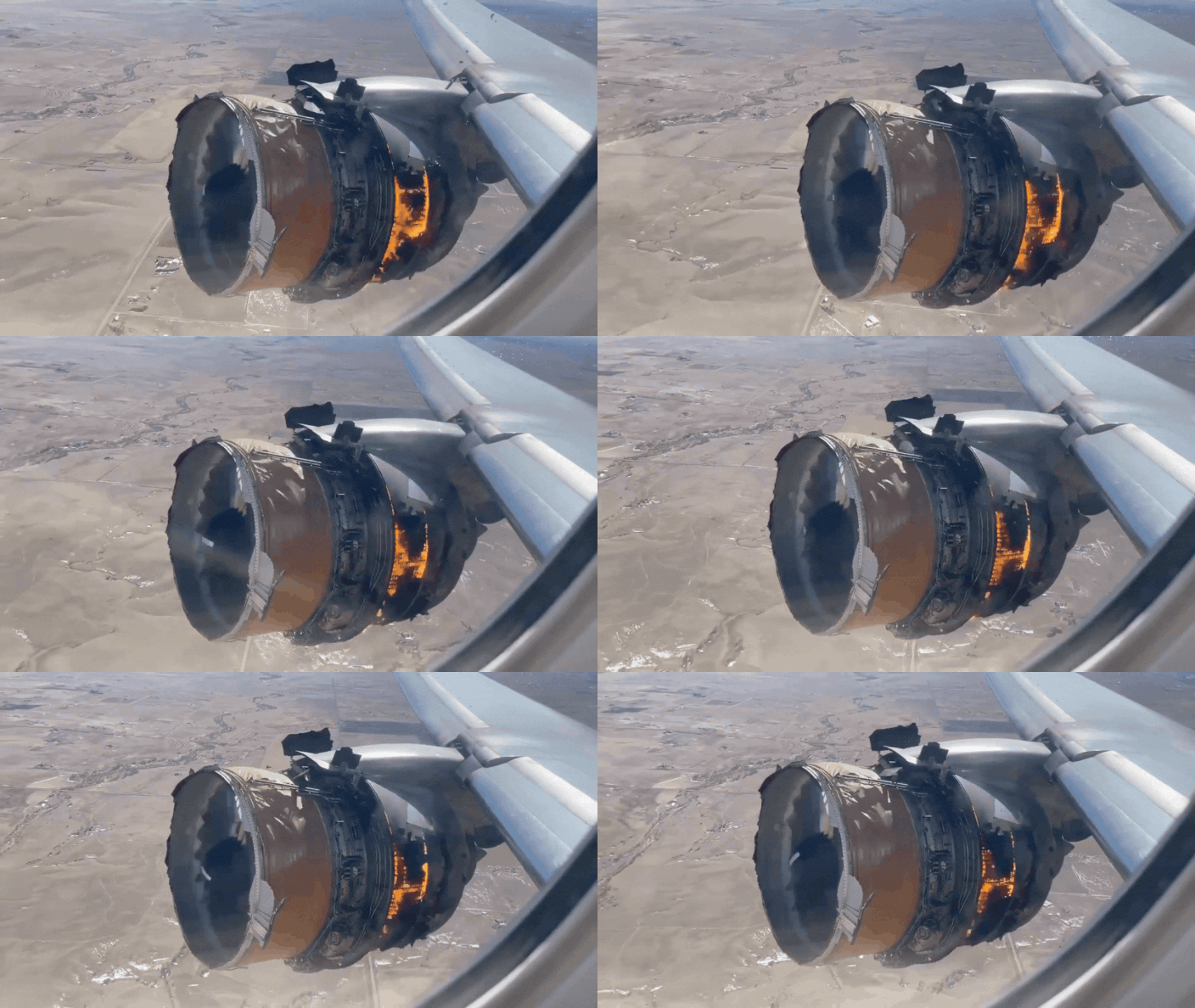
Your phone buzzes, you open your favorite social media app, and there it is again. A terrifying, close-up video taken from a passenger window showing a massive Boeing 777 engine fire mid-flight. The metal skin of the engine is completely ripped away. Bright orange flames dance violently against the blue sky. The entire frame shakes, and you can practically feel the collective panic of everyone on board through your screen. If you have a flight coming up, seeing stuff like this makes you want to cancel your ticket and walk instead.
Social media feeds love to recycle nightmare fuel. The truth is, this specific viral video isn't from a recent disaster. It captures the terrifying moments of United Airlines Flight 328 back in February 2021. The plane had just taken off from Denver bound for Honolulu when its right engine suffered a catastrophic structural failure, showering Colorado neighborhoods with heavy debris. Also making headlines in this space: Why Chicago Throws the Best Fourth of July Celebration in America.
People are sharing it today as if it happened yesterday. It triggers our deepest fears about flying, but it also glosses over the most important part of the story. Nobody died. Nobody was even hurt. The plane turned around and landed safely on a massive runway twenty-three minutes later. Understanding why these engines can burn without bringing a plane down will completely change how you view air travel safety.
The Reality Behind the Viral Boeing 777 Engine Fire Footage
When you look at that raw footage, it feels like you're watching a tragedy in progress. Passenger David Delucia openly admitted to local reporters at the time that he grabbed his wife's hand and thought they were done for. The visual shock of a naked, burning engine right outside your window is enough to make anyone lose their mind. Further details regarding the matter are explored by The Points Guy.
What Actually Happened Over Colorado
The flight was climbing through 13,000 feet when a loud boom rocked the airframe. Inside the right engine, a massive fan blade made of hollow titanium had developed a microscopic crack over years of service. It was a classic case of metal fatigue. Under the intense pressure of takeoff, that blade finally snapped.
When it broke, it didn't just stop spinning. It wrecked the entire front section of the engine. The massive front cowling, the outer shell that gives the engine its aerodynamic shape, ripped completely off the wing. Bits of metal got sucked backward into the core, breaking fuel lines and sparking a spectacular blaze.
Pieces of the plane literally rained down on the town of Broomfield. A massive circular piece of the engine casing crushed a pickup truck in someone's driveway. Soccer fields were littered with industrial insulation. It looked like a war zone on the ground, yet the pilots in the cockpit remained incredibly cool. They ran through their emergency checklists, shut off the fuel supply to the burning engine, fired the onboard extinguishers, and brought the twin-engine giant back to Denver International Airport.
Why Old Aviation Clips Keep Coming Back to Life
The internet has a terrible memory but a huge appetite for drama. Algorithms don't care about dates. They care about engagement. A video of a perfectly normal flight getting you to Chicago on time gets zero views. A video of a Boeing 777 engine fire gets millions of clicks within hours.
Accounts frequently scrub the dates and locations from old clips to make them seem current. This creates a false impression that commercial aviation is falling apart at the seams. In reality, the global aviation system is safer than it has ever been. By dissecting what went right during that Denver flight, we get a masterclass in modern aerospace engineering.
How Modern Airliners Handle a Blazing Engine
It sounds counterintuitive, but commercial airplanes are built to survive their own engines blowing up. An engine fire is obviously a worst-case scenario, but it is a scenario that engineers have spent decades planning for.
Redundancy is Not a Luxury
A Boeing 777 is a twin-engine aircraft. It is massive, heavy, and carries hundreds of passengers across oceans. But here is the secret. It only needs one engine to fly.
Twin-engine jets are certified under strict regulations known as ETOPS, which basically stands for Extended-range Twin-engine Operational Performance Standards. Cynical pilots joke that it means "Engines Turn Or Passengers Swim," but it is actually a rigorous certification process. It proves that an aircraft can lose one engine at the most remote point of its route and still fly for three, four, or even five hours on the remaining engine to reach a safe diversion airport.
[Normal Flight: Two Engines Operating]
       ▼
[Engine Failure / Fire Occurs]
       ▼
[Crew Isolates & Shuts Down Damaged Engine]
       ▼
[Remaining Engine Sustains Flight & Directs Plane to Safety]
When the right engine failed on United Flight 328, the left engine simply took over the workload. The pilots didn't have to worry about falling out of the sky. They had more than enough thrust from the remaining engine to climb, turn, and maintain absolute control of the aircraft.
The Fire Suppression Systems You Never See
You might wonder why the engine keeps burning in the video if the pilots pulled the fire handles. When a catastrophic failure happens, the outer shell of the engine is gone, exposing the hot core to the open air.
Pilots pull a fire switch that immediately cuts off all aviation fuel, hydraulic fluid, and electricity going to that wing. This starves the fire at its source. They then release bottles of pressurized halon gas directly into the engine compartments to smother any remaining flames.
In the viral video, the fire you see is often residual fuel and oil burning off the exposed, hot metal surfaces, or airflow keeping a small pocket of flame alive outside the internal fire zones. Because the engine is completely isolated from the rest of the aircraft, that fire cannot easily spread to the wing tanks where the main fuel supply is stored. The wing structure itself is heavily insulated and built to withstand intense thermal stress.
What to Do If Your Flight Suffers a Major Failure
Let's be real. If you look out the window and see sparks or flames, you're going to feel an adrenaline rush. That's human nature. But panic spreads faster than fire inside a cabin, and knowing how to act can literally save lives.
- Keep your seatbelt fastened tight. When an engine fails, the plane can yaw or jolt violently as the thrust changes. If you're standing up or wearing a loose belt, you're going to hit the ceiling or the seats next to you.
- Trust the cockpit crew. The pilots up front aren't guessing. They train for this exact scenario in high-tech simulators every single six months. They can fly the plane with their eyes closed on one engine. Let them do their job while you focus on yours.
- Clear the aisles immediately. If the oxygen masks drop or the flight attendants start giving commands, you need to hear them. Do not try to film the incident for social media clout if it interferes with safety instructions.
- Leave your luggage behind. If the plane lands and the captain orders an evacuation, do not reach for your overhead bag. Trying to grab a carry-on slows down the line and can tear the emergency slides, trapping people inside a smoking cabin.
Aviation regulators took the 2021 Denver incident incredibly seriously. The Federal Aviation Administration immediately ordered emergency inspections of all Boeing 777s powered by those specific Pratt & Whitney engines. Dozens of planes were grounded worldwide until the fan blades could be scanned with advanced ultrasonic technology to find hidden internal cracks before they could snap.
The system worked. The weakness was found, the engines were fixed, and the planes went back to work. Next time that burning engine video pops up on your timeline, look past the flames. Notice how the wing stays attached, the other engine keeps humming, and the plane keeps flying. That isn't a video of a failure. Kinda turns out it's actually a video of an engineering triumph.