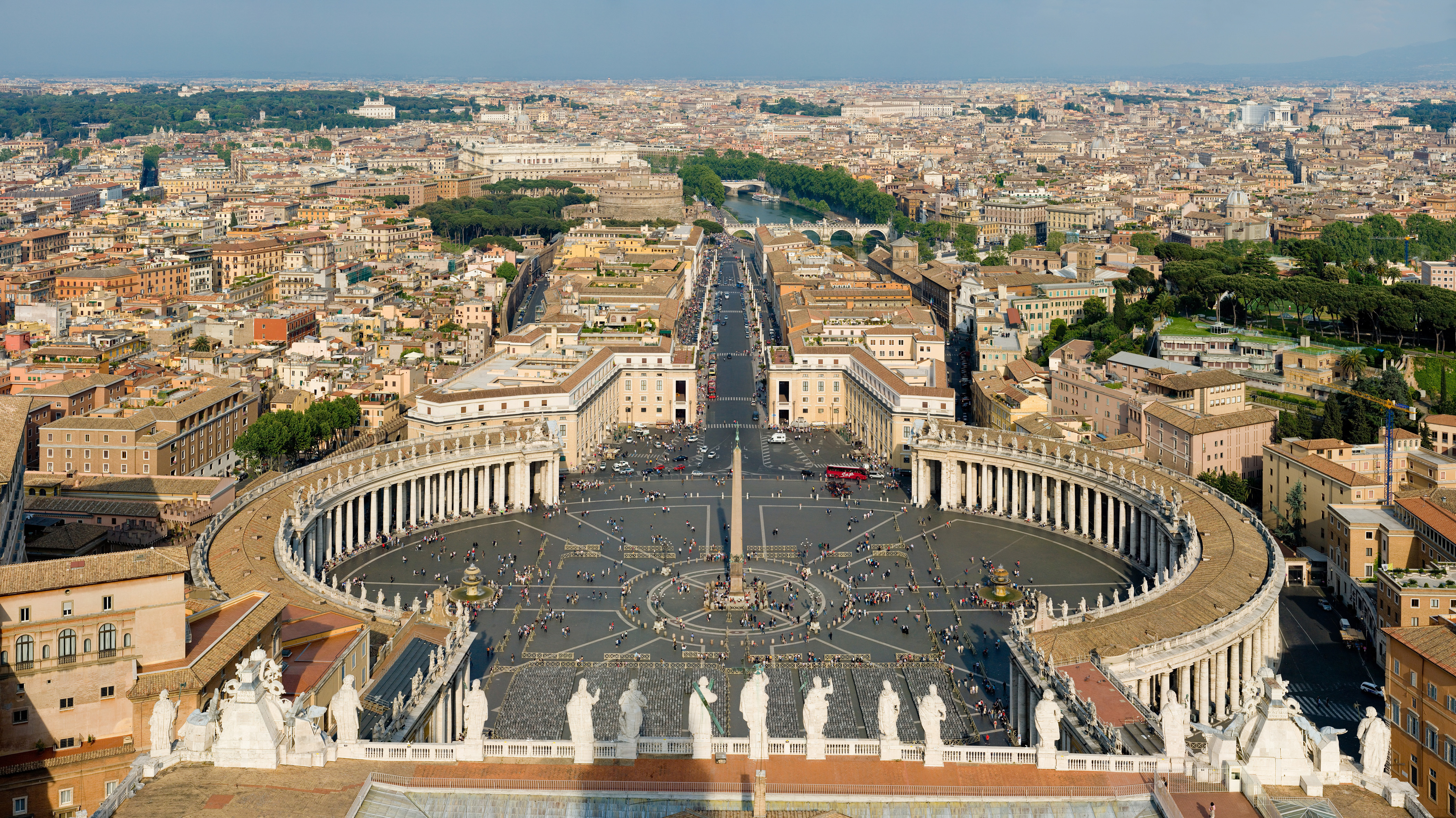
The global press is gearing up for a collective meltdown over Pope Leo’s upcoming document on artificial intelligence. On May 25, the Vatican will drop its first major work addressing algorithmic ethics, machine learning, and the digital age. The media will frame this as a historic clash of titans—the ancient moral authority of the Catholic Church finally confronting the unchecked hubris of Silicon Valley.
They are entirely wrong. For a different view, see: this related article.
The lazy consensus surrounding this announcement assumes that tech billionaires are waiting with bated breath for theological guidance, or that a papal decree carries the operational weight to shift how neural networks are trained. It does not. The upcoming encyclical is not a structural threat to big tech; it is a marketing boon for it. By treating AI as a sentient moral agent requiring cosmic intervention, the Vatican inadvertently validates the tech sector’s greatest marketing lie: that they have built something divine.
The Flawed Premise of High-Tech Absolution
For years, tech executives have traveled to Rome for private audiences and highly publicized ethics workshops. We have seen the "Rome Call for AI Ethics" signed by corporate giants who smile for the cameras, nod solemnly about human dignity, and then return to Seattle and Mountain View to optimize data-harvesting loops. Related coverage on the subject has been provided by ZDNet.
I have sat in closed-door rooms where enterprise software companies discuss ethical compliance. Do you know what happens? Compliance is treated as a line-item expense to be minimized. Legal departments do not consult the Catechism; they consult liability charts.
The mainstream press constantly asks: How will the Pope change the AI landscape?
The question itself is broken. It assumes that moral declarations possess regulatory teeth. The Vatican operates on the timeline of centuries; Silicon Valley operates on two-week sprint cycles. While theological committees debate the metaphysical implications of artificial general intelligence (AGI), engineers are deploying updates that alter the information consumption habits of three billion people before lunch.
The Myth of Algorithmic Sin
Let us look closely at the language we expect to see on May 25. There will be extensive warnings about the algorithmic amplification of bias, the erosion of labor markets, and the dehumanization of warfare through autonomous weapons systems. These are real, tangible problems, but the competitor articles frame them as systemic moral failures inherent to the technology itself.
This is a dangerous misdirection.
An algorithm possesses no malice, no soul, and no capacity for sin. A neural network is simply a massive, multi-dimensional matrix of weights and biases—nothing more than advanced statistical regression on steroids.
$$f(x) = \sigma(W^T x + b)$$
When a predictive policing model displays racial bias, or an automated hiring tool discriminates against women, the algorithm is not choosing to be evil. It is executing mathematical optimization on historic human data. The sin is not in the machine; the sin is in the data pipeline. By elevating this conversation to a spiritual plane, the Vatican shifts focus away from the concrete corporate actors who profit from dirty data and onto an abstract, ghostly entity called "AI." Big Tech loves this. It lets them blame the tool rather than the builder.
Why Tech Executives Welcome Papal Scrutiny
If Sam Altman or Sundar Pichai truly feared papal intervention, they would be lobbying against it. Instead, they embrace it. Why? Because every time a major world leader or religious figure treats AI as a existential threat to human nature, it artificially inflates the perceived power of the technology.
It is the ultimate hype mechanism.
Imagine a scenario where a startup claims to have invented a machine that can talk to ghosts. If the scientific community ignores them, the startup goes bankrupt. But if the Vatican issues a formal statement warning the faithful against using the ghost-machine because it risks demonic possession, the startup's valuation triples overnight. The warning confirms the capability.
By framing AI through the lens of apocalyptic moral peril, global institutions convince the public that these systems are infinitely powerful, autonomous intelligences. They are not. They are prone to hallucination, fragile under distribution shifts, and entirely dependent on staggering amounts of human labor for data annotation. The corporate narrative wants you to believe they have built a digital deity. The Vatican’s upcoming intervention unwittingly acts as the supreme validation of that narrative.
The Real Cost of Abstract Ethical Frameworks
I have watched organizations waste millions of dollars hiring "AI Ethics Consultants" who produce glossy, hundred-page PDF manuals filled with vague principles like Fairness, Accountability, and Transparency. These documents look beautiful on a corporate social responsibility webpage, but they are utterly useless on the engineering floor.
An engineer cannot write code to optimize for "transparency" if that transparency drops model accuracy by fifteen percent and costs the company three million dollars in quarterly revenue. When push comes to shove, the revenue wins every single time.
The downside to my own cynical view is obvious: without moral frameworks, we risk descending into a hyper-utilitarian dystopia where human worth is measured solely by algorithmic efficiency. Yes, we need boundaries. But those boundaries must be forged through binding, enforceable legislation and aggressive antitrust enforcement—not through paternalistic scolding from a city-state that lacks an economic hammer.
The European Union’s AI Act, for all its bureaucratic flaws, attempts to create actual legal liability. It institutes fines that hit global turnover percentages. That is language a CFO understands. A papal encyclical, no matter how beautifully drafted or intellectually rigorous, carries the exact same enforcement mechanism as a New Year's resolution.
Dismantling the Compliance Theater
When the document drops on May 25, watch the reaction of the tech giants closely. They will not push back. They will not publish defensive press releases. Instead, they will issue statements praising Pope Leo’s "profound insight into the human condition" and claim that their current internal guidelines are already perfectly aligned with his vision.
This is compliance theater at its finest.
It allows companies to maintain the illusion of ethical alignment while continuing to build black-box models that exploit intellectual property, violate user privacy, and concentrate wealth into fewer hands than ever before in human history. They will use the Pope’s words as a shield against actual regulation, arguing that self-regulation guided by these high principles is superior to heavy-handed government intervention.
Stop asking how the Pope will fix AI. Stop waiting for global summits to deliver us from the anxieties of the digital age. The path forward requires a brutal rejection of high-minded rhetoric in favor of aggressive, ground-level engineering audits, labor unionization across tech sectors, and strict data-provenance laws.
If you want to change how artificial intelligence impacts the world, strip the technology of its mystical aura. Treat it like sewage infrastructure: a necessary, highly complex, deeply unsexy public utility that needs strict engineering standards, constant maintenance, and zero corporate mythology. Everything else is just poetry.


/arc-anglerfish-arc2-prod-mco.s3.amazonaws.com/public/BHPBP5TJJFF5XBWKSOQWZ6G55A.JPG)