The metal of the airplane seat feels freezing when your skin is slick with sweat. For months, the routine of survival is dictated by a singular, exhausting rhythm: the concrete floor of a detention center, the fluorescent lights that never turn off, and the crushing weight of waiting. Then, suddenly, the waiting ends. There is the snap of plastic zip-ties around the wrists. There is the line of shoulders, hunched and shuffling up a metal ramp into the belly of a charter plane.
When the wheels leave the tarmac in Texas, the relief is nonexistent. Only the dread remains.
Hours later, the tarmac changes. The air is different, heavy with the moisture of a homeland that no longer feels like home. The doors open to Caracas. But before the dust can even settle on the shoes of the hundred-plus Venezuelans stepping off that plane, the ground thousands of miles away begins to tear itself apart.
This is not a story about bureaucracy. It is a story about the terrifying precision of bad timing.
The Paper Trail Ends in the Dust
To understand how human beings vanish from the grid, you have to look at the machinery that moves them. In the days leading up to the disaster, the logistical gears of international deportations were turning with standard, clinical efficiency. Numbers on a spreadsheet. Names read off a clipboard. A flight path mapped out across the Caribbean.
Then the earth moved.
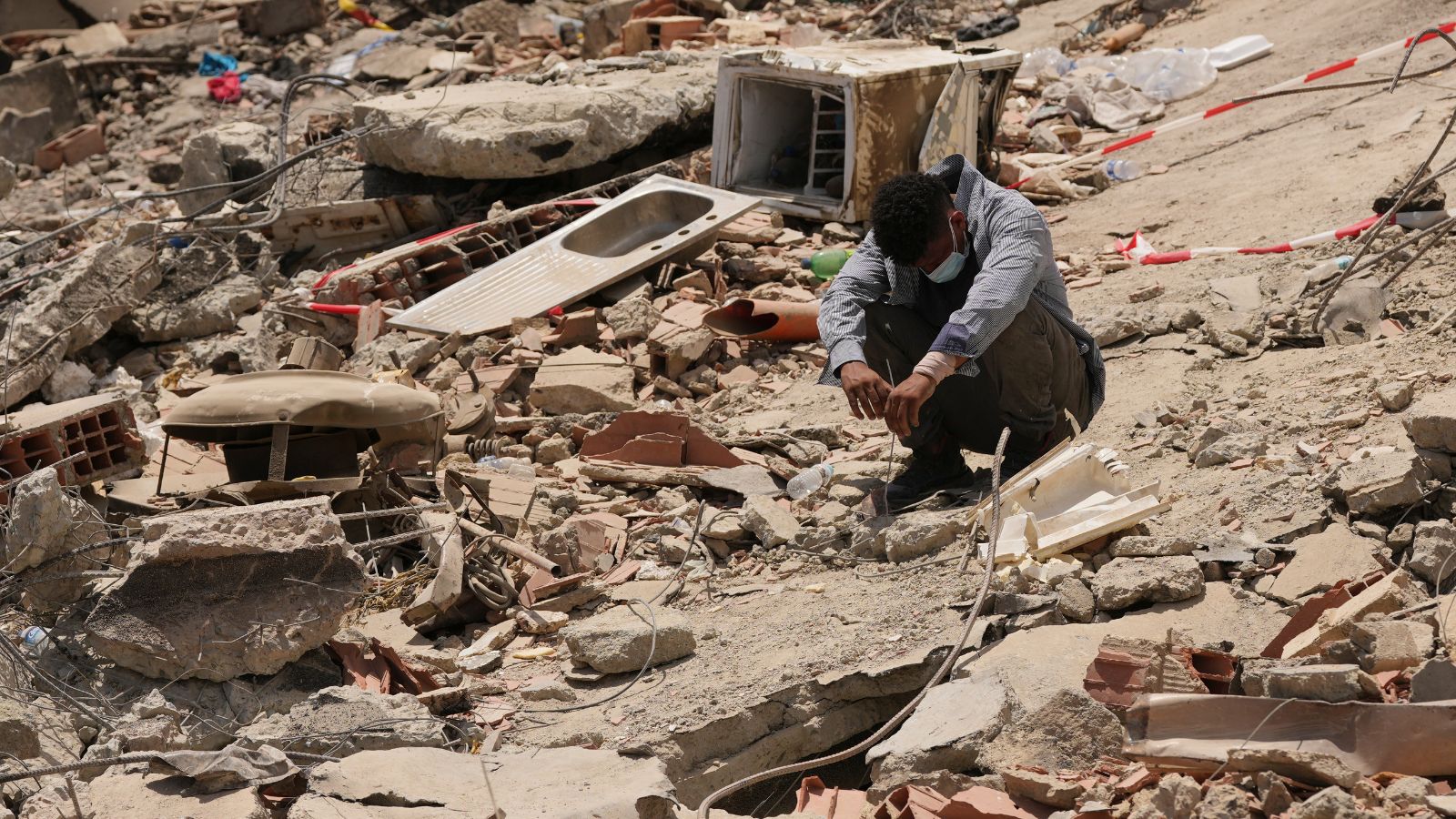
The seismographs registered a catastrophic tremor—a massive earthquake that shattered infrastructure, cut power grids, and brought communication networks to their knees. For families watching the news from cramped apartments in Miami, New York, or Bogota, the panic was instantaneous. They knew the flight had left. They knew their sons, daughters, fathers, and sisters were on it. They knew the plane had landed just hours before the world split open.
And then, silence.
Imagine trying to call a ghost. You dial a number that worked last week, but now there is only the flat, automated drone of a dead line. You check social media, refreshing pages until your thumb aches, looking for a familiar face in the background of a chaotic news broadcast. Nothing. The official government channels offer only platitudes or silence. The records show the flight landed. The records show the passengers disembarked. Beyond that, the ink runs dry.
The Geography of Disappearance
When a state deports someone, the responsibility theoretically shifts at the border. But when the receiving state is already buckling under economic collapse, crumbling infrastructure, and political volatility, a natural disaster acts as a massive eraser.
Consider a hypothetical traveler. Let's call him Carlos. Carlos spent three years working kitchens in Chicago, sending half his paycheck back to Maracaibo to pay for his mother’s insulin. When his asylum claim was denied, the system worked exactly as it was designed to. It detained him, processed him, and put him on a plane.
When Carlos steps off that plane, he has no phone. His identification papers are tucked into a manila envelope held by an official who is currently dealing with a collapsing building or a severed power grid. If the local police station loses electricity, the digital intake log disappears. If the roads collapse, Carlos cannot catch a bus back to his province. He is stranded in a chaotic transit hub during a national emergency, stripped of the digital footprint that defines modern human existence.
He becomes a ghost not because he wants to hide, but because the system that tracked his every movement across three borders suddenly stopped looking.
The numbers are staggering. Over one hundred individuals. That is not a statistic; it is a neighborhood. It is a collection of birthdays, favorite meals, specific laughs, and unpaid debts. Yet, in the grand calculus of geopolitics, these individuals occupy a blind spot. They are no longer the responsibility of the country that expelled them, and they are a low priority for a country struggling to pull survivors from the rubble.
The Echo Chamber of the Left Behind
The real agony of this silence lives in the WhatsApp group chats of the diaspora.
Distance distorts grief. When you are thousands of miles away from a disaster zone, every hour of silence feels like a year. The updates come in fragments. A cousin in Caracas manages to get a single bar of cell service and sends a voice note: The electricity is out across the entire city. No one knows who was on the buses. Then the connection drops again.
The human mind abhors a vacuum. In the absence of information, it builds nightmares. Did the tremor hit the facility where they were being held for processing? Were they released onto the streets right as the buildings began to sway? Did they try to flee into the mountains, away from the coastal tremors, only to be swallowed by the landslides?
This uncertainty is a specific kind of torture. It prevents mourning, but it also prevents hope. It leaves families stuck in a permanent, agonizing present tense. They cannot hold a funeral, and they cannot book a ticket to go look for them. They can only wait for a phone to ring.
The Failure of the Safety Net
We like to believe that the world is heavily monitored. We assume that between satellites, biometric tracking, and international agencies like the Red Cross, it is impossible for a crowd of people to simply evaporate.
But the reality is far more fragile. International disaster response relies on cooperation, and cooperation requires stable diplomatic channels. When those channels are frayed or nonexistent, the flow of information stops. The agencies tasked with tracking displaced persons find themselves locked out of the very rooms where the data is kept.
It reveals a uncomfortable truth about our globalized world: our systems for moving people out of a country are incredibly robust, while our systems for ensuring they survive the transition are shockingly frail. The logistical prowess required to organize a charter flight, coordinate security, and execute a deportation across thousands of miles is immense. Yet, the logistical will to trace those same names forty-eight hours later, after an act of God, is virtually nonexistent.
The silence continues to stretch. The debris from the earthquake is slowly being cleared, brick by heavy brick, from the avenues and side streets. But for the families of the missing, the rubble remains exactly where it fell, burying the answers they desperately need under a mountain of bureaucratic indifference and shattered stone.
The sun sets over the Caribbean, casting long, dark shadows across the runways where the planes once landed, leaving nothing but the quiet, unanswered ring of a phone in an empty room.