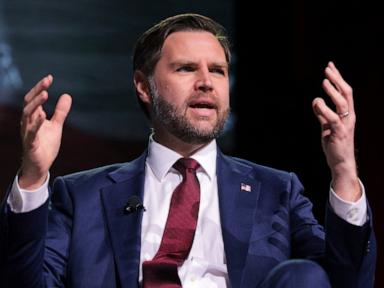
Establishment pundits are currently vibrating with the same exhausted frequency. They look at JD Vance, look at the ticking clock in the Middle East, and see a political anchor. They claim his skepticism of direct kinetic involvement with Tehran is "baggage" that will sink a ticket during a hot war.
They are wrong. Dead wrong.
What the beltway class calls "baggage" is actually the first coherent attempt at a post-neoconservative foreign policy in forty years. The consensus view—that every regional flare-up requires a blank check and a carrier strike group—is a relic of a unipolar moment that died in the sands of Iraq. Vance isn't struggling with a liability; he is stress-testing a new American realism that prioritizes domestic industrial solvency over endless policing of the Levant.
The Myth of the Political Liability
The "baggage" narrative relies on a flawed premise: that the American voter is itching for another multi-trillion dollar entanglement in the Middle East. Data suggests otherwise. For two decades, the populist base of both parties has signaled a profound exhaustion with "regime change" dynamics.
When Vance questions the ROI of a full-scale war with Iran, he isn't dodging a responsibility. He is identifying a massive strategic overreach. The critique that he is "weak" or "inconsistent" fails to grasp the fundamental shift from an interventionist stance to a "burden-sharing" model.
In this framework, the U.S. stops acting as the world's 911 dispatcher and starts acting like a rational stakeholder. If the regional powers in the Middle East want a specific security architecture, they must build it—and pay for it. The idea that Vance is "trapped" by his previous anti-war statements assumes he wants to escape them. He doesn't. He’s doubling down because the math of the old system no longer adds up.
The High Cost of the Status Quo
Let’s talk about the variables the analysts ignore. While the DC cocktail circuit debates "deterrence," the actual industrial base of the United States is screaming.
- Munitions Depletion: We are currently burning through interceptors and precision-guided munitions at a rate our factories cannot match.
- Fiscal Gravity: You cannot fund a domestic manufacturing renaissance while simultaneously underwriting the security of every nation from the Mediterranean to the Persian Gulf.
- Strategic Distraction: Every hour spent obsessing over Tehran is an hour we aren't focusing on the actual existential threat in the Indo-Pacific.
Vance’s "isolationism" is actually prioritized realism. He understands that a nation with $34 trillion in debt cannot afford to be the world's permanent security guarantor. The "baggage" isn't Vance’s rhetoric; the baggage is the $8 trillion spent on Middle Eastern wars since 2001 with zero tangible improvement to the average American's quality of life.
Why the "Anti-War" Label is a Misnomer
The media loves a binary. You are either a "hawk" or a "dove." This is preschool-level analysis. Vance represents a third category: the transactional nationalist.
This isn't about pacifism. It's about efficacy. Imagine a scenario where the U.S. enters a direct conflict with Iran. The Strait of Hormuz closes. Global oil prices verticalize. The fragile recovery of American manufacturing is strangled by energy costs. Does that make us safer? Does that "spread democracy"? No. It creates a vacuum that our primary competitors are more than happy to fill while we bleed out in a desert.
I have watched policy "experts" pitch the same failed strategies for thirty years. They use the same vocabulary of "moral imperatives" to mask strategic insolvency. Vance is the first person in a generation to call their bluff on a national stage. He is pointing out that the emperor has no clothes, and the emperor’s tailors are furious about it.
Dismantling the "People Also Ask" Fallacies
Does JD Vance’s stance alienate traditional allies?
The question itself is flawed. It assumes "allies" are a monolithic group of charity cases. True allies are partners in a mutual security agreement. If an alliance depends entirely on American blood and treasure without reciprocity, it isn't an alliance; it's a subsidy. Vance is moving the conversation toward a "partnership" model, which is only "alienating" to those who have grown accustomed to the subsidy.
Is skepticism of Iran war a sign of isolationism?
Hardly. Isolationism is sticking your head in the sand. Realism is acknowledging that you cannot win every fight, so you choose the ones that actually matter to your borders and your bank account. Directing resources toward the southern border rather than the Iranian border is a matter of logical geographic priority.
The Irony of the "Inconsistency" Charge
Critics point to the fact that Vance supports Israel while remaining skeptical of an Iran war as a "contradiction." This is the peak of intellectual laziness.
It is entirely possible—and strategically sound—to support a regional partner’s right to defend itself while refusing to let that partner’s local conflicts dictate American grand strategy. This is called strategic autonomy. The U.S. should provide the tools for regional stability without becoming the primary combatant in every local feud.
By maintaining this distinction, Vance is actually providing more long-term stability. He is signaling to regional players that they cannot indefinitely outsource their hardest security decisions to Washington. This forces a level of local accountability that has been missing for decades.
The Real Risk Nobody Admits
The danger isn't that Vance's "baggage" will lose an election. The danger is that the old guard will successfully shame the American public back into the "forever war" mindset before the shift is complete.
We are at a tipping point. The defense industrial base is brittle. The social contract is frayed. The American public is tired of being told that their crumbling infrastructure is less important than the power dynamics of a region halfway across the globe.
Vance’s critics are terrified because his "baggage" is actually a mirror. It reflects the failures of their own foreign policy record. They want to talk about his "flip-flops" or his "rhetoric" because they cannot defend the actual results of their interventionist ideology. They are fighting for a status quo that has delivered nothing but debt and instability.
The beltway class calls it a liability. The rest of the country calls it common sense. If you think JD Vance is the one carrying the baggage in this conversation, you haven't looked at the state of the world lately. The baggage belongs to the people who broke it and expect you to keep paying for the repairs.
Stop asking if Vance is "ready" for an Iran war. Start asking why the people who want the war are so desperate to avoid talking about the cost.