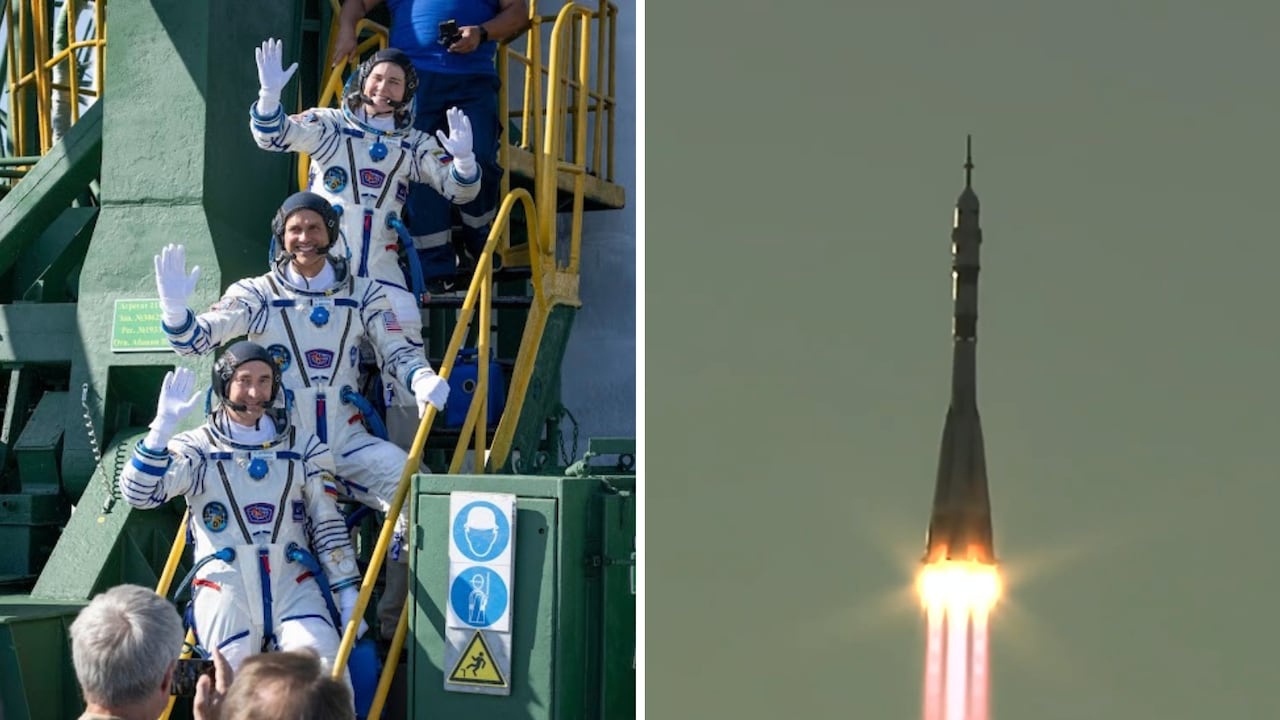
On July 14, 2026, a Russian Soyuz 2.1a rocket roared off the pad at the Baikonur Cosmodrome in Kazakhstan. Inside the cramped Soyuz MS-29 capsule sat NASA astronaut Anil Menon, flanked by Russian cosmonauts Pyotr Dubrov and Anna Kikina. They are bound for an eight-month stay aboard the International Space Station (ISS). To the casual observer, this is a standard crew rotation. To anyone watching the geopolitical landscape, it is a striking anomaly—a rare, functioning bridge of cooperation between Washington and Moscow when almost every other diplomatic line has been severed.
How does this arrangement survive when the terrestrial relationship between these two superpowers is at its lowest point since the Cold War? The answer is not found in high-minded ideals of scientific unity. It lies in cold, hard, engineering codependency. Recently making waves recently: Why the EU Push for a Social Media Youth Mode Will Change How We Scroll Forever.
The Cold Engineering Reality of the ISS
The ISS was designed to prevent either nation from operating it alone. This was not an accidental design flaw; it was a deliberate choice made during the post-Soviet optimism of the 1990s to ensure partnership. Further information into this topic are explored by Engadget.
The orbital laboratory is divided into two main sections: the Russian Orbital Segment and the United States Orbital Segment. Each relies on the other for vital survival functions.
- Propulsion and Altitude Control: The Russian segment provides the heavy thrusters and cargo ships needed to boost the station's altitude and keep it from burning up in Earth's atmosphere. Without Russian engines, the ISS would slowly decay in orbit and eventually crash.
- Power and Life Support: The US segment features the massive solar arrays that generate the electricity required to power the entire station, including the Russian modules. The US also provides the bulk of the life support systems and communication networks.
If either country walks away, the station dies. Because of this technical marriage, NASA and Roscosmos operate under a no-funds-exchanged "seat barter" agreement. A US astronaut flies on a Russian Soyuz, and in exchange, a Russian cosmonaut takes a seat on an American SpaceX Crew Dragon. No money changes hands. This system keeps both nations embedded in each other's flight operations, ensuring that both sides maintain the capability to reach the station regardless of technical grounding of either launch system.
A Surprising Gathering in the Kazakh Steppe
The launch of Soyuz MS-29 brought a surprising collection of VIPs to Baikonur. NASA Administrator Jared Isaacman—the billionaire private astronaut appointed to lead the agency—made the journey to Kazakhstan to meet with Roscosmos director Dmitry Bakanov. It marked the first time a NASA chief has set foot at the Russian-leased launchpad since 2018.
Isaacman's presence signals a pragmatic shift. Tensions over the war in Ukraine had frozen top-level travel for years under previous leadership. But with the ISS scheduled for retirement around 2030, the transition phase is delicate. Maintaining personal communication between the agency heads is a strategic necessity to ensure a controlled, safe de-orbiting process when the station's life ends.
The flight is also highly personal for the NASA chief. Spaceflight is a small world. Anil Menon, the 49-year-old rookie astronaut on the flight, was previously SpaceX’s first flight surgeon. His wife, Anna Menon, is a senior SpaceX engineer who went to space in 2024 on the Polaris Dawn mission—a private flight funded and commanded by Isaacman himself. Anna Menon was also selected as a NASA astronaut candidate in 2025.
Moving Beyond Simple Orbit Dynamics
While the politics remain complex, the science onboard remains focused on pushing technical limits. During his eight months in orbit, Menon will focus on research designed to reduce Earth-dependence for long-duration missions.
Microgravity Semiconductor Production
On Earth, gravity causes convection currents that introduce tiny defects into the molecular structure of semiconductor crystals. In the near-perfect weightlessness of the ISS, Menon will work on refining manufacturing techniques to grow near-flawless crystals. These high-grade materials are vital for the next generation of high-performance computing, specialized optics, and advanced medical imaging equipment.
Autonomous AI Medical Imaging
On a journey to Mars, real-time medical consultation with doctors on Earth is impossible due to communication lag times of up to 20 minutes. To address this, Menon will test new medical procedures using augmented reality and onboard artificial intelligence. The system guides non-specialist astronauts through complex ultrasound scans, diagnosing internal injuries or monitoring cardiovascular changes without requiring direct oversight from ground control.
Bioprinting and Vascular Constructs
A major hurdle in long-term spaceflight is the degradation of the human body, particularly the cardiovascular system. Menon will experiment with bioprinting vascular constructs—essentially printing the building blocks of human blood vessels in microgravity. This work helps researchers study cellular aging processes in ways that are impossible under the constant stress of Earth's gravity.
The Unresolved Horizon
The current agreement to keep the ISS running expires at the end of the decade. Russia has previously threatened to pull out of the project early to build its own orbital outpost, while the US is actively funding commercial space stations to take the place of the aging lab.
But building space stations takes time and massive amounts of capital. For now, the reality of space operations forces a level of cooperation that earthly diplomats can only dream of. The ISS remains a strange, pressurized sanctuary of peace, hurtling through the vacuum of space at 17,500 miles per hour, held together by cold necessity and shared survival.