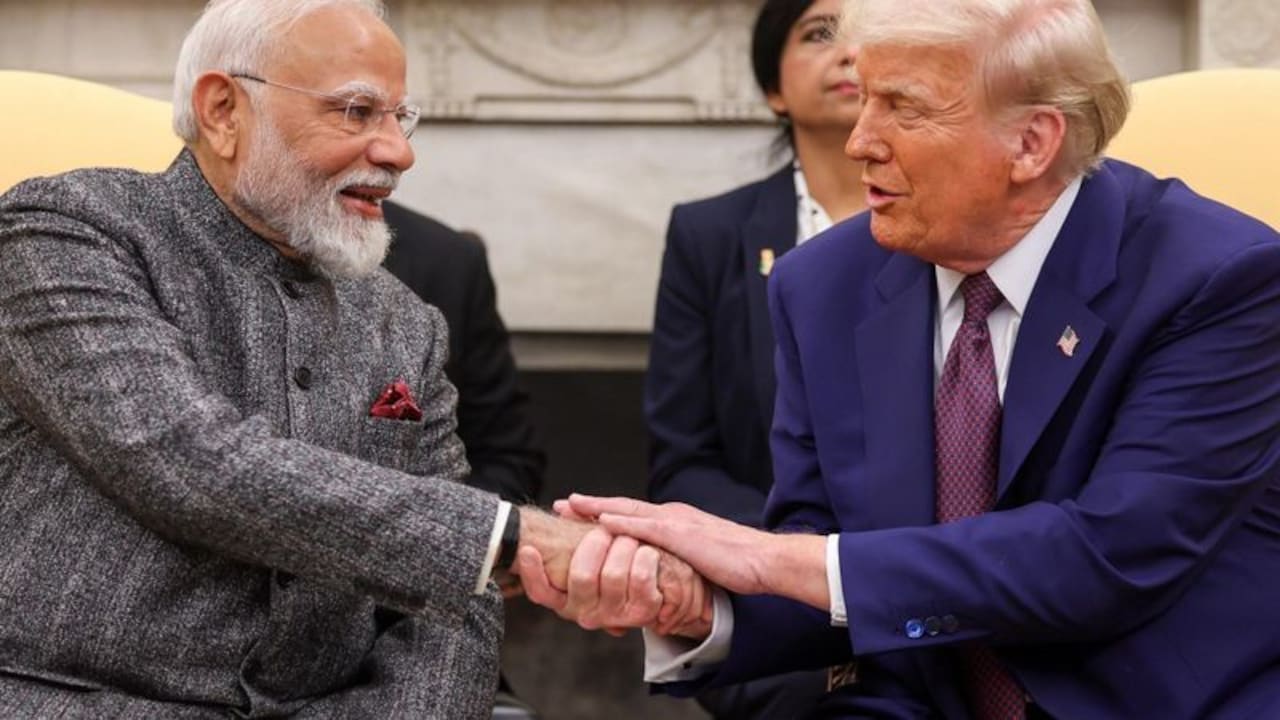
Washington and New Delhi just took a massive step toward breaking Beijing's chokehold on the global economy.
Let's skip the diplomatic fluff. The recent signing of a critical minerals pact in New Delhi isn't just another routine photo-op for politicians. It's a calculated, defensive wall built around the components that power your everyday life, from your smartphone to your next electric car.
For decades, China played the long game. They built a near-monopoly on processing the rare earths and critical minerals that keep modern tech breathing. Everyone else got lazy, outsourcing production to Chinese factories because it was cheap. But the cracks in that strategy are wide open now. Geopolitical blackmail, sudden export bans, and supply shocks have forced a radical rethink.
The strategy isn't about completely cutting China off. That's impossible. Instead, it's about building a robust "China plus one" alternative. The US has the capital and the cutting-edge design capabilities. India has the sheer scale, the workforce, and an aggressive hunger to become the world's next manufacturing powerhouse.
The Billion Dollar Handshake
When U.S. Secretary of State Marco Rubio and Indian External Affairs Minister S. Jaishankar finalized the critical minerals framework, they put a stamp on a massive structural shift.
Look at the numbers. Bilateral trade between the US and India crossed $140 billion in the 2025–26 fiscal year. While India's exports stayed relatively flat, its imports from the US skyrocketed by over 17%. India is aggressively buying American energy, including a massive 50% surge in US crude oil and doubling its liquefied natural gas (LNG) intakes.
This isn't random. It's a deliberate pivot. India is intentionally stepping away from discounted Russian crude and volatile Middle Eastern energy hubs to anchor itself firmly to Uncle Sam. In exchange, the US lowered threatened reciprocal tariffs down to 18%, clearing the runway for deeper tech cooperation.
The core of this alliance sits on three pillars:
- Pax Silica: India formally joined this US-led democratic tech coalition to secure semiconductor supply chains and block economic coercion.
- The TRUST Initiative: The latest evolution of the older iCET framework, bringing together government and private tech sectors under a single national security umbrella.
- The FORGE Initiative: A targeted partnership focused specifically on resource geostrategic engagement and mining investments.
Moving Beyond Assembly Lines
A lot of skeptics look at India and say, "Sure, they assemble iPhones, but can they actually build the foundational tech?"
It's a fair question. For a long time, India was just the final stop where pre-made parts were glued together. But the strategy has shifted toward actual fabrication and raw material processing.
Take the Shakti Semiconductor Fab project. This isn't a theoretical plan; it's a $500 million project backed by the US Space Force, Bharat Semi, and 3rdiTech. Based in India, this facility is designed to produce military-grade silicon carbide and gallium nitride chips. These are the specialized, high-voltage semiconductors used in night vision, missile guidance, and advanced radars. It's the first multi-material fab of its kind built for international defense collaboration, aiming for phase-one production by 2027.
At the same time, global tech giants are dropping historic amounts of cash into Indian infrastructure:
- Microsoft committed $17.5 billion to build out massive cloud and AI data infrastructure over the next four years.
- Google put down $15 billion for a premier AI data hub in Andhra Pradesh.
These aren't just call centers anymore. They're foundational pillars of a parallel tech ecosystem.
The Critical Mineral Trap
You can't build advanced chips, EV batteries, or fighter jets without critical minerals like lithium, cobalt, and neodymium. This is where the biggest vulnerability lies.
The International Energy Agency projects that global demand for these minerals will double by 2030. Right now, the top three refining nations control an astonishing 86% of the market. China sits comfortably at the top of that pyramid.
The vulnerability is terrifyingly real. The US is more than 75% dependent on imports for twelve vital critical minerals. India is even worse off, facing a 90% import dependency across thirty minerals it considers vital for its survival.
If Beijing decides to turn off the tap tomorrow, Western and Indian manufacturing grinds to a halt. The new US-India framework tackles this exact bottleneck by co-investing in mining, processing, and recycling technologies. The goal is to build an alternative supply chain that bypasses Chinese processing plants entirely.
Real Friction in the Alliance
Let's be completely honest. Building this alliance isn't smooth sailing. Inside corporate boardrooms, executives complain about real-world hurdles when trying to shift operations from China to India.
India's bureaucracy can still be a slow, frustrating nightmare. Infrastructure, while improving rapidly with new highways and ports, still lags behind the polished, state-subsidized efficiency of Chinese industrial clusters. Navigating local compliance laws and land acquisition can take months, sometimes years, driving Western supply chain managers crazy.
There's also a fundamental difference in mindset. The US views this alliance through a rigid geopolitical lens—you're either with us or against us. India, on the other hand, fiercely protects its strategic autonomy. New Delhi wants to be a partner to Washington, but it refuses to be a subordinate client state. Balancing these differing political egos while managing trade tariffs remains a constant tightrope walk.
Actionable Steps for Businesses
If you're managing a supply chain or running a business dependent on tech hardware, you can't just sit back and watch the news. The geopolitical landscape has changed permanently. You need to adapt your operations immediately.
Diversify Your Sourcing Portfolio Now
Stop relying on a single geographic hub for your components. Begin auditing your Tier 1 and Tier 2 suppliers. Look for opportunities to shift at least 20% of your manufacturing or component sourcing to alternative hubs like India, Vietnam, or Mexico to insulate your business from sudden export controls.
Leverage Local Subsidies
If you're expanding operations, look directly at India’s Production Linked Incentive (PLI) schemes. The Indian government is aggressively offering billions in capital expenditure subsidies—up to 50% in sectors like semiconductor design and electronics manufacturing—to offset your initial setup costs.
Secure Long-Term Material Contracts
With critical mineral demand projected to skyrocket, expect price volatility and artificial shortages. Lock in long-term procurement contracts with suppliers utilizing the newly formed US-India and Quad-backed supply corridors to ensure your production lines don't run dry.