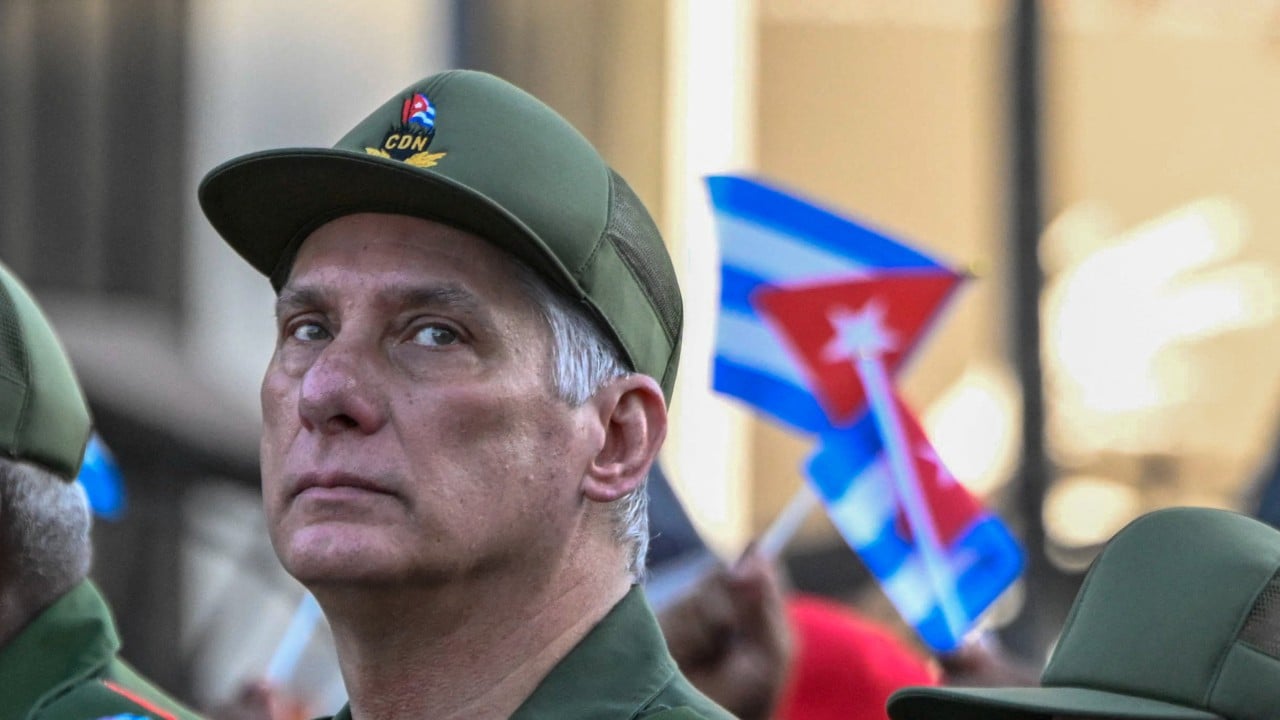
Washington and Havana are locking horns in a way we haven't seen in decades. This isn't just the usual diplomatic posturing or slow-burn economic pressure. The situation shifted dramatically following leaked intelligence reports alleging that Cuba acquired over 300 advanced military drones from Russia and Iran. Suddenly, rumors of active US military planning to force regime change are swirling, and Cuba's leadership is firing back with direct warnings of a regional catastrophe.
If you're trying to make sense of the sudden escalation, you need to look past the loud headlines. This isn't a random spat. It's the explosive convergence of a crippling energy blockade, new drone warfare capabilities, and a highly aggressive strategy from the Trump administration targeting the Cuban regime's absolute core.
The Drone Intel That Sparked the Crisis
Everything shifted when a report from Axios, citing classified US intelligence, dropped a bombshell. The report claims Havana didn't just buy a few surveillance drones. They supposedly built a stockpile of more than 300 attack drones sourced directly from Moscow and Tehran.
Even more alarming to Washington are the alleged targets. US intelligence officials claim Havana has actively discussed plans to use these drones against the US naval base at Guantanamo Bay, American military vessels in the Caribbean, and potentially locations in Key West, Florida.
[Image of military attack drone]
The Cuban government forcefully denies the claims, calling them a complete fabrication meant to serve as a pretext for an American invasion. Cuban President Miguel Díaz-Canel took to social media to state bluntly that Cuba poses no threat to any nation. However, he didn't explicitly deny owning the hardware. Instead, he hammered home a different point, stating that Cuba has an absolute and legitimate right to defend itself from a military onslaught.
Díaz-Canel warned that any direct US military action against the island would trigger a bloodbath with incalculable consequences for regional peace and stability.
Washington Squeezes the Economic Lifeline
While the military rhetoric heats up, the US Treasury Department is busy executing a devastating economic strategy. US Secretary of State Marco Rubio announced a massive sweeping package of sanctions designed to paralyze Cuba's state-run economy.
The primary target is GAESA, the massive military-aligned conglomerate that controls the vast majority of Cuba's retail, tourism, and financial transactions. Washington explicitly calls it the heart of Cuba's kleptocratic system. By freezing its access to international commerce and targeting individual board members like Ania Guillermina Lastres Morena, the US wants to starve the regime of hard currency.
They didn't stop there. The sanctions also targeted Moa Nickel (MNSA), a major state mining operation run as a joint venture with Canada's Sherritt International. The US argues the joint venture exploits natural resources to benefit the government rather than the Cuban people. Add in direct sanctions against nine top Cuban officials, including the ministers for communications, energy, and justice, and you have a total diplomatic and financial wall.
The Reality of Life Under the Blockade
To understand why Cuba's rhetoric is so fierce right now, you have to look at how close the island is to a total internal collapse. This economic war isn't happening in a vacuum.
Ever since Washington cut off Cuba's primary energy supplies following the January arrest of the president of Venezuela—Cuba's closest regional ally—the island's energy grid has completely disintegrated. The Trump administration also slapped massive tariffs on any country attempting to ship oil to Havana, creating a de facto naval blockade.
The results on the ground are brutal.
- Gasoline and diesel prices doubled in a matter of days.
- Strict fuel rationing is in place across every province.
- Most of the country gets electricity for only one or two hours a day.
When a government is dealing with widespread blackouts and severe food shortages, external military threats become incredibly volatile. The Cuban leadership is cornered, and cornered regimes rely heavily on aggressive deterrence.
Reopening Wounds From the Cold War
The tension is amplified by a massive legal bomb dropped by the US Department of Justice. Federal prosecutors are moving forward with plans to indict 94-year-old Raúl Castro. The indictment stems from a 1996 incident where Cuban military jets shot down two private planes operated by the Miami-based Cuban exile humanitarian group Brothers to the Rescue.
Raúl Castro is the brother of Fidel Castro and one of the last living pillars of the 1959 Cuban Revolution. Indicting him now is a deliberate, highly symbolic message from Washington. It signals that the US is no longer interested in containment or gradual diplomatic pressure. The goal is the complete dismantling of the communist government.
For Havana, this feels like 1961 all over again. Cuban UN Ambassador Ernesto Soberón Guzmán explicitly referenced the Bay of Pigs invasion, reminding reporters that when the US tried to invade in the 60s, they were soundly defeated. He noted that while the modern military landscape is vastly different, the island's willingness to fight back hasn't changed.
What Happens Next
Don't expect either side to back down quietly. The US believes its maximum pressure campaign is working because Cuba's economy is visibly fracturing under the fuel embargo. On the flip side, the alleged presence of Iranian military advisers and advanced Russian drone tech in Havana means Washington won't ignore the security risks.
If you are watching this situation unfold, keep your eyes on two specific indicators rather than the political speeches. First, look at whether Mexico or Russia attempts to break the US naval oil blockade with heavily protected fuel tankers. Russia has already stated it is in constant contact with Havana to ease the impact of the energy crisis. Second, watch for any spike in migration. A collapsing economy paired with the threat of a military conflict will almost certainly trigger a massive wave of maritime migration toward the Florida coast, forcing Washington to balance its aggressive foreign policy with domestic border realities.