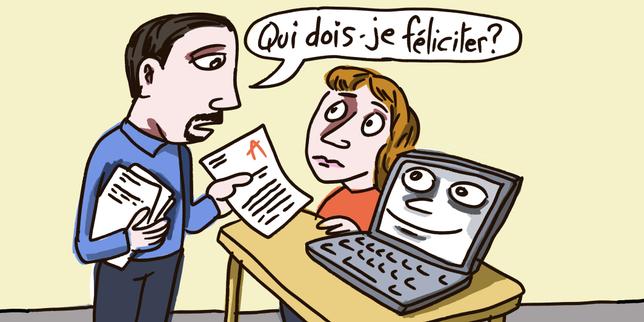
Higher education spent the last few years trapped in a cycle of panic. When generative text models first exploded onto the scene, academic institutions across France and Quebec responded with knee-jerk bans and software designed to sniff out digital cheating. That phase is officially over. Professors and deans realized that treating advanced software like contraband doesn't work. Instead, universities are completely redesigning how they test knowledge. The old model of assigning a take-home essay and hoping for authentic critical thought is dead.
If you look closely at how campuses in Paris, Montreal, and Quebec City handle student evaluation now, a massive shift emerges. Institutions are moving away from passive memory recall because automated tools render standard multiple-choice tests and basic summaries obsolete. When an algorithm can score a passing grade on a standard exam in seconds, the exam itself has failed, not the student.
The Death of the Take Home Essay
For decades, the standard format for proving mastery was simple. Give students a prompt, send them home for a week, and collect ten pages of prose. That strategy is a liability today. Students aren't necessarily malicious cheaters; they are pragmatic actors navigating a system that hasn't caught up to reality. If a powerful language model can generate a coherent framework for a history paper in five seconds, asking humans to spend twenty hours mimicking that exact output is pointless.
French and Quebec universities are abandoning this approach in favor of granular process tracking. Professors now demand to see the scaffolding behind a final grade. You submit your rough outline first. Then your primary source list. Then you complete a live defense of your thesis in front of a panel. By breaking a single major deliverable into four mandatory checkpoints, institutions ensure that actual human learning happens during the messy middle, rather than at the click of a button on the final night.
Rethinking Campus Evaluations Through Real World Context
A curious thing happens when you talk to educators on both sides of the Atlantic: they admit that banning digital assistants creates a dangerous skills gap. Students who graduate without knowing how to prompt, audit, or correct automated outputs will enter a professional market that demands fluency in those exact skills. The goal isn't isolation anymore. The goal is integration coupled with rigorous skepticism.
Professors are designing assignments that require hyper-local context, live primary research, and deep personal reflection. An automated generator can write a generic essay about marketing strategy, but it cannot analyze how a specific local business in downtown Lyon or a Montreal tech startup navigated regional supply chain issues last Tuesday. By tethering assignments to immediate, localized realities, educators force students to bring something genuinely human to the table.
Oral Defenses Make A Major Comeback
Writing text on a screen used to be the primary currency of academia. Now, the spoken word is reclaiming its throne. Oral examinations, viva voce defenses, and interactive lab walkthroughs are surging in popularity across faculties of law, business, and even engineering.
You can fake a written report with an advanced algorithm, but you cannot fake a real-time conversation where a professor drills down into the specific logic of your methodology. These sessions don't need to take hours. A ten-minute targeted conversation reveals instantly whether a student actually understands the core concepts or merely copied a polished output they barely comprehend.
What This Means For The Future of Degrees
We are watching a structural evolution in what a university diploma actually represents. It no longer certifies that you can memorize facts or format a bibliography according to rigid style guides. Software handles those tasks effortlessly. Instead, a modern degree certifies that you possess resilient critical thinking, ethical judgment, and the capacity to evaluate automated information without losing your own intellectual autonomy.
The transition is messy, and implementation varies wildly from one faculty to another. Some professors embrace digital copilots as collaborative brainstorming partners, while others lock down their exam rooms entirely. But the underlying direction is clear. Education is moving past the initial shock and building a smarter, more resilient framework for the years ahead. Stop trying to outsmart the technology and start designing evaluations that require actual human depth.