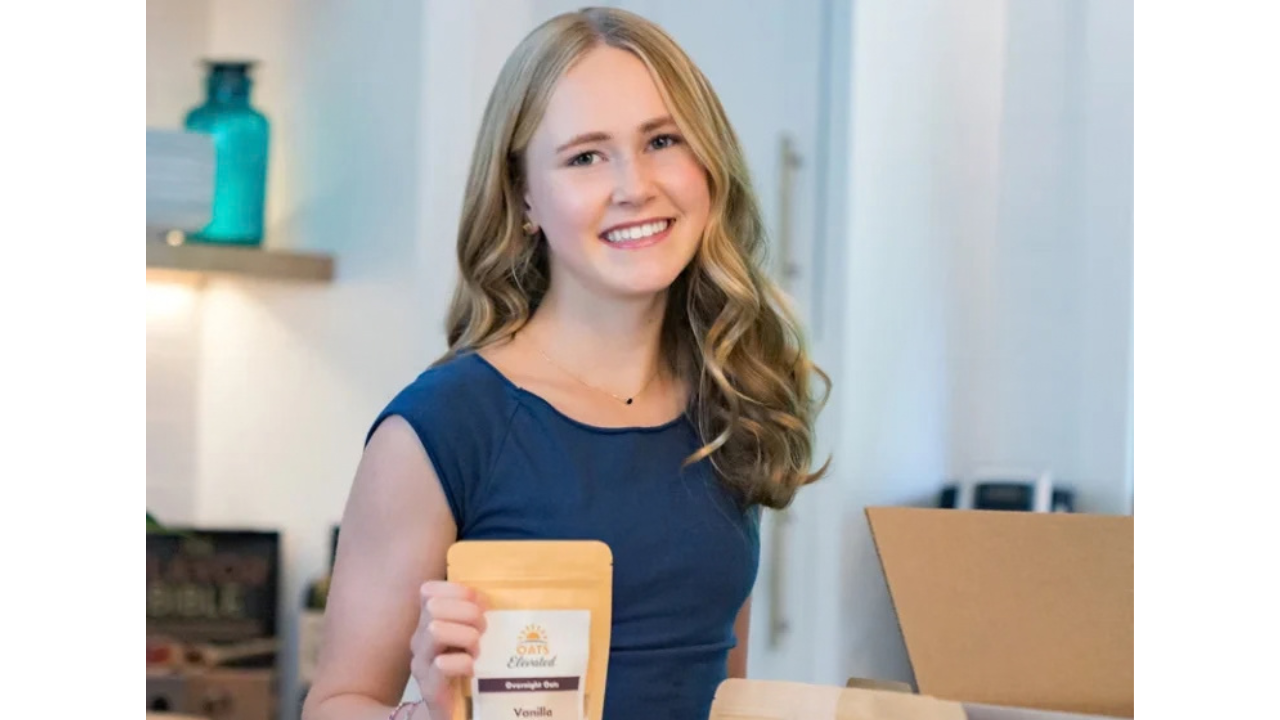
Scaling a consumer packaged goods brand from a localized kitchen operation to a regional direct-to-consumer and wholesale entity requires navigating rigid supply chain constraints, margin pressures, and distribution trade-offs. Examining a lean, youth-founded enterprise such as Oats Elevated, launched by Kentucky-based entrepreneur Brooke Sweeney at age fourteen, reveals the mechanical realities of small-scale food production. Rather than viewing such micro-enterprises through the lens of human-interest novelty, a structural decomposition of their operating model exposes the distinct financial variables governing early-stage consumer brands.
The Margin Architecture of Dry Goods
The economic viability of dry-mix nutritional products rests primarily on material input costs and shelf-life stability. Liquid-based food ventures face immediate spoilage vectors, high refrigeration overhead, and restrictive logistics chains. Conversely, a dry-blend overnight oat product shifts the variable cost burden to high-value dry components, specifically protein isolates, functional additives, and base grains. If you found value in this piece, you should look at: this related article.
Priced standardly at five dollars per single-serve pouch, the top-line revenue per unit must absorb three primary cost centers: direct raw materials, co-packing or manual labor, and outbound fulfillment.
- Raw Material Inputs: Organic rolled oats, functional sweeteners like date powder, and specialty additions such as cacao nibs or freeze-dried fruits establish the baseline cost of goods sold. When utilizing premium fortifications, such as NSF-certified protein powders, ingredient costs scale disproportionately higher than commodity breakfast cereals.
- Packaging Overhead: Protective multi-layer barrier pouches preserve shelf life by blocking moisture and oxygen ingress. For small-batch producers, custom-printed packaging runs carry a high unit penalty compared to massive industrial supply contracts, compressing initial gross margins.
- Labor and Assembly Time: Manual or semi-automated weighing, blending, and heat-sealing introduce a direct labor cost per unit. Until production shifts to an incubator kitchen or shared commercial facility, labor efficiency remains bound by human physical throughput.
Channel Distribution Mechanics
Transitioning from local farmers' markets to digital e-commerce and retail wholesale introduces competing unit economic profiles. Each channel commands distinct customer acquisition costs and margin sharing structures. For another angle on this development, check out the latest coverage from Business Insider.
The direct-to-consumer channel via online storefronts maximizes top-line capture per transaction, typically commanding the full five-dollar retail price point per unit. However, this model absorbs high customer acquisition costs through digital marketing, payment processing fees, and individual pick-and-pack fulfillment labor. Offering volume incentives, such as free shipping thresholds or subscription discounts, further optimizes customer lifetime value at the expense of immediate order margin.
Wholesale placement in regional farm stands, cafes, and boutique grocery outlets flips the equation. Retailers require a standard wholesale margin discount, typically fifty percent off the retail MSRP, transferring inventory holding costs away from the founder but drastically reducing per-unit gross profit. For a micro-batch producer, wholesale volume provides brand validation and baseline cash flow stability, while direct-to-consumer sales drive cash generation.
The Scaling Bottleneck and Infrastructure Transition
Early-stage food enterprises inevitably hit an operational ceiling dictated by physical space and regulatory compliance. Operating out of domestic or localized settings limits batch sizes and restricts formal entry into major regional supermarket chains, which mandate rigorous food safety certifications and high-volume output consistency.
To break past this operational plateau, brands must transition through specific capital milestones:
- Commercial Kitchen Integration: Utilizing shared incubator kitchens or co-packing facilities provides access to industrial-grade mixers, automated filling lines, and commercial sanitation infrastructure without requiring millions in upfront plant construction capital.
- Supply Chain Disintermediation: Moving from retail-sized ingredient purchasing to bulk wholesale ingredient procurement drops the baseline cost of goods sold, directly expanding gross margins to fund broader marketing or distribution initiatives.
- Inventory Forecasting: Balancing working capital against perishable or seasonal inventory ensures that cash is not trapped in excess stock while preventing stockouts during high-demand cycles.
Evaluating the trajectory of lean consumer brands demonstrates that survival depends less on initial marketing exposure and more on relentless optimization of unit economics, disciplined channel selection, and the timing of infrastructure upgrades. The transition from a local market stall to a scalable regional footprint requires deliberate management of capital efficiency at every tier of the supply chain.