Every few months, diplomats in Geneva gather under fluorescent lights to issue stern condemnations. Microphones click. Press releases flow. Reports are filed into digital archives where they gather dust alongside thousands of identical documents. Another side event at the United Nations Human Rights Council concludes with high-minded speeches about minority girls, forced conversions, and legal loopholes in Pakistan.
Then everyone goes home to cocktails, and nothing changes.
The lazy consensus in international human rights reporting treats these UN statements as victories. Journalists write up the press releases as if a strongly worded resolution or a panel discussion is an active intervention. It is not. It is diplomatic appeasement dressed up as activism, a ritualized performance designed to soothe Western conscience while leaving the machinery of impunity untouched on the ground in Sindh and Punjab.
If you want to understand why teenage Hindu and Christian girls continue to vanish, convert overnight, and find themselves married off to men old enough to be their grandfathers, you have to stop looking at it as an unfortunate legal loophole. It is not a glitch in the system. It is the system functioning exactly as intended by local power structures.
Let us dismantle the comforting lies we tell ourselves about this crisis.
The Myth of Mouth-Service Legislation
The standard prescription offered by international bodies is dismally predictable. Raise the minimum marriage age to eighteen across all provinces. Criminalize forced conversions. Train the police. Enforce existing laws.
It sounds entirely reasonable on paper. It also displays a profound misunderstanding of political reality.
Imagine a scenario where a fourteen-year-old girl from a marginalized minority family in rural Sindh is abducted. Her parents run to the local police station, frantic, desperate, holding birth certificates and school records proving she is a child. What do they encounter? Not neutral civil servants waiting to enforce a statute, but a local ecosystem where the police, clerical networks, and landed elites are fused into a single predatory unit.
When a cleric backed by armed local muscle produces a hastily signed marriage certificate and a signed declaration claiming the girl converted to Islam of her own free will, the police do not look at the birth certificate. They look at power dynamics. They look at tribal loyalties, religious optics, and the terrifying cost of crossing radicalized mobs.
Passing a federal law or holding another Geneva panel does not alter the calculus of a corrupt provincial sub-inspector who fears for his life and career if he crosses a local strongman. In many districts, the state has effectively subcontracted local law enforcement to religious majoritarianism. Asking that same state to prosecute perpetrators of forced conversions from minority communities is like asking arsonists to investigate a house fire they set themselves.
The Mechanics of the Shrine Industry
To understand why legislation fails, you must examine the industrial scale of these conversions. Particular religious shrines and clerical networks in specific districts have built entire operational models around this practice.
When a girl is abducted, she is swiftly transported to a designated clerical center where notary publics, compliant witnesses, and marriage registrars operate like a well-oiled assembly line. Certificates are backdated or forged. Age verification is bypassed through medical falsifications or simple intimidation of municipal record keepers. Once the documentation is secured, the perpetrators immediately file protective petitions in high courts, claiming the girl married voluntarily and faces threats from her own grieving family.
This legal jujitsu turns reality upside down. The victimized family becomes the aggressor in the eyes of local zealots, while the adult abductor is shielded by judicial mandates requiring the girl to be produced in court—where she is frequently surrounded by hostile crowds of supporters who intimidate her before she can utter a word to a judge.
When human rights reports list these cases as mere administrative delays, they sanitize a coordinated criminal enterprise. The courts themselves are often paralyzed by fear. Judges who attempt to apply constitutional protections to underage minority girls receive death threats, find themselves targeted by social media smear campaigns, or face physical attacks. Until the judicial infrastructure is insulated from mob violence, passing more statutes is like putting fresh paint on a sinking ship.
The Economy of Impunity
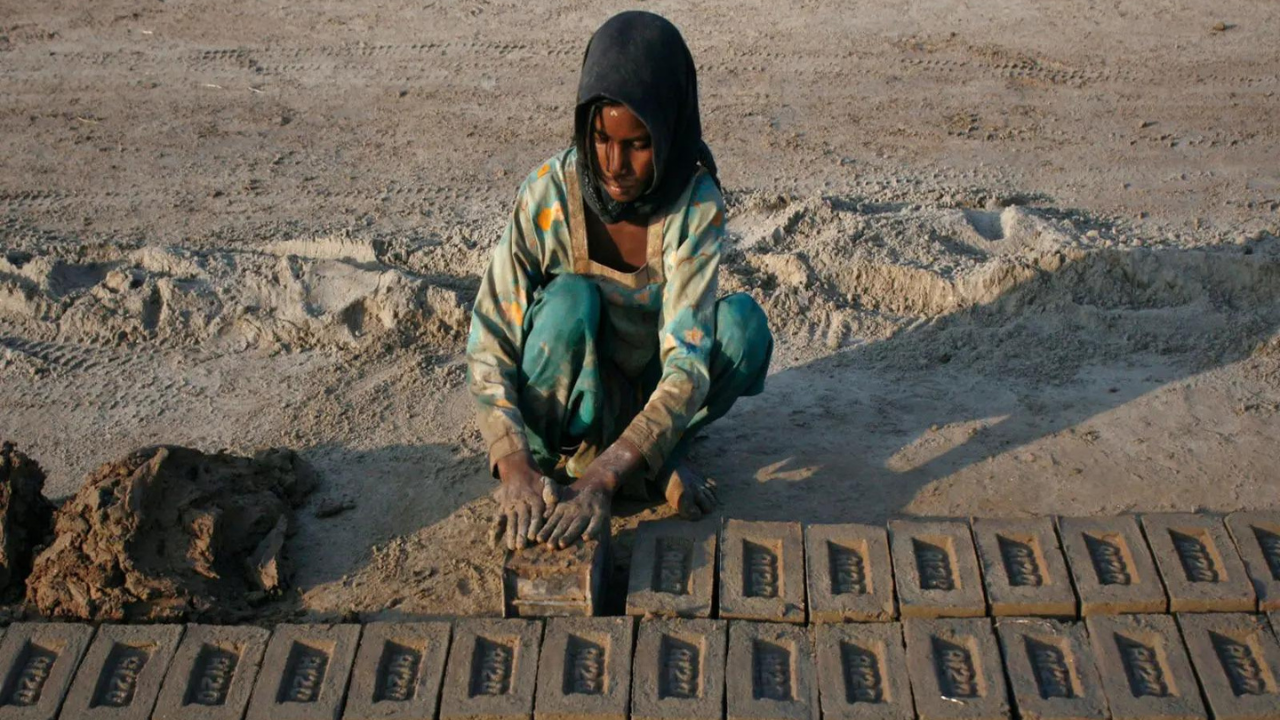
To treat these tragedies solely as religious persecution or gender-based violence misses the brutal economic baseline. Minority communities in rural Pakistan disproportionately occupy the lowest rungs of agrarian labor. They are trapped in generational debt bondage, working brick kilns, sugarcane fields, and feudal estates with zero legal recourse.
When a teenage girl from these vulnerable households is targeted, the attack is rarely random. It is an assertion of absolute dominion. It signals to the entire community that their daughters, their bodies, and their religious identities are entirely unprotected property.
When international observers focus exclusively on the religious conversion aspect, they fall into a trap set by the perpetrators. The religious facade provides legal and social cover under local blasphemy sensitivities and societal prejudice. Anyone who questions the legality of a minor marriage or a forced conversion is instantly accused of insulting religion, shifting the entire moral weight of the narrative from the protection of a traumatized child to the defense of religious orthodoxy.
Local activists who fight these cases do not need more panel discussions in Europe. They need physical security, independent prosecutorial support that bypasses compromised local police, and financial backing to sustain endless court battles against deep-pocketed and fanatical adversaries. Every time the international community responds with a seminar instead of targeted diplomatic pressure and economic conditionality, it signals to the Pakistani establishment that there are zero costs attached to state complicity.
Why Western Diplomacy Fails
Western capitals treat Pakistan through the lens of transactional geopolitics, counterterrorism cooperation, and regional stability. Human rights clauses in trade agreements or aid packages are treated as polite suggestions rather than hard boundaries.
When diplomats raise minority rights at the UNHRC, they do so with one eye on economic muscle and the other on regional security partnerships. They issue mild admonitions, the Pakistani delegation offers standard defensive denials blaming provincial autonomy or judicial independence, and the matter is shelved until the next session.
This polite diplomatic tango is an insult to the victims.
Real accountability requires consequences that sting. If Islamabad wants favorable trade status, foreign investment, or international financial assistance, that access should be directly linked to dismantling the institutionalized impunity that protects the abductors of children. As long as foreign capitals compartmentalize trade and security from human rights abuses against minorities, local authorities in Sindh and Punjab know they can ignore UN warnings with absolute impunity.
The Complicity of Silence
There is another uncomfortable truth that human rights organizations rarely utter out loud: the domestic political silence within Pakistan is deafening. Mainstream political parties, regardless of their rhetorical commitments to democracy and rule of law, calculate that defending minority girls from forced conversions carries a catastrophic political price.
In an environment poisoned by decades of religious extremism and weaponized blasphemy laws, standing up for an abducted Christian or Hindu teenager invites violent backlash from religious zealots. Consequently, mainstream politicians engage in strategic cowardice. They look away, whisper condolences behind closed doors, and leave the fight to a tiny, courageous network of civil society activists who are constantly forced to look over their shoulders.
When domestic political cost-benefit analysis favors appeasing extremists over protecting children, external pressure becomes the only variable that can shift the balance. But that external pressure must be relentless, punitive, and unyielding. It cannot be satisfied by an annual report or a side event in Geneva.
Dismantling the Performance
We must stop funding and attending diplomatic circuses that serve primarily as resume-builders for international bureaucrats and moral cover for indifferent governments.
If you are an activist, stop measuring success by how many UN experts sign a joint statement. Measure success by whether a fourteen-year-old child is safely recovered from the custody of her abductor, whether corrupt police officials are criminally prosecuted, and whether financial sanctions hit the enablers of this modern slave trade.
The next time a high-profile delegation convenes to express deep concern over minority girls in Pakistan, look past the polished press releases. Demand to know what specific trade concessions or diplomatic privileges will be revoked if the practice continues unchecked.
Until the international community stops treating human rights as a polite conversation topic and starts treating them as a non-negotiable condition for global engagement, these UN events will remain what they have always been: a quiet agreement to watch children suffer while everyone pretends to care.
For a firsthand look at these diplomatic gatherings, you can watch this UNHRC side event highlights child marriages covering the Geneva proceedings. This video provides a direct view of the exact discussions and panel presentations that take place without altering conditions on the ground.