Donald Trump just dropped a massive headline at the NATO summit in Ankara, telling Volodymyr Zelenskyy that the US will grant Ukraine a license to build its own Patriot missile interceptors. "We'll show them how to do it," Trump said, pitching it as a win-win that stops Ukraine from complaining about supply shortages while saving US stockpiles already drained by global conflicts.
It sounds like a done deal. It sounds like a massive breakthrough. But if you think Ukrainian-made Patriots are going to protect Kyiv anytime soon, you are misreading the reality of defense manufacturing.
The political green light is a historic diplomatic coup, sure. But translating a piece of paper into a Mach 5 kinetic interceptor capable of blowing a Russian ballistic missile out of the sky is an entirely different beast. The hard truth is that establishing this pipeline faces massive bottlenecks, security nightmares, and deep technological hurdles that can't be bypassed with political goodwill.
The Two Year Production Reality
Let's look at the actual math of building a modern air defense interceptor. According to data from defense analysts, the production cycle for a single Lockheed Martin PAC-3 MSE interceptor spans roughly 24 months. That is not the time it takes to build a factory. That is the time it takes to build one missile from the day the raw materials are ordered to the day it rolls off the assembly line.
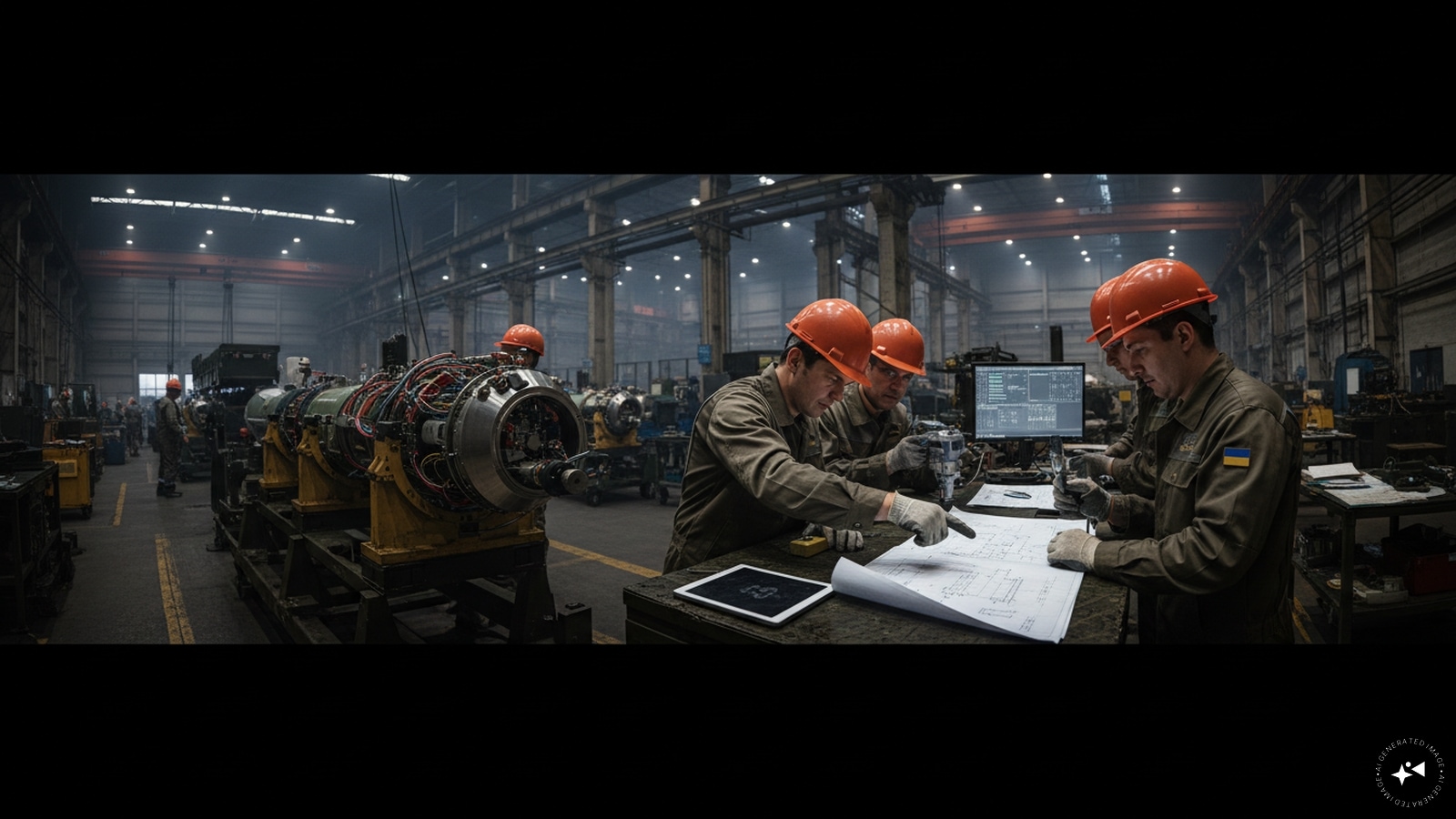
A Patriot missile isn't an artillery shell. It's a complex computer packed with explosives and rocket propellant. The manufacturing network relies on around 400 different subcontractors supplying highly specialized components. You cannot just replicate this ecosystem in a weekend.
Consider what goes into a PAC-3 MSE:
- The Seeker: The active radar seeker tracking incoming targets is made by Boeing in Huntsville, Alabama. They are trying to scale up to 2,000 units a year, but right now, every single seeker flows through a single American pipeline.
- The Rocket Motor: The dual-pulse solid-fuel rocket motor is manufactured by Aerojet Rocketdyne. Global solid propellant shortages mean casting and curing these motors takes up to 30 months.
- The Guidance Systems: The Guidance Processor Unit and Inertial Measurement Units are tightly guarded proprietary systems.
Even if Trump forces the hands of RTX and Lockheed Martin—companies he admitted he hadn't even notified before making his announcement—the raw physics of the defense supply chain dictate that the first Ukrainian-assembled Patriot missile wouldn't see combat for years.
The Foreign Blueprint Problem
Building complex Western military hardware under license under normal conditions is slow. Look at Poland. Polish defense firm Wojskowe Zakłady Elektroniczne S.A. spent roughly seven years preparing its domestic facilities just to manufacture micro solid-fuel motors for the Patriot system. Japan and Germany have done it, but only after years of tech transfers, safety certifications, and massive capital investments.
Ukraine does not have seven years. It doesn't even have peaceful skies to build a standard factory.
Patriot Production Bottlenecks:
- Core Production Cycle: 24 Months
- Solid-Fuel Rocket Motor: up to 30 Months
- US Seeker Supply: Limited to single-source Boeing facilities
Then comes the obvious security issue. How do you defend a high-tech missile assembly plant from the exact Russian ballistic missiles you are trying to shoot down? Russia's Foreign Ministry is already warning of "catastrophic consequences" regarding the deal. A Patriot factory inside Ukraine would immediately become the number one target for Moscow's long-range strikes.
Military analysts like Franz-Stefan Gady point out that Ukraine would have to heavily decentralize production across multiple hidden, underground, or highly fortified facilities to prevent a single Russian strike from wiping out the entire supply chain. That adds another layer of logistical friction to an already messy process.
What Happens Right Now
This license is an investment in Ukraine's long-term defense posture, but it does absolutely nothing to solve the immediate crisis. Russia continues to hammer Ukrainian cities with ballistic missiles that exploit a severe lack of operational interceptors.
While Zelenskyy's team scrambles to get technical diplomats to iron out the details with US contractors, Ukraine is hedging its bets. Local arms manufacturers like Fire Point are already testing cheaper, domestic alternatives like the FP-7.x anti-missile interceptor. Those might scale faster, but they lack the proven combat history of a Patriot.
If you are tracking this deal, ignore the political spin about a fast turnaround. Watch the tech transfers instead. The true indicator of progress won't be statements from politicians; it will be whether Boeing and Lockheed Martin actually export the tooling, software codes, and raw propellants needed to make production viable.
To turn this political promise into real-world protection, Ukraine's immediate next steps require setting up joint ventures with European hubs like Germany's upcoming MBDA facility to assemble sub-components outside of Russia's immediate strike range. Kyiv must also secure immediate interim transfers of finished missiles from US allies while the heavy industrial foundation is laid.