The war in Ukraine just hit a fever pitch. While much of the international media focuses on political bickering in Washington or Brussels, the reality on the ground is turning into a brutal grind that Kiev hasn't seen in months. Russia is pushing hard. It’s not just one sector anymore. We’re seeing a synchronized intensification across the entire 1,000-kilometer front line. Moscow is throwing everything they’ve got at Ukrainian defenses, trying to break the spirit of a nation that’s been fighting for its life for years.
Kiev is ringing the alarm bells. The General Staff of the Armed Forces of Ukraine reported dozens of combat engagements in a single twenty-four hour window. The pressure is most intense near Pokrovsk and Kurakhove, but the "intensification" isn't limited to the east. It’s a systemic attempt to overstretch Ukrainian reserves. If you’ve been following the maps, you know the situation is fluid and, frankly, dangerous.
Diplomacy Under Fire in Rome
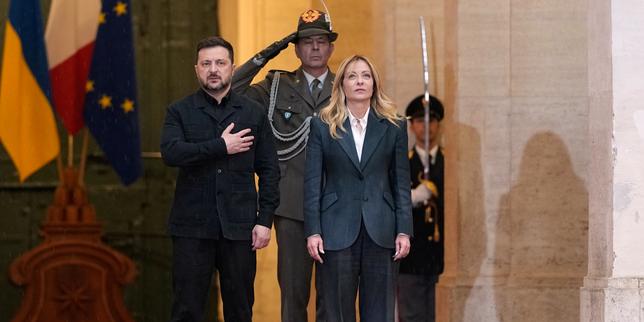
While the trenches are a meat grinder, Volodymyr Zelensky is playing the long game in Europe. He just landed in Rome to meet with Italian Prime Minister Giorgia Meloni. This isn't just a courtesy call or a photo op. Italy has become a surprisingly fierce advocate for Ukraine under Meloni's leadership, defying some of the early skeptics who thought her coalition might waver toward Moscow.
Zelensky is there because he needs more than just "thoughts and prayers." He needs air defense. He needs long-range capabilities. Most importantly, he needs to ensure that Italy stays the course as the European Union navigates internal friction regarding long-term military funding. Meloni has been clear—Italy supports a "just peace," but they know a just peace doesn't happen if Ukraine loses the ability to defend its skies.
Why the Russian Offensive is Speeding Up Now
Russia's timing isn't accidental. They’re trying to capitalize on a window of opportunity before weather conditions worsen and before new tranches of Western equipment fully integrate into Ukrainian brigades. By ramping up the pressure across the entire line, they force Kiev to make impossible choices. Do you pull seasoned troops from the north to hold the collapsing flank in the south? Or do you hold your ground and risk a breakthrough elsewhere?
It’s a classic strategy of exhaustion. Putin is betting that the West will blink first. He’s betting that the "Ukraine fatigue" we hear about in news cycles will translate into a total halt of ammunition shipments. But from what we’re seeing in Rome today, that bet might not pay off as easily as the Kremlin hopes. Zelensky’s "Victory Plan" is being shopped around European capitals precisely to prevent this exhaustion from setting in.
The Reality of the Front Line Stalemate
Don't let the word "offensive" fool you into thinking Russia is making lightning-fast gains. They aren't. They’re trading thousands of lives for meters of dirt. The casualty rates are staggering. British intelligence and various open-source monitors suggest Russian daily losses are at some of their highest levels since the full-scale invasion began.
Ukraine is fighting a mobile defense. They give up space to save lives, then counter-attack where the Russians get overextended. It’s a brutal, high-stakes chess match played with artillery and FPV drones. The drones have changed everything. You can't move a tank platoon without being spotted in minutes. You can't gather infantry for a push without a swarm of Mavics dropping grenades on your head.
Italy Role as a Strategic Anchor
Meloni’s support matters because it bridges the gap between the hardline Atlanticist view and the more cautious Mediterranean European perspective. When Italy speaks, countries like France and Germany listen. The Rome meeting focuses on the "SAMP/T" air defense systems—the Franco-Italian tech that can intercept ballistic missiles. For a city like Kiev or Kharkiv, one of these systems is the difference between a functioning power grid and a dark, freezing winter.
Zelensky’s visit also touches on the G7. Remember, Italy held the G7 presidency recently and pushed hard for using frozen Russian assets to fund Ukrainian defense. That’s billions of dollars. Moscow hates this. They’ve threatened "retaliation," but Meloni hasn't flinched. It’s a display of political steel that keeps the European coalition from crumbling under the weight of high energy prices and populist rhetoric.
Logistics are Winning and Losing this War
You can talk about bravery all day, but wars are won by the guys driving the trucks and the factories making the shells. Russia has shifted to a total war economy. They’re getting shells from North Korea and drones from Iran. Ukraine is relying on a patchwork of Western systems that sometimes don't talk to each other.
The "intensification" Kiev is talking about is partly an artillery duel. Russia still holds a significant advantage in the number of shells fired per day. Ukraine is trying to close that gap with precision. They don't need to fire ten shells to hit a target if they can do it with one Excalibur round or a well-placed drone strike. But precision has its limits when the enemy is willing to throw wave after wave of "meat assaults" at your positions.
What to Watch in the Coming Days
The situation is incredibly tense. Keep your eyes on the Pokrovsk axis. If that rail hub falls, logistics for the entire Donetsk region get a lot more complicated for Ukraine. Simultaneously, watch the diplomatic fallout from the Rome summit. If Italy announces a specific, massive new aid package, expect a "retaliatory" missile strike from Russia within 48 hours. That’s their standard operating procedure.
Zelensky isn't just asking for weapons; he's asking for a seat at the table for a future that doesn't involve being a Russian satellite state. Every meeting with leaders like Meloni solidifies Ukraine's place in the European family. It’s a slow process, but it’s happening alongside the thunder of the guns.
Immediate Tactical Realities
If you're looking for the bottom line, here it is. Russia is trying to force a climax before the end of the year. They want to grab as much territory as possible to go into any potential negotiations from a position of strength. Ukraine is trying to hold the line while begging the West to stop being afraid of "escalation."
You should monitor the official reports from the Ukrainian General Staff and the Institute for the Study of War (ISW) for granular troop movements. Don't rely on single-source Telegram channels that often spread panic or false victories. The truth is usually found in the middle of the carnage—a grueling, painful struggle for every inch of Ukrainian soil. Stay updated on the air defense deliveries coming out of the Rome talks, as those will dictate how many civilians survive the coming month. Use reliable live maps to track the shifting gray zones near Vuhledar and the northern border regions. Support local initiatives that provide first aid kits directly to the brigades on the zero line. The fight is far from over. Efforts in Rome might just be the pivot point Ukraine needs to survive the winter.