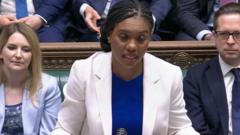
Britain’s military strategy is in a state of chaotic transition. The newly unveiled Defence Investment Plan was supposed to showcase international strength ahead of the upcoming NATO summit. Instead, it triggered a furious political storm in the House of Commons, exposing a massive black hole in how the nation intends to pay for its security.
During a bruising encounter at Prime Minister’s Questions, Conservative leader Kemi Badenoch hit Prime Minister Keir Starmer where it hurts. She pointed directly at a gaping £5 billion shortfall in the plan’s funding. This is not just typical parliamentary theater. The argument lays bare a fundamental crisis at the heart of British governance: you cannot build a lethal military while refusing to face the reality of the nation's balance sheet.
The Friction Behind the Numbers
The government is pitching this new plan as a historic upgrade. Starmer promised an extra £15 billion for the armed forces, featuring a massive investment in drone warfare and an ambition to make the army ten times more lethal. On paper, it sounds impressive. The headline figure claims the UK will reach 2.69% of GDP on defence by 2030.
But look past the spin and the strategy unravels.
- The military explicitly stated it needed £28 billion. The government provided roughly half.
- Former Defence Secretary John Healey resigned earlier this month specifically over these funding shortfalls.
- The plan still leaves the UK more than £25 billion a year short of its ultimate 3.5% GDP commitment to NATO.
Badenoch didn't hold back. She pressed Starmer on exactly where the missing £5 billion would come from. The current leadership claims existing budget headroom will cover the gap outside of a formal spending review. It's a tough sell. When a plan causes your own Defence Secretary to walk out the door, something is deeply broken.
Welfare vs Warfare
The core of this political gridlock comes down to an uncomfortable truth. You have to choose what to prioritize. Badenoch argued that the administration is trapped because it refuses to reform welfare spending. In her view, the only ways to find this money are to raise taxes, borrow more, or cut public spending elsewhere.
Starmer shot back, accusing the opposition of "faux outrage." He pointed out that the previous Conservative administration oversaw massive spikes in welfare alongside a 14-year hollowing out of the armed forces. It’s the classic Westminster blame game. Meanwhile, the current troop numbers are thin, equipment pipelines are delayed, and the global security climate is deteriorating rapidly.
While Poland and Germany aggressively ramp up their hardware spending, the UK is trying to play catch-up with accounting tricks. The government's defense is that they have delivered real-term increases outside the normal budget cycle. But shifting money from road projects or banking on unproven fiscal headroom doesn't inspire confidence in frontline personnel.
The Actionable Reality for UK Security
The political dust will settle, but the strategic vulnerability remains. For anyone tracking the defense sector, the immediate path forward requires moving past the political point-scoring and focusing on structural reform.
- Prioritize Domestic Procurement Efficiency: With limited cash, the Ministry of Defence must fix its notoriously wasteful procurement cycles. Pouring money into bureaucratic delays helps no one.
- Commit to Asymmetric Tech: The £5 billion designated for drone technology is a start, but it needs immediate deployment. Mass-produced, cheaper tech must fill the gaps left by a shrinking conventional force.
- Be Honest About the NATO Target: Pretending the UK is on an "ironcast" path to 3.5% GDP while missing the mark by tens of billions damages international credibility. The government needs to lay out a realistic tax or spending framework to fund its geopolitical ambitions.
Relying on legacy prestige won't work anymore. If Britain wants to remain a serious player on the global stage, it has to stop treating national defense like an afterthought in an internal budget dispute.