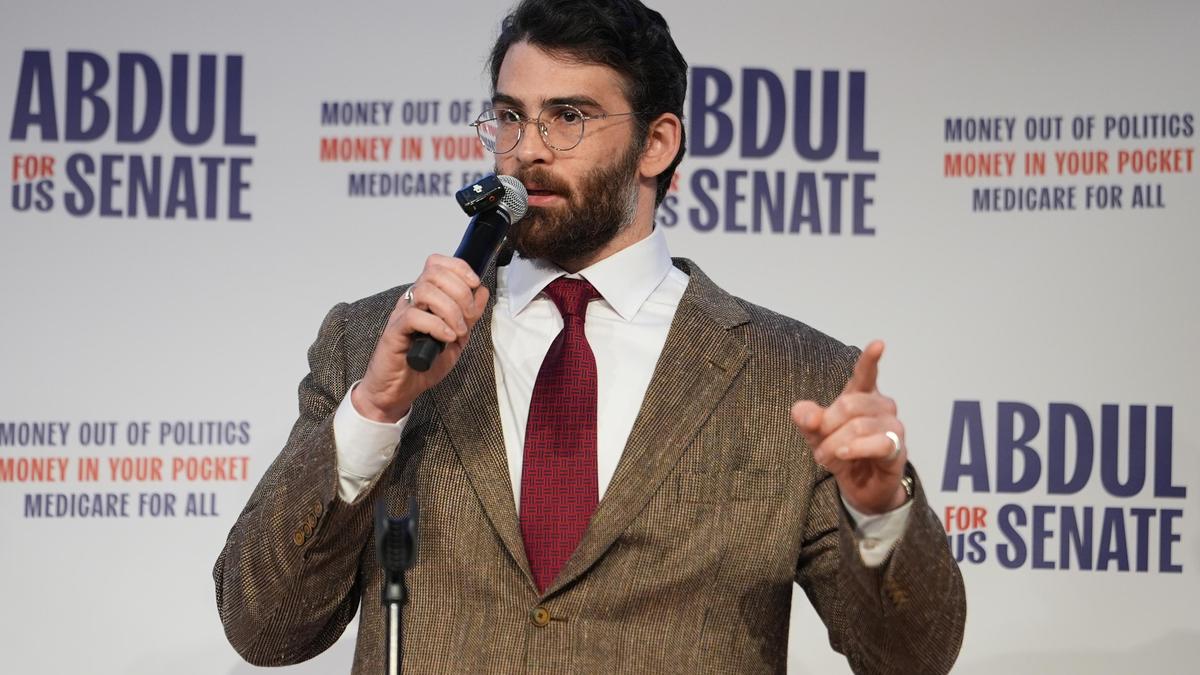
Free speech stops at the border. That's the unmistakable message from the British Home Office after it abruptly canceled the Electronic Travel Authorizations for progressive American commentators Cenk Uygur and Hasan Piker.
They weren't planning an underground political rally. They were booked for highly public, mainstream gigs. Uygur, the founder of The Young Turks, was scheduled to debate at the prestigious Oxford Union and present a lecture at the SXSW London festival. Piker, his nephew and a massive Twitch streaming star, had a headline slot at the same tech and culture festival. Instead, both found themselves barred from boarding their flights to London.
It's a stark reminder of how aggressively the British government will use its immigration laws to police political discourse.
The Conducive to the Public Good Clause
When the British government wants someone gone or kept out, they use a specific legal mechanism. The Home Office canceled the travel documents under guidelines stating that their presence "may not be conducive to the public good."
What does that actually mean? It means the state has determined your ideas, your past rhetoric, or your potential to spark unrest makes you a liability on British soil.
The Home Office released a statement directly confirming the move. They stated that decisions to refuse entry are based solely on an assessment of the potential risk an individual poses to U.K. society.
The political fallout was immediate. Uygur and Piker wasted no time taking to social media to blast the decision, alleging that the British state acted explicitly to suppress their vocal opposition to Israeli military actions in Gaza. Uygur asked his followers on X if anyone is truly free anymore. Piker went further, claiming the British government revoked his visa at the behest of Israel.
But the reality behind the ban is far more complicated than a simple critique of foreign policy.
The Real Reasons Behind the Border Block
Government insiders and media reports paint a different picture. The decision to block the duo wasn't sparked by a routine critique of a foreign government. It was driven by serious anxieties regarding a surge in domestic antisemitism and community polarization.
Reports indicate that authorities were deeply concerned with the rhetoric used by both commentators. Piker has previously generated severe backlash for comparing Zionists to Nazis, using derogatory terms toward Orthodox Jews, and making highly controversial statements regarding the October 7 attacks and Hamas. Uygur has faced intense scrutiny for utilizing tropes that critics argue border on classic antisemitism, including assertions regarding external control over American political systems.
With tensions running incredibly high across major British cities, the Home Office decided that allowing two highly influential internet firebrands to take the stage would act as an accelerant.
We can look at the stark domestic reality to see why the government is so twitchy.
- The U.K. recently raised its domestic terrorism threat level to severe.
- Physical attacks, including the high-profile stabbing of two Jewish men in London's Golders Green neighborhood, have put police on high alert.
- Lawmakers have faced intense pressure from advocacy groups to enforce consequences when public figures cross the line from political commentary into perceived hate speech.
Deplatforming Across the Political Spectrum
If you think this is a coordinated purge targeting only the political left, you haven't been paying attention to British border policy. The Home Office has been handing out entry bans like parking tickets, hitting every corner of the ideological map.
Just last month, the British government barred 11 individuals classified as foreign far-right agitators. They were scheduled to speak at an event linked to anti-Islam activist Tommy Robinson. Go back to April, and the government barred American rapper Ye from entering the U.K. ahead of a scheduled summer festival appearance following his string of antisemitic outbursts.
The state doesn't care about your specific political affiliation. It cares about public order.
The political class in the U.K. is entirely fractured over the strategy. David Taylor, a Labour Member of Parliament, publicly defended the exclusion of Piker. He argued that the U.K. has absolutely no obligation to open its doors to figures who spread division or show sympathy for proscribed groups. Conversely, Green Party leader Zack Polanski accused the government of actively working to silence legitimate critiques of foreign state actions.
The Chilling Effect on Global Media
This isn't just a local British news story. It sets a massive, dangerous precedent for international journalists, creators, and public intellectuals.
If you're a digital creator with millions of followers, your business relies on international travel, live events, and global networking. The SXSW London festival is supposed to be a hub for technology and creativity. Uygur's scheduled talk didn't even mention the Middle East. It was titled "Techno-Feudalism is Here: Who Are the Lords?" Piker was set to analyze digital culture in a session titled "How the American Left Learned to Speak the Internet."
None of that mattered. The moment your digital footprint contains rhetoric that a foreign state deems a risk to public order, your ability to conduct global business evaporates.
The U.S. political establishment has noticed. Over the past year, both Donald Trump and JD Vance have voiced open concern regarding what they view as a crumbling landscape for free speech inside the United Kingdom. This latest move will almost certainly worsen the growing diplomatic friction between Washington and London over free expression.
How Global Creators Must Navigate Border Rules
The era of assuming a valid passport and an electronic travel authorization guarantees entry is completely over. Western democracies are actively monitoring digital output, streaming archives, and social media feeds before letting visitors cross immigration checkpoints.
If you are a media professional or political commentator traveling internationally for speaking engagements, you need to alter your approach immediately.
First, realize that your content archive is completely transparent. Border agencies use automated tools to scan public statements of high-profile visitors. If you have used language that violates local hate speech laws, you must anticipate border friction.
Second, ensure your hosting organizations are fully briefed. If you're invited to speak at an institution like the Oxford Union or a major commercial festival, their legal teams need to review your entry compliance weeks in advance, not days.
Ultimately, this ban proves that the internet might be borderless, but physical reality isn't. The digital world allows you to build an audience of millions across oceans, but a few strokes of a pen in a government office can still ground your plane before it ever leaves the tarmac.