Stop looking at the arms.
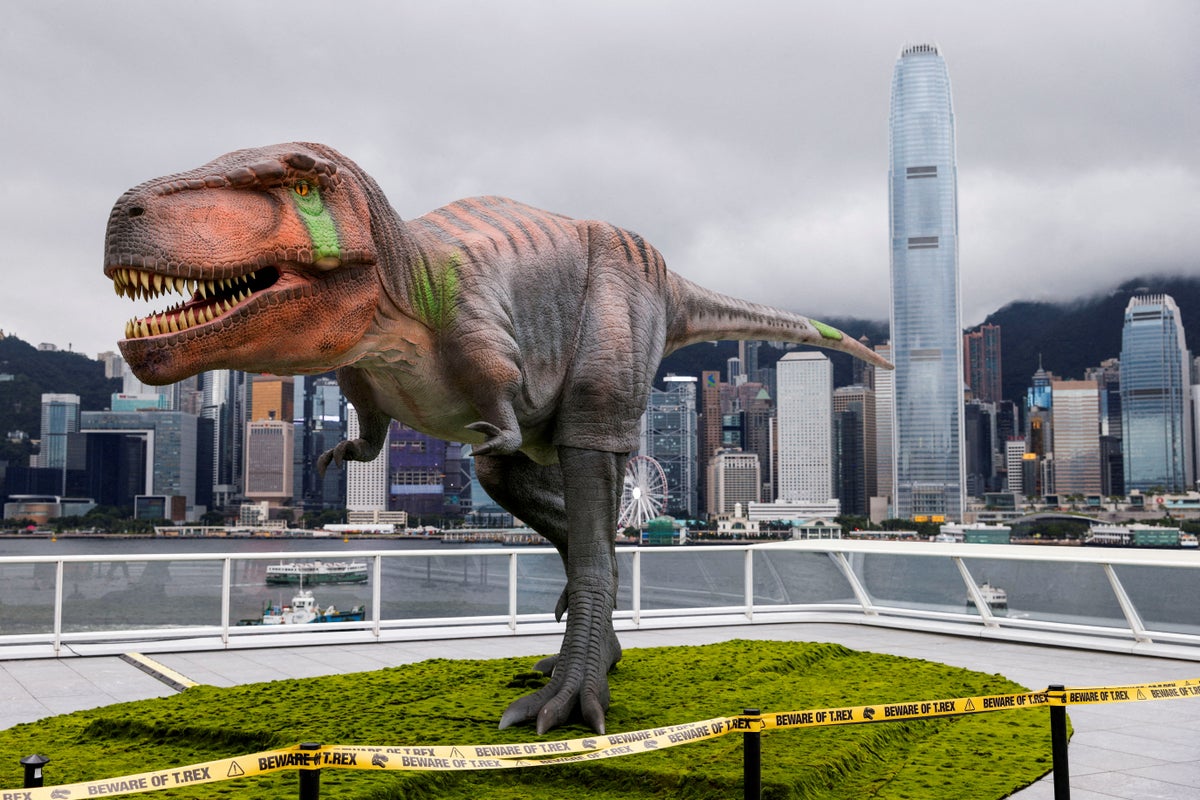
For over a century, paleontology has suffered from a collective fixation on two dangling, two-fingered limbs that barely reached a Tyrannosaurus rex’s mouth. Pop-science writers treat those arms like an evolutionary punchline. Academic consensus tries desperately to justify them, spinning elaborate theories about mating claspers, carcass-slashing weapons, or accidental shrinkages designed to keep them from being bitten off during frenzied group feedings.
It is all a distraction.
The entire debate rests on a fundamentally flawed premise: the idea that every single anatomical feature on an organism must possess a distinct, adaptive purpose. This is adaptationism at its worst. By demanding a utilitarian explanation for the T. rex’s tiny limbs, we miss the actual masterclass in evolutionary mechanics happening right in front of us.
The T. rex did not have small arms because they served a secret function. It had small arms because it stopped using them, and evolution does not tolerate waste.
The Biomechanical Trade-Off
Evolutionary biology operates on a strict energy budget. Building bone, maintaining muscle mass, and running nerve pathways requires massive caloric investment. In a closed biological system, you cannot scale up one weapon system without scaling down another.
Consider the mechanics of a hyper-carnivore. The ancestral theropods—the early, bipedal predatory dinosaurs—had relatively balanced proportions. They possessed long arms with functional hands to grasp prey, paired with moderately sized jaws.
Then came the specialized shift toward apex predation.
As the tyrannosaur lineage evolved, their hunting strategy leaned heavily into crushing force. The skull expanded to accommodate massive jaw-closing muscles like the M. adductor mandibulae. The neck thickened to support a skull that could exert over 12,000 pounds of pressure per square inch, capable of shattering bone.
[Ancestral Theropod: Functional Arms + Moderate Jaws]
                      │
                      ▼ (Evolutionary Pivot)
[Tyrannosaurid: Atrophied Arms + Bone-Crushing Jaws]
When your entire head becomes a 1,000-pound kinetic weapon, your center of mass shifts dramatically forward. To maintain bipedal balance, something had to give. If T. rex had retained long, muscular arms alongside that colossal skull, it would have tipped forward into the dirt.
To counterbalance the ultimate skull, the arms had to shrink.
The Fallacy of the Vestigial Joke
Mainstream articles love to trot out the theory that T. rex arms were powerful weapons despite their size. They point to thick cortical bone and muscle insertion scars, claiming the limbs could curl 400 pounds.
Let us run a simple thought experiment. Imagine a predator weighing nine tons, standing twenty feet tall, and measuring forty feet from nose to tail. It is staring down a multi-ton Triceratops. Does it make any tactical sense for that predator to close the distance to within three feet—putting its vulnerable chest directly in range of defensive horns—just to use a pair of arms with a three-foot reach?
Of course not.
The presence of muscle tissue does not automatically imply a high-priority survival function. It merely indicates that the organ has not completely disappeared yet. Vestigial structures often retain residual musculature simply because the genetic blueprint takes millions of years to completely phase them out.
Look at the modern kiwi bird. Its wings are entirely useless, hidden beneath hair-like feathers, yet they still possess tiny vestigial bones and muscles. We do not write academic papers inventing complex tactical uses for a kiwi's wing. We recognize it for what it is: evolutionary baggage. The T. rex was caught in the middle of that exact same down-sizing process when the asteroid struck.
The Problem With the Feeding Frenzy Theory
A recent, highly publicized hypothesis suggests that tyrannosaurid arms shrank to avoid accidental amputation during group feeding sessions. The argument goes: multiple T. rex individuals are tearing apart a carcass, a stray bite occurs, and suddenly a long arm is severed, leading to infection and death. Therefore, natural selection favored individuals with shorter limbs.
This argument falls apart under basic ecological scrutiny.
First, it assumes that T. rex was a habitual, obligate pack hunter that fed in chaotic, crowded conditions similar to modern spotted hyenas. The fossil evidence for communal tyrannosaur behavior is sparse, based on rare multi-individual trackways and bonebeds that could easily represent catastrophic mass mortality events rather than a permanent social structure.
Second, it invents an incredibly convoluted evolutionary pressure to solve a problem that apex predators handle through behavior, not anatomy.
Crocodilians engage in brutal, chaotic group feedings known as "death rolls." They frequently bite off each other’s limbs. Yet, over 250 million years, crocodiles have not evolved tiny, withered legs to avoid this. They simply tolerate the occasional loss because their immune systems are profoundly robust.
To suggest that T. rex restructured its entire upper skeleton just to avoid a clumsy dining accident is a massive stretch. It applies a hyper-specific behavioral explanation to a broad macroevolutionary trend.
What People Also Ask: The Flawed Assumptions
When you look at public interest queries surrounding dinosaur anatomy, the same fundamental misunderstandings appear repeatedly.
Did T. rex arms have claws for slashing?
Yes, they had two claws. No, they were not effective weapons. When your primary weapon is a mouth that can swallow a human whole, relying on a three-foot arm extension to slash an enemy is an evolutionary step backward. Any damage inflicted by those claws would be mathematically insignificant compared to a single bite from the jaws.
Could T. rex push itself off the ground with its arms?
Some researchers suggest that T. rex used its arms to stabilize its torso when rising from a resting position. While physically possible, this is akin to using a toothpick to prop up a bowling ball. The massive pelvic bones, powerful hind limbs, and heavy tail provided more than enough leverage and counterweight to lift the animal's body without needing assistance from minuscule pectorals.
Why didn't the arms disappear completely?
Evolution takes time. The tyrannosaurid family was at the absolute peak of its evolutionary trajectory when the Cretaceous-Paleogene extinction event occurred 66 million years ago. Had they been given another ten or twenty million years, it is highly probable that the arms would have vanished entirely, leaving them completely armless like the avian descendants that followed.
Embracing Evolutionary Neutrality
The real discomfort with admitting that T. rex arms were largely useless stems from a deep-seated resistance to evolutionary neutrality. We want nature to be perfect. We want every detail of a creature to be finely tuned, polished, and optimized for survival.
The reality is far messier.
Genetic drift, historical contingency, and structural constraints play massive roles in shaping anatomy. Sometimes, a trait changes simply because it is linked to another, more important trait. When genes select for increased skull size and jaw pressure, those same genetic pathways can cause a cascading, downward effect on other parts of the skeletal blueprint.
The T. rex was not a perfectly engineered machine designed to use every square inch of its body. It was a biological compromise—a terrifyingly effective mouth attached to a massive pair of legs, carrying around the shrinking remnants of an ancestral past it no longer needed.
Stop looking for a hidden purpose in the small arms. The real story is how spectacularly irrelevant they had become.