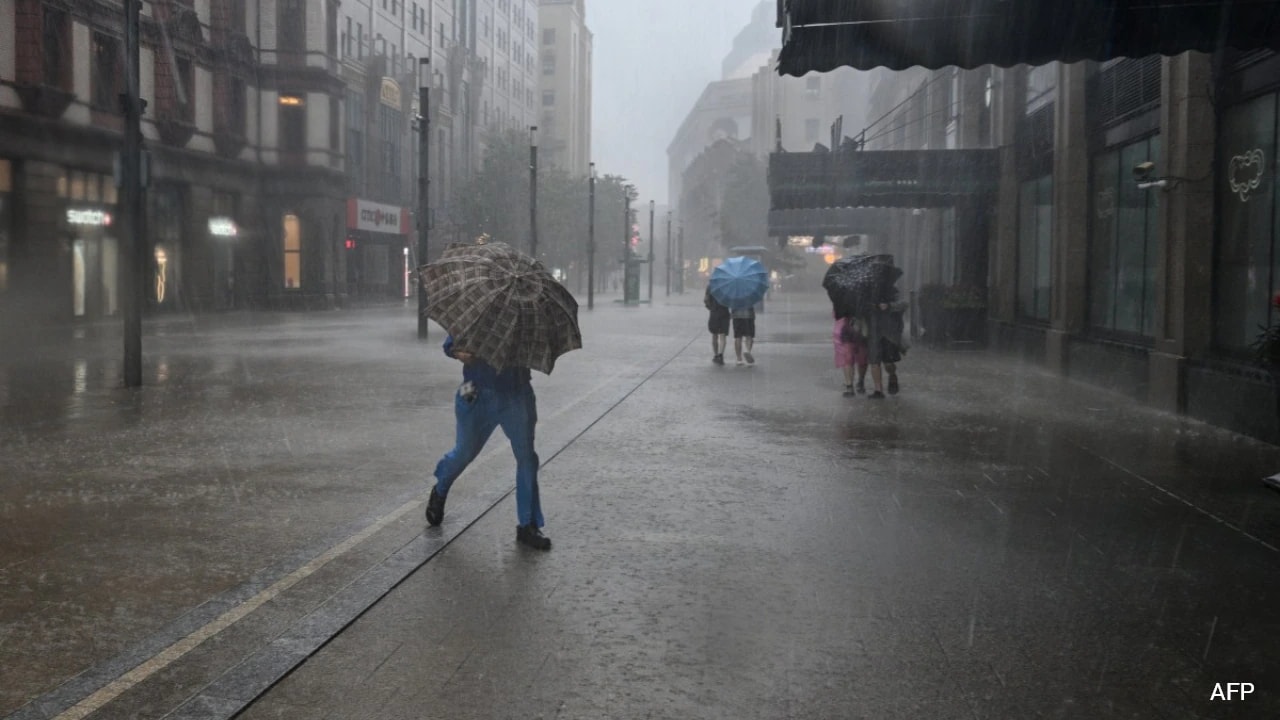
When a storm packs sustained winds hitting 150 kilometers per hour right into a densely populated coastline, panic isn't an option; rapid relocation is. That is precisely what happened when Typhoon Dolphin slammed into eastern China, leaving meteorologists tracking one of the most violent weather events of the year.
If you are wondering how a modern economic powerhouse handles a system of this magnitude, the scale is staggering. More than one million people packed their bags and fled inland. Cities turned into holding zones for emergency responders, and the aviation sector ground to an absolute halt.
The Anatomy of a Red Alert
China's National Meteorological Centre didn't mince words. They issued their highest-level red alert as the cyclone barreled toward Zhejiang province. Dolphin first made landfall near Yuhuan, packing incredible destructive power before hitting Wenzhou an hour later.
Most people underestimate how fast a typhoon can paralyze an entire region. It is not just about the wind tearing roofs off buildings. It is about the sheer volume of water falling from the sky. Forecasts warned that certain areas could see up to 500 millimeters of rainfall. That transforms streets into rushing rivers and triggers massive landslides in vulnerable mountain zones.
Local governments didn't wait for disaster to strike. Wenzhou alone relocated over 900,000 residents into emergency shelters. Taizhou evacuated another 390,000. Even outside the direct impact zone, Shanghai pulled thousands of people out of low-lying districts before things got ugly.
Grounded Planes and Empty Terminals
Air travel across eastern China evaporated overnight. If you had plans to fly through Shanghai's Pudong or Hongqiao airports, you spent your day staring at cancellation boards.
Nearly 1,400 flights vanished from schedules in Shanghai alone. Hangzhou's airport cut hundreds of inbound and outbound routes. Rail networks suspended operations, ferry services across various coastal routes dropped anchor, and major shipping ports halted fuel loading operations entirely.
Tourist hotspots felt the squeeze too. Major attractions, including segments of Shanghai's Disneyland and outdoor viewing platforms along the Bund waterfront, locked their gates.
The Broader Regional Toll
Dolphin didn't just materialize out of nowhere. Before hitting the Chinese mainland, the storm chewed through Taiwan's northern sectors, shutting down ferry lines and canceling dozens of flights. Japan's Okinawa islands also took a beating, knocking out power to thousands of homes and injuring residents. Even the Philippines felt the indirect lash, as the system amplified seasonal monsoon rains that caused separate flooding issues and landslides.
Meteorologists note that while Dolphin was downgraded to a tropical storm shortly after landfall, the danger didn't pass. Remnant moisture continues to dump torrential rain across neighboring provinces like Anhui, Jiangsu, and Henan.
Emergency crews remain on high alert as rivers swell and saturated hillsides threaten further movement. Transit hubs are slowly bringing services back online, but getting millions of displaced residents back to normalcy will take weeks.
:max_bytes(150000):strip_icc()/ar-American-Cheese-taste-test-horizon-4x3-54cc339550cd44b9a818c17bdfd5428d.jpg)