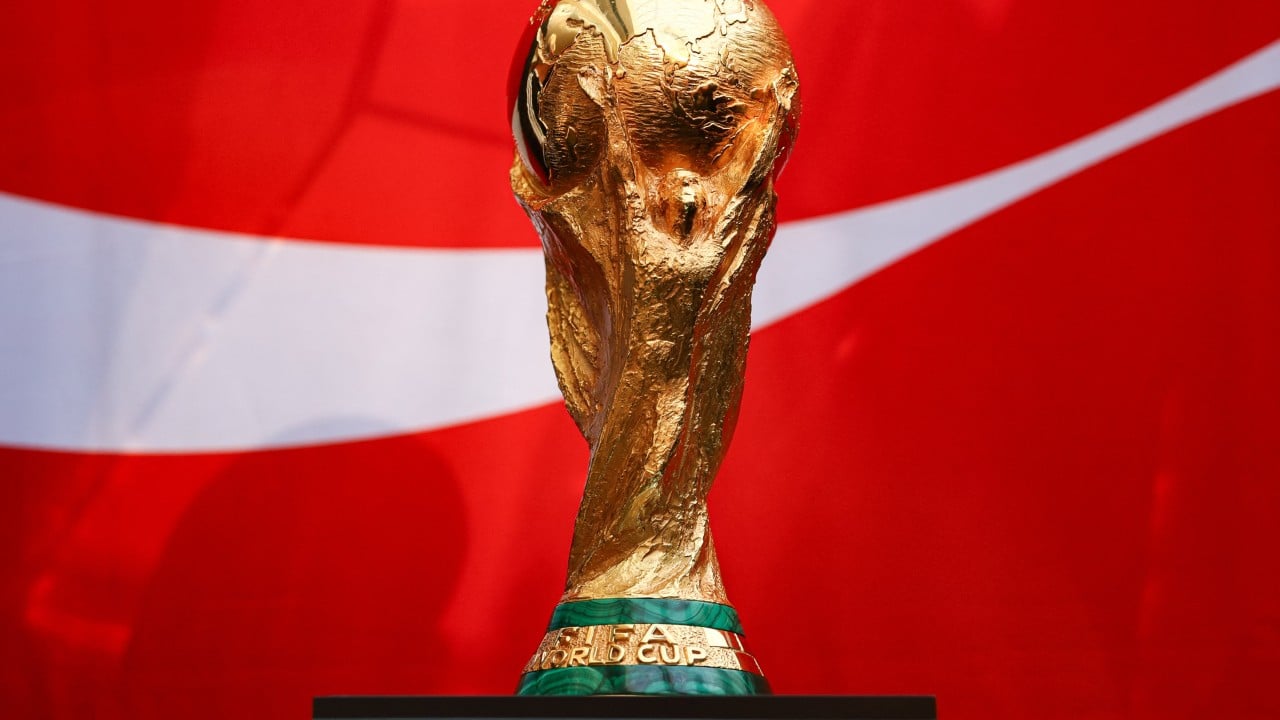
Financial analysts love a good hype cycle, and the 2026 World Cup has handed them a golden ticket. Media outlets and institutional researchers are fawning over reports that the iconic FIFA World Cup trophy has seen its bullion value surge over 150% since 2022, now sitting at roughly $713,000. They package this as a masterclass in macroeconomic trends, pointing to central bank demand and trade uncertainties to explain why 4.93 kilograms of pure gold has appreciated nearly thirtyfold since 1974.
Then come the sports business appraisers, who slap a hypothetical $20 million valuation on the object if it ever hit the auction block. Meanwhile, you can explore related events here: The Dark Side of Using Buy Now Pay Later for Everyday Bills.
It is a beautiful narrative. It is also a total misunderstanding of asset liquidity, ownership structures, and how value actually functions in the real world.
The financial obsession with the melt value or theoretical auction value of the World Cup trophy is a distraction. I have spent decades watching corporations, investors, and sporting bodies overvalue illiquid legacy assets based on spreadsheet math that fails the moment it hits reality. The truth about the world’s most famous sports prize is far more cynical: as a financial asset, its value is exactly zero. To explore the bigger picture, we recommend the excellent report by Harvard Business Review.
The Myth of the $20 Million Asset
To call something an asset worth $20 million implies a market exists where that value can be realized. For the FIFA World Cup trophy, that market is a fantasy.
Let's look at the mechanics of what is actually being measured. The trophy stands 36.8 centimeters tall, made of 6.175 kilograms of 18-carat gold, resting on bands of malachite. The London Bullion Market Association (LBMA) tracks gold spot prices down to the penny, and yes, if you melted the sculpture down, the physical commoditized metal is worth about $713,000 in today's market.
But nobody is melting down Silvio Gazzaniga’s masterpiece.
The $20 million figure tossed around by sports marketing groups is based on scarcity and historical provenance. If a piece of the true cross or the Mona Lisa went to Sotheby's, wealthy collectors would drive the price into the stratosphere. But those items can theoretically be bought and sold. The World Cup trophy cannot.
FIFA holds absolute, unyielding ownership of the authentic trophy. Under current regulations, winning nations do not even get to keep the original. During the final whistle celebrations, players lift the real gold trophy. The moment the cameras turn off, FIFA officials confiscate it under armed guard. The winning federation is handed a gold-plated bronze replica manufactured by GDE Bertoni in Italy.
Because the original asset can never legally enter the open market, establishing a market valuation is completely meaningless. It cannot be leveraged as collateral. It cannot be depreciated on a balance sheet to offset tax liabilities. It cannot be sold to bail out a bankrupt federation. It is a locked artifact, functioning purely as a marketing prop for Zurich.
The Flawed Logic of Sports Trophy Valuations
To understand how absurd the conversation around the World Cup trophy's market value is, we have to look at how other iconic sports prizes are treated. The financial media uses material composition as a lazy proxy for prestige.
| Trophy | Primary Material | Melt Value | Estimated Market Value |
|---|---|---|---|
| FIFA World Cup | 18-Carat Gold | $713,000 | $20,000,000 |
| Borg-Warner (Indy 500) | Sterling Silver | $156,000 | $3,500,000 |
| Woodlawn Vase (Preakness) | Sterling Silver | $24,860 | $4,000,000 |
| Vince Lombardi (Super Bowl) | Sterling Silver | $7,230 | $50,000 |
On paper, the World Cup trophy obliterates the competition. Look at American sports: Tiffany & Co. crafts a brand-new silver Vince Lombardi trophy every year for the Super Bowl winner. Its melt value is a rounding error, but its value to the franchise is massive because they actually own it.
The Borg-Warner trophy is a massive 69-kilogram silver monolith that stays at the Indianapolis Motor Speedway Museum. Like FIFA, IndyCar keeps the original and gives the driver a miniature replica called a "Baby Borg."
But notice the divergence. No serious financial publication tracks the daily fluctuations of sterling silver to analyze the economic health of motor racing through the lens of the Borg-Warner trophy. Why? Because it is recognized as a museum piece. Yet, because the World Cup happens to be made of gold—the ultimate safe-haven asset for paranoid investors—analysts insist on treating it like a financial instrument.
Using the trophy to track gold market trends is a flawed methodology. If an investor wants to hedge against inflation, they buy gold futures or physical bars. They do not track a sports prize that is structurally immune to market forces.
The Real Cost of Absolute Security
There is a dark irony in FIFA’s obsession with hoarding the original trophy under lock and key. The current model of aggressive security is a direct reaction to historical incompetence.
The original World Cup prize, the Jules Rimet trophy, was a financial disaster waiting to happen. In 1966, it was stolen from an exhibition in London before being found by a dog named Pickles in a suburban hedge. In 1970, after Brazil won its third title, FIFA allowed the Brazilian Football Confederation (CBF) to keep the original permanently, adhering to old rules.
In 1983, thieves walked into the CBF headquarters in Rio de Janeiro, overpowered a night watchman, and walked out with the Jules Rimet. It was never seen again. The prevailing theory is that the thieves melted it down into gold bars, destroying a priceless piece of sporting history for a few thousand dollars of black-market bullion.
When FIFA commissioned the new trophy for the 1974 tournament, they changed the rules forever. They realized that letting federations manage a highly liquid, highly valuable physical asset was an existential threat to the brand.
By pulling the real trophy out of circulation, FIFA protected the physical object but stripped it of its tangible utility. The trophy sitting in a vault in Zurich does not generate capital. The replicas displayed by the German or Argentinian federations are the ones driving fan engagement, ticket sales, and museum revenue. The real asset is dead capital.
Redefining the Asset Class
If the World Cup trophy has no market liquidity and cannot be transferred, what is its actual financial utility?
It is a branding vehicle. The value isn't in the 18-carat gold; the value is in the exclusive intellectual property rights associated with its image. FIFA generates billions of dollars in television rights, corporate sponsorships, and licensing fees every four years. The image of the trophy is the anchor for that entire corporate ecosystem.
When an economic research group publishes a paper claiming the trophy's value has surged 157%, they are engaging in a clever piece of misdirection. They are valuing the container instead of the product. The value of FIFA isn't the gold in their vault; it is their monopoly over global football culture.
Imagine a scenario where the spot price of gold crashes by 80% tomorrow due to the discovery of massive new deposits. The melt value of the World Cup trophy would plunge. Would the tournament lose a single viewer? Would Adidas or Coca-Cola renegotiate their sponsorship deals down? Of course not. The material value is disconnected from the commercial reality.
Stop looking at the bullion charts to calculate what football's greatest prize is worth. The financial media will continue to run the same tired calculations every time gold hits a new historic high, treating a sports icon like an investment portfolio. But an asset you can never sell, never borrow against, and never truly own isn't an investment at all. It is just the world's most expensive marketing expense.