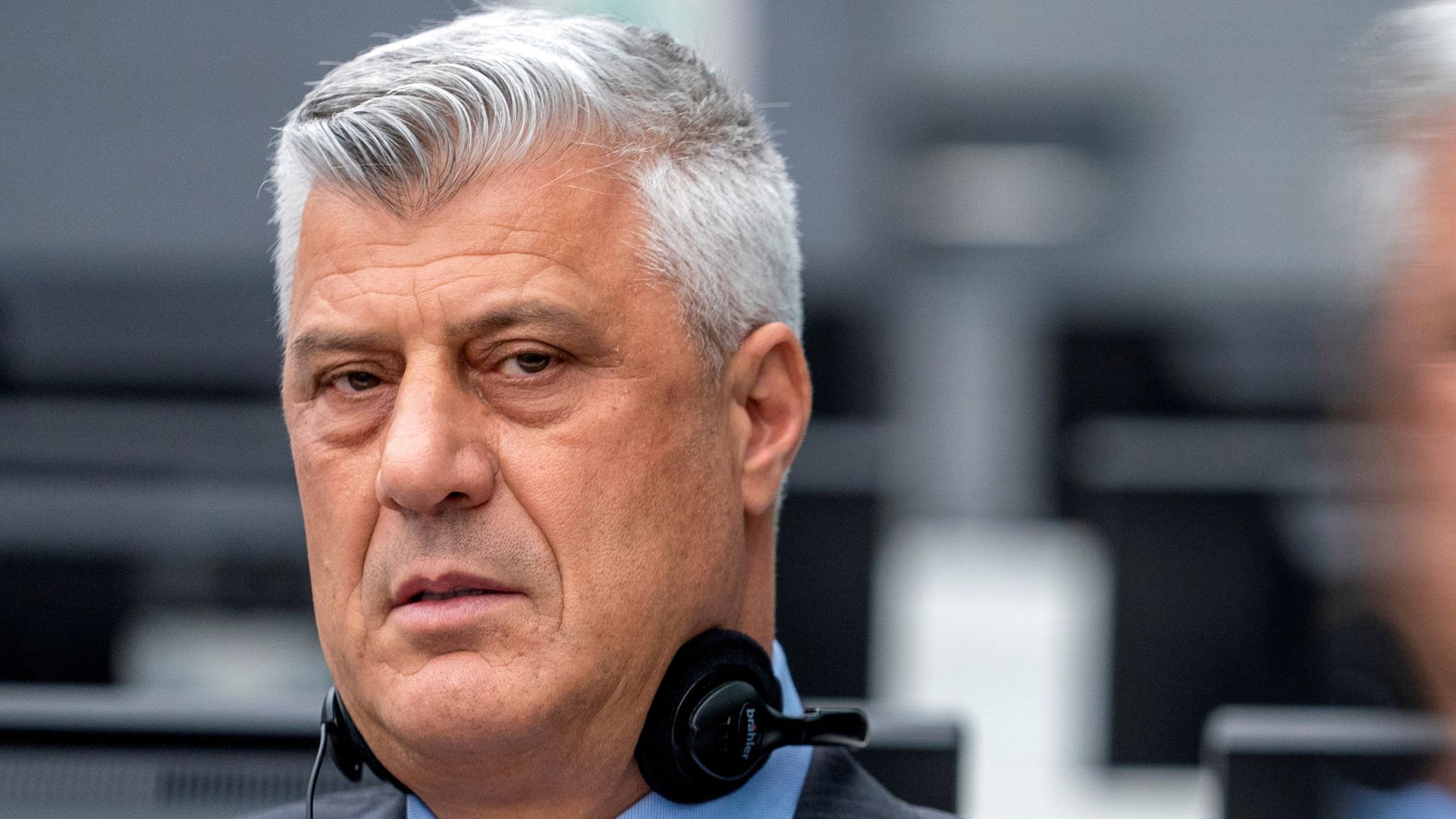
History moves slowly in the Balkans, until it arrives with the sudden weight of a prison sentence. Hashim Thaçi is no longer the triumphant guerrilla commander who helped midwife a new European state or the statesman who signed its declaration of independence. On a quiet morning in September 2026, a special international tribunal in the Netherlands handed down a twenty-five-year prison term to the former president of Kosovo. The verdict closed a chapter of armed struggle and opened a bitter reckoning over the human cost of the late twentieth-century conflicts that fractured Yugoslavia.
For years, the narrative surrounding the Kosovo Liberation Army remained locked in binary opposition. To supporters, the guerrillas were freedom fighters protecting an oppressed ethnic Albanian majority from the brutal state machinery of Slobodan Milošević. To detractors and prosecutors, those same commanders presided over a network of clandestine detention facilities where political rivals, suspected collaborators, and civilians of various ethnicities faced torture, arbitrary imprisonment, and murder. The judgment delivered by the Kosovo Specialist Chambers in The Hague did not try to rewrite that entire war, but it firmly established individual criminal liability for those at the very top of the military hierarchy.
The courtroom drama spanned years of meticulous testimony, witness intimidation concerns, and fierce legal battles. Judges found Thaçi guilty on multiple counts of war crimes, including illegal detention, cruel treatment, torture, and murder. Alongside him, former parliamentary speaker Jakup Krasniqi also received twenty-five years behind bars. Kadri Veseli drew an eighteen-year sentence, while Rexhep Selimi was handed thirteen years. Yet the legal outcome carried notable nuance. The panel acquitted all four men of crimes against humanity, drawing a precise line through the prosecution's sweeping charges while still holding them accountable for specific wartime abuses committed against hundreds of detainees.
Evidence presented during the proceedings painted a grim picture of makeshift prisons established in schools, cowsheds, and basements during the height of the 1998-1999 conflict. Prosecutors detailed the unlawful confinement of at least three hundred eighty-five individuals, alongside dozens of documented instances of severe torture and dozens of murders. Witnesses spoke under the heavy shadow of fear, with community pressures and security risks shadowing the trial from its inception. The tribunal persevered, attempting to project international jurisprudence into a region where justice is frequently viewed through an intensely partisan lens.
Reactions across Pristina and Belgrade revealed the deep chasm that still separates historical interpretations. In Kosovo, where monuments to wartime resistance fill the towns and veterans enjoy revered social status, the verdict was greeted with shock and profound anger. Many citizens view the tribunal not as an impartial instrument of international law, but as a biased mechanism designed to sully a righteous war of national liberation. Political leaders condemned the outcome, arguing that the court unfairly equates a defensive population with an aggressor state responsible for mass expulsions and thousands of civilian deaths.
Conversely, officials in Belgrade watched the proceedings with vindication, though skepticism regarding the severity of the sentences remained palpable among victims associations. Families of missing Serbs, Roma, and ethnic Albanians who crossed the leadership of the insurgency have spent decades searching for answers. For them, any judicial acknowledgment of abuses committed by the guerrilla leadership offers a measure of validation, even if the wounds inflicted a quarter-century ago refuse to close.
The political ramifications inside Kosovo are immediate and profound. Thaçi dominated domestic politics for over two decades, transitioning from underground fighter to prime minister, and eventually to head of state before resigning in late 2020 upon his indictment. His departure from public life left a vacuum that reshaped the nation's political parties. A younger generation of leaders now governs without the direct gravitational pull of the historic commanders who fought the war. Yet the psychological shadow of the liberation struggle persists, influencing every legislative debate, international negotiation, and election cycle.
International actors monitoring the Western Balkans face renewed diplomatic balancing acts. The European Union and the United States invested heavily in building the Kosovo Specialist Chambers precisely to prove that post-conflict accountability applies universally, regardless of which side won the war. That principle now faces its ultimate test on the ground. European capitals worry about domestic instability, protests, or a hardening of nationalist rhetoric that could derail fragile normalization talks between Pristina and Belgrade.
The institutional architecture of the court itself remains a lightning rod for criticism. Operating under Kosovo law but seated in The Hague to protect witnesses and ensure judicial independence, the tribunal represents an unusual hybrid experiment in international criminal justice. Defense teams argued vigorously that the prosecution relied on tainted evidence and coerced statements, signaling that appellate battles will be fiercely contested. Rodney Dixon, representing Veseli, announced immediate plans to appeal the decision, signaling that the legal war is far from over.
Beyond the courtroom rhetoric lies the quiet agony of the victims. The tribunal announced that a timetable for reparations proceedings will follow shortly, addressing compensation for those who survived arbitrary detention or lost family members. Money cannot mend decades of trauma, but financial and moral restitution serves as a tangible metric of accountability. Whether the fledgling state can implement these reparations without provoking renewed social unrest remains an open question.
History does not offer neat closures. The men who organized the armed resistance against Serbian rule built a state, won international recognition, and now carry criminal convictions for the darker corners of that insurgency. As the defendants prepare for appeals and Kosovo absorbs the sobering reality of a quarter-century sentence for its former leader, the nation stands at another crossroads.
For further details on the proceedings and international reactions, you can watch this Ex-President Thaci Guilty Verdict Coverage report. This video is relevant because it captures the live reporting and international context of the Hague tribunal's historic verdict against the former Kosovo president.