The soles of a pair of boots do not wear down evenly. If you turn them over after five hundred miles, you will see the autobiography of the person who wore them written in the rubber—a heavy drag on the outer left heel where an old ankle injury never quite healed, a scuff across the right toe from catching roots in the dark, a smooth, polished bald spot beneath the ball of the foot where the body pivots ten thousand times a day.
Imagine, then, what happens to a human soul after thirty-six thousand miles.
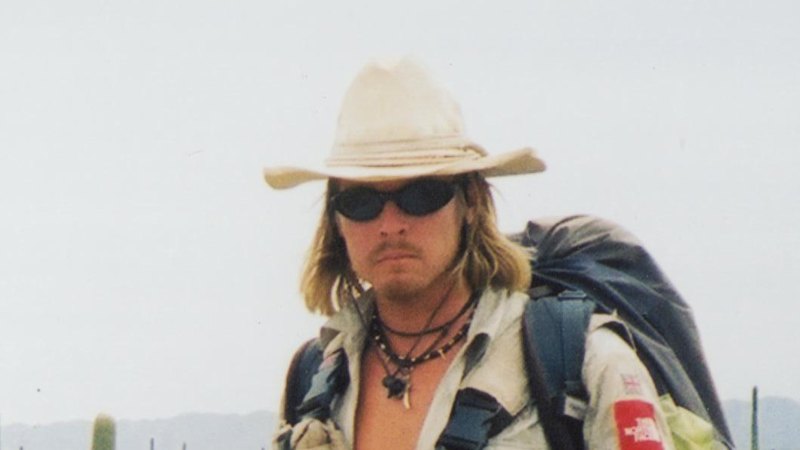
In November 1998, a former British paratrooper named Karl Bushby stepped off the southern tip of Punta Arenas, Chile, with a backpack, a notebook, and a rule that sounded like a barroom dare. He was going to walk home to Hull, England. Not fly. Not take a ferry across a rough strait when the weather turned sour. He would trace an unbroken line of footprints from the bottom of South America, up through the Darién Gap, across the entirety of North America, over the frozen skin of the Bering Strait, through the endless white expanse of Siberia, and west across Europe until he knocked on his father’s front door.
He thought it would take eight years.
Twenty-eight years later, in the late autumn of 2026, Karl Bushby is fifty-seven years old, and he is finally closing in on the English Channel.
Stop and let that number sit in your chest for a second. Twenty-eight. In 1998, the iPhone did not exist. Google was two months old, operating out of a garage in Menlo Park. If you were born the morning Karl laced up his boots in Patagonia, you have grown up, graduated, perhaps married, maybe watched your own hair begin to silver, all while one man kept putting his left foot in front of his right foot.
The Architecture of an Unbroken Line
We live in an era obsessed with frictionless movement. We tap a piece of glass and a car appears at the curb; we board aluminum tubes that hurl us across oceans while we complain about the legroom and the Wi-Fi speed. Because we can cross the planet in twenty hours, we have forgotten how big the Earth actually is. We have shrunk it down to pixels on a screen.
To understand what Karl Bushby did, you have to strip away the romanticized, Instagram-filtered version of adventure. Walking around the world is not a montage of golden sunsets and mountaintop epiphanies. Mostly, it is grey. It is the rhythmic, hypnotic thud of boots on asphalt shoulder, the taste of road dust coating the back of your throat, and the low-grade, persistent ache in your hips that never fully goes away even when you lie down on cold ground to sleep.
Picture a hypothetical commuter—let’s call her Sarah—standing on a train platform in London, checking her watch because the 8:14 is three minutes late. To Sarah, a delay of an hour ruins an evening. A delay of a week ruins a vacation. Now take that impatience, that modern allergic reaction to waiting, and stretch it across nearly three decades.
Karl’s self-imposed rules for the Goliath Expedition were merciless. No motorized transport could advance him a single inch forward. If a visa expired, if a war broke out, if the ice melted before he could cross a river, he had to stop. If he had to fly back to England to raise money or renew a passport, he was required to return to the exact GPS coordinate where he had lifted his foot off the dirt before he could take another step toward Hull.
Think about the psychological weight of that rule. It meant the journey was an elastic band stretched taut across continents. Every time he went home to regroup, the Earth pulled him back to the middle of nowhere.
The Invisible Walls That Nearly Broke Him
When people hear about a twenty-eight-year walk, they naturally assume the greatest enemies were physical. They picture the Darién Gap—that lawless, roadless swamp between Colombia and Panama where venomous snakes, cartel militias, and flash floods swallow travelers whole. Karl walked through it, machete in hand, hacking his way through rotting vegetation while fungal infections ate at his skin. They picture the Bering Strait in March 2006, when Karl and French adventurer Dimitri Kieffer became the first people in modern history to cross the shifting, groaning sea ice from Alaska to Russia on foot—fifty-eight miles of drifting ice pans where one misstep meant freezing to death in pitch-black water within minutes.
And yes, the cold nearly killed him. The jungle nearly killed him. Polar bears stalked his scent across the snow.
Yet the true monsters of the Goliath Expedition were not made of ice or mud. They were made of paper.
The moment Karl stepped off the Bering Strait onto Russian soil in Chukotka, he was arrested by border guards because he had entered the country at a place without an official customs post. The Russian government slapped him with a five-year entry ban. Later came the 2008 global financial crash, which evaporated his sponsorships overnight. Then came shifting geopolitical borders, visa restrictions that limited him to ninety days in Russia out of every one hundred and eighty, and finally, a global pandemic that locked down international frontiers and stranded him in limbo.
You cannot punch a visa denial. You cannot out-march an embassy stamp.
For years at a time, Karl was trapped in a strange purgatory—neither a normal citizen with a mortgage and a career, nor a walker moving forward. He spent months in dreary hotel rooms and borrowed apartments, staring at maps, writing letters to bureaucrats, watching his youth slip away while his boots sat dry in a corner. Anyone who has ever fought through a protracted illness, a bitter legal battle, or years of caregiving knows this specific brand of exhaustion. It is the fatigue of running in place while the calendar pages tear off the wall.
Most human beings would have quit in 2007. Almost all of the rest would have quit in 2013, when Russia banned him again, prompting him to walk three thousand miles from Los Angeles to Washington, D.C., just to petition the Russian embassy in person.
Why didn't he?
To answer that, we have to look at a truth we rarely admit out loud: once a dream becomes large enough, it stops being something you carry and becomes something that carries you. By year fifteen, walking home wasn't just a goal for Karl; it was the architecture of his entire identity. To take a plane home would have meant admitting that the previous fifteen years of suffering had been an exercise in vanity. The sunk cost wasn't measured in dollars. It was measured in missed birthdays, faded friendships, and a life unlived in the ordinary world.
Swimming the Caspian and the Shifting Map of the World
Even the geography of the planet refused to hold still for him.
By the early 2020s, Karl had finally cleared the vast, frozen expanses of Siberia and Mongolia, pushing into Central Asia. To reach Europe without breaking his unbroken-line rule, he faced an impossible bottleneck. To the north lay Russia and the war in Ukraine—closed, dangerous, impassable. To the south lay Iran—a diplomatic nightmare for a former British soldier.
Between them lay the Caspian Sea, the largest enclosed inland body of water on Earth.
He couldn't take a boat. Remember the rule. No motorized transport.
So, in August 2024, at fifty-five years old, Karl Bushby waded into the water in Kazakhstan and swam. Alongside a support team and a fellow swimmer, Angela Maxwell, he spent thirty-one days crossing one hundred and seventy-nine miles of open water, sleeping on support boats anchored at his exact stopping point each night before jumping back into the waves at dawn, arriving on the shores of Azerbaijan battered by salt and currents, having literally swum across a sea to keep a promise he made to himself in the twentieth century.
Pause and consider the sheer stubbornness of that act. When the road ended at the edge of an inland sea, and politics blocked every bridge around it, he treated the ocean like another stretch of highway.
That moment in the Caspian reveals the secret engine behind extraordinary human endurance. We often mistake grit for loud, chest-thumping aggression. In reality, true endurance looks like water. It doesn't argue with the boulder in the stream; it pools, rises, finds a crack, and goes over or around. It takes twenty-eight years because it refuses to break.
The Terrifying Question of Arrival
Now, the finish line is no longer a theoretical dot on a globe. Across Europe, the final miles are ticking down toward the English Channel—another stretch of cold water he will cross without an engine—and the familiar chalk cliffs of England.
Everyone watching this story from the outside is waiting for the triumphant ending. We want the slow-motion footage of him walking down his hometown street in Hull, the banners, the tears, the pint at the local pub, the neat bow tied around an epic human triumph.
We want that because we are terrified of what actually happens the morning after.
Think about what happens to astronauts after they walk on the moon, or Olympic athletes the Tuesday after the closing ceremony. Psychologists have a name for the hollow, echoing depression that follows the completion of a lifelong obsession, though the clinical terms feel too sterile for what Karl is about to face. For nearly ten thousand days, every single decision Karl Bushby made was filtered through one crystal-clear question: Does this get me closer to Hull?
What do I eat today? Whatever fuels the walk.
Where do I sleep tonight? Wherever the road stops.
Who am I? I am the man walking home.
When he steps across the threshold in Hull, that compass shatters. There is no more north, south, east, or west. There is only Tuesday. There is figuring out how to pay a utility bill, how to sit still in a room without feeling the phantom vibration of gravel beneath your heels, how to relate to neighbors whose biggest problem is a broken fence or a delayed parcel.
We spend our lives believing that happiness lives at the destination—the promotion, the paid-off house, the retirement party, the finish line. We tell ourselves that once we arrive, we will finally be at peace. Yet anyone who has ever poured years of blood and solitude into a single mountain knows the quiet dread that waits at the summit: the realization that the climbing was the only thing keeping you warm.
What His Footprints Leave Behind for the Rest of Us
You are probably never going to walk thirty-six thousand miles. You are not going to wrestle a machete through the Darién Gap or swim across the Caspian Sea. Frankly, you shouldn't have to.
Yet Karl Bushby’s long, absurd, magnificent walk holds up a mirror to the quiet compromises we make every single day. Most of us abandon our hardest promises not because they are impossible, but because they take too long. We live in a culture of thirty-day challenges and overnight transformations. If a project doesn't bear fruit in six months, we pivot. If a relationship hits a rough patch in year three, we assume it’s broken. If a skill feels clumsy after a few weeks, we decide we lack the talent.
We underestimate what a human being can accomplish in a year, and we wildly underestimate what a human being can accomplish when they refuse to let the clock dictate their surrender.
Karl walked out of Patagonia when he was twenty-nine years old—young, invincible, certain the world would yield to him in eight years flat. He is coming home at fifty-seven, his face mapped with lines carved by Siberian winds and Patagonian sun, his body held together by scar tissue and sheer habit. The world he is walking into does not resemble the world he left. The people waiting for him are older; some of the people who waved goodbye are no longer here to wave him in.
He did not conquer the Earth. No one conquers the Earth. You can only trace a thin, temporary line across its dust before the wind blows it smooth again.
Somewhere on a road in northern Europe right now, a man in worn boots is taking one step, and then another, carrying twenty-eight years of rain, border guards, frozen oceans, and quiet mornings on his back. He is moving at roughly three miles an hour—the exact speed human beings were designed to travel, the only speed slow enough to actually see the world you are passing through. And when he finally stops moving, the loudest sound in Hull will not be the cheering crowd, but the sudden, deafening silence of a pair of boots hitting the floor for the very last time.