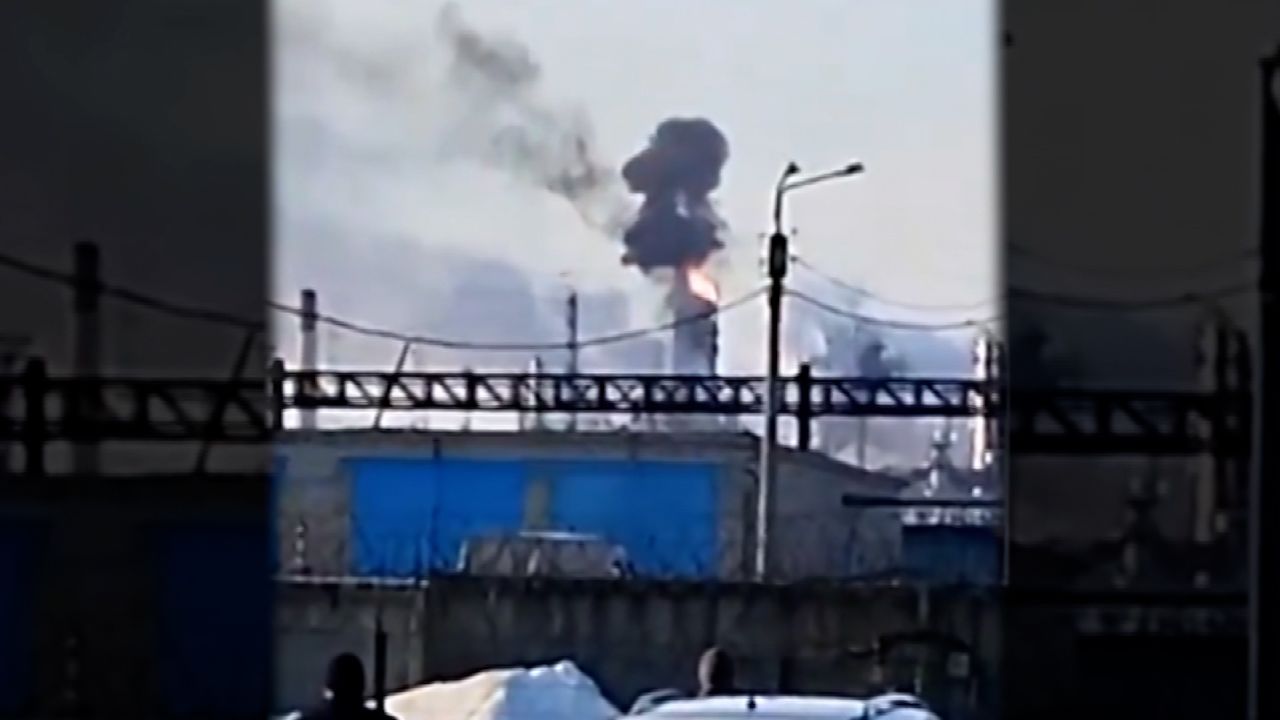
The smoke rising from the Tuapse refinery isn't just a local emergency. It's a loud, burning signal that the Russian energy sector's supposed safety net is shredded. When a drone hits a massive facility owned by Rosneft on the Black Sea coast, it's not just about the fire. It's about the fact that one of the most heavily defended regions in the country just got bypassed by a relatively cheap piece of tech. Local residents were evacuated from nearby buildings as the sky turned orange, but the real fallout is the growing realization that Russia's export machine is sitting in the crosshairs.
This isn't a one-off event. It's part of a systematic dismantling of the logistics that keep the Kremlin’s war chest full. If you’re looking at the maps, Tuapse is a critical node. It’s one of the older refineries, sure, but its proximity to the Black Sea makes it a vital export hub. When it burns, the global oil market flinches, and the Russian internal economy takes a direct hit to its processing capacity. If you enjoyed this piece, you might want to look at: this related article.
The Tuapse Hit and the Failure of Air Defense
We’ve heard the official lines before. Russian authorities usually claim they intercepted every drone or that "falling debris" caused the fire. It’s a tired script. The reality on the ground in Krasnodar Krai tells a different story. Videos from the scene showed massive plumes of smoke and the unmistakable sound of engines before the blast.
The Tuapse refinery sits roughly 450 miles from the front lines. That’s a long flight for a drone. The fact that these units are reaching their targets suggests that Russian air defense—the S-300s and S-400s we hear so much about—is either spread too thin or simply isn't calibrated for small, low-flying targets. You can't protect every square inch of a country that large, and the attackers know it. They’re finding the gaps. They’re exploiting the seams in the radar coverage. For another angle on this development, check out the latest coverage from Associated Press.
Local officials moved fast to clear out the surrounding residential areas. That’s standard protocol, but it reveals the danger these facilities pose to the civilian population when they’re located in urban or semi-urban zones. You have high-pressure tanks, volatile chemicals, and massive fuel reserves sitting right next to where people sleep. It’s a powder keg.
Why the Black Sea Energy Hub is Vulnerable
The Black Sea used to be a Russian lake. Not anymore. Between naval drones and aerial UAVs, the entire coastline from Novorossiysk to Tuapse is a high-risk zone. The Tuapse refinery has an annual capacity of about 12 million tons. That’s roughly 240,000 barrels per day. Losing even a fraction of that output ripples through the system.
Russian oil companies like Rosneft face a brutal dilemma. They need the export revenue to fund operations, but the cost of defending these sites is skyrocketing. They’re installing "anti-drone nets" around storage tanks. It’s basically chain-link fencing on steroids. Does it work? Maybe against a small hobbyist drone. Against a military-grade suicide UAV with a shaped charge? Not a chance.
Refineries are incredibly complex machines. You don't just "fix" a hit to a vacuum distillation unit. These are custom-built pieces of engineering. Because of international sanctions, Russia can’t just hop on the phone and order replacement parts from Western firms like Honeywell or Siemens. They have to scavenge, bypass, or try to build inferior versions themselves. A fire that looks small on a grainy Telegram video can actually knock a plant offline for months.
Economics of the Drone War
It costs a few thousand dollars to build a long-range drone. It costs millions to repair a refinery. The math is ugly for Moscow. Every successful strike forces Russia to pull air defense units away from the front lines to protect their industrial heartland.
- Refinery hits reduce domestic supply, which spikes gas prices for Russian citizens.
- Export disruptions hurt the ruble’s value.
- Insurance costs for tankers in the Black Sea go through the roof.
I’ve seen reports suggesting that nearly 15% of Russian refining capacity has been affected by these strikes at various points over the last year. That’s a staggering number for a nation that brands itself as an energy superpower. They’re being bled dry by "paper cuts" that happen to be filled with high explosives.
The Tuapse incident specifically highlights the vulnerability of the southern route. Most people think of Russian oil moving through pipelines to Europe, but that’s largely a thing of the past. Now, it’s all about the sea. If the ports aren't safe, the oil doesn't move. If the oil doesn't move, the state doesn't get paid.
The Human Cost of Strategic Targets
When the sirens go off in Tuapse, it’s a reminder that the war isn't "somewhere else" for the Russian people. It's at their doorstep. The evacuation of residential buildings near the refinery shows a level of urgency we didn't see earlier in the conflict. People are scared. They’re seeing the pillars of their local economy literally go up in flames.
The psychological impact is arguably as important as the physical damage. It creates a sense of helplessness. If the state can't protect its most prized assets—the refineries that fuel the nation—how can it protect the average person? The social contract in Russia has long been: stay out of politics, and we'll keep the economy stable and the country safe. That deal is looking worse every day.
Practical Realities for Global Markets
If you’re watching oil prices, you need to ignore the daily noise and look at the structural damage. These attacks aren't just "incidents." They are a campaign. Every time a plant like Tuapse gets hit, the global "risk premium" on oil stays high.
- Check the refinery status. Look for "Force Majeure" declarations from Rosneft. If they can’t meet contracts, the price of diesel in Europe and Asia will climb.
- Watch the shipping lanes. Follow the tanker tracking data out of Tuapse. If the volume drops, it means the damage was more than just "cosmetic."
- Monitor air defense shifts. If Russia starts moving more Pantsir systems to the coast, it means they’re desperate.
The Tuapse refinery fire is a symptom of a much larger rot. The technical inability to stop these drones, combined with the lack of spare parts to fix the damage, creates a downward spiral. It’s a war of attrition where the target isn't just a building—it's the very foundation of the Russian state's wealth.
Don't expect this to stop. The success of the Tuapse strike only emboldens further attacks. For anyone involved in energy or geopolitics, the message is clear: the era of "safe" Russian energy infrastructure is over. You should be planning for more volatility and more frequent disruptions in the Black Sea region. Diversify your sources now, because the smoke over Tuapse isn't clearing anytime soon.