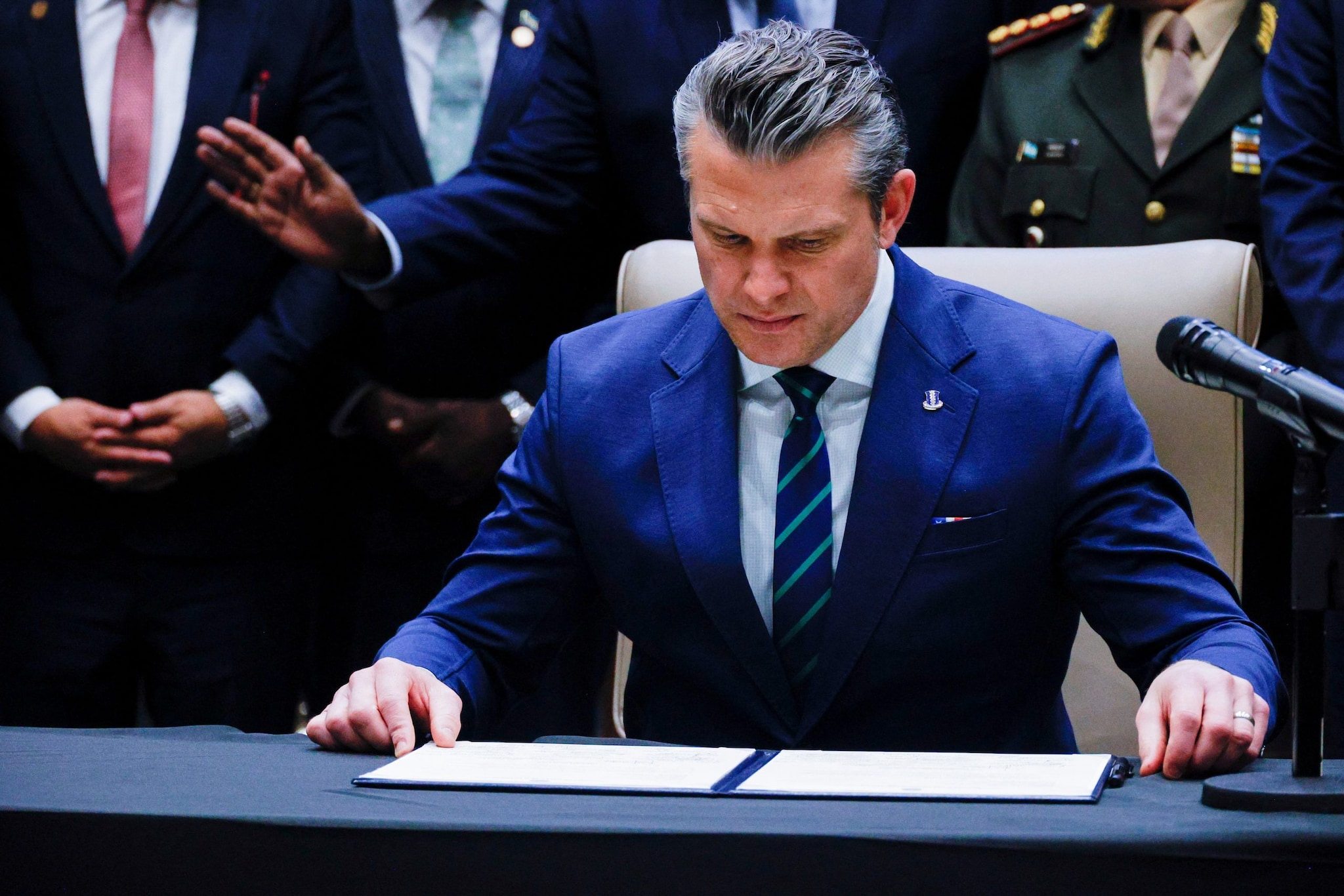
Pete Hegseth isn't known for pulling punches. The US Defense Secretary just dropped a massive claim that’s sending ripples through the Middle East and Washington alike. He says Iran basically begged for a ceasefire. If true, this changes the entire narrative of the current regional conflict. It suggests that despite the fiery rhetoric coming out of Tehran, the internal pressure on the regime has reached a breaking point.
You've probably heard the standard news cycle by now. Proxies are firing, drones are flying, and diplomats are scurrying. But Hegseth’s specific choice of words—"begged"—paints a picture of a desperate leadership rather than a defiant one. It’s a bold stance that flies in the face of the public image Iran tries to project through its state media and the Islamic Revolutionary Guard Corps (IRGC).
Is this just psychological warfare from the Pentagon? Or is it a sign that the sanctions and military pressure are actually working? We have to look at the numbers and the timeline to see why Hegseth feels comfortable making such an aggressive statement.
Why the Iranian Economy Is Forcing Their Hand
The math doesn't lie. Iran is struggling. You can't run a regional shadow war when your currency is in a freefall. The Iranian Rial has hit record lows against the dollar repeatedly over the last few months. Inflation is north of 40%. When people can’t afford eggs, they don't care about regional hegemony.
I've watched these cycles for years. The regime uses its proxies to buy leverage at the negotiating table. But this time feels different. The internal dissent isn't just coming from student activists in Tehran; it's coming from the working class. Hegseth's claim that they begged for a ceasefire likely stems from intelligence showing that the IRGC is worried about domestic stability. They need a breather. They need the money to flow back in.
They’re overextended. From Lebanon to Yemen, the bill for their foreign policy is coming due. If the US and its allies keep the pressure on, the "begging" Hegseth mentions might turn into actual concessions.
The Hegseth Factor and New Pentagon Rhetoric
Hegseth isn't your typical bureaucrat. He doesn't use the polished, cautious language of a career diplomat. That’s exactly why he used a word like "begged." It’s meant to humiliate the opponent while signaling to the American public that the current administration's "Maximum Pressure 2.0" is yielding results.
Critics argue that this kind of talk is dangerous. They say it backs a cornered animal into an even tighter spot. But the Defense Secretary seems to believe that the only way to deal with the regime is through public strength. By saying they begged, he’s stripping away their mask of "resistance." It’s a power move. It tells the world that the US knows exactly how weak the Iranian position actually is.
The Pentagon’s intelligence suggests that the back-channel messages coming out of Tehran are a far cry from the "Death to America" chants in the streets. They want out. They want a deal that preserves the regime while stopping the bleeding.
Proxy Fatigue and the Failure of the Ring of Fire
For a long time, Iran’s "Ring of Fire" strategy seemed brilliant. Surround Israel and pressure US interests with cheap drones and motivated proxies. But that strategy has hit a wall. The IDF has decimated Hezbollah’s leadership. Hamas is a shell of its former self in Gaza. The Houthis are getting hit at their ports.
If you’re the Supreme Leader, you’re looking at your board and seeing your best pieces taken off the table. Hegseth's assertion makes sense when you realize Iran is running out of shields. They’re exposed. Without Hezbollah to act as a primary deterrent on Israel’s northern border, Iran’s own soil becomes the next logical target for any escalation.
They aren't begging because they’ve had a change of heart. They’re begging because their primary defense mechanism is failing. It’s survival 101.
What a Ceasefire Actually Means for the Region
Don't mistake a ceasefire for peace. If a ceasefire happens now, it’s a tactical pause. Iran wants to use that time to re-arm, re-fund, and re-group. This is the mistake many previous administrations made. They saw a pause as a bridge to a permanent solution.
Hegseth’s comments suggest the US is wise to this. If they’re "begging," it means the leverage is entirely on the American side. The smart play isn't to just give them what they want. It’s to squeeze harder until the "begging" includes dismantling the nuclear program and stopping the export of terror.
Basically, we're seeing a high-stakes game of chicken. Iran is blinking first. But a blinking opponent is still an opponent. You don't take your foot off the gas when you see the other car start to swerve.
The Risks of Public Humiliation in Diplomacy
There’s a flip side here. When you tell the world a proud nation "begged," you make it very hard for them to sign a deal without losing face. Domestic hardliners in Tehran will use Hegseth’s words to argue against any diplomacy. They'll say, "Look, the Americans are mocking us. We must fight."
It’s a gamble. Hegseth is betting that the regime is so desperate they'll swallow the insult because they have no other choice. If he’s wrong, this rhetoric could trigger a desperate, violent outburst. But if he’s right, we’re looking at a major shift in the balance of power.
The reality on the ground supports the idea of Iranian weakness. We’ve seen fewer large-scale coordinated attacks and more desperate, one-off strikes. That’s not the behavior of a confident military power. That’s the behavior of an entity trying to look big while its legs are shaking.
Track the Money and the Drones
If you want to know if Hegseth is telling the truth, watch the shipping lanes and the black-market oil sales. If Iran is truly desperate, they’ll start making even riskier moves to get cash. Or, conversely, we’ll see a sudden drop in proxy activity as they husband their remaining resources.
Keep an eye on the diplomatic chatter in Oman and Qatar. These are the usual spots for the "begging" to happen. If those channels go quiet or if we see a sudden surge in "humanitarian" requests, you’ll know Hegseth was spot on.
Stop looking at the official press releases from the Iranian Foreign Ministry. They're meant for a domestic audience that needs to believe the regime is still strong. Look at the data. Look at the currency. Look at the state of their proxies. The picture those things paint is one of a regime that is, quite frankly, running out of options.
Demand more than just a temporary halt. A ceasefire that doesn't address the root causes of the instability is just a countdown to the next war. The US holds the cards right now. It's time to play them. Watch the next round of sanctions and the movement of the Mediterranean carrier groups. That’s where the real story is being written. If the regime is begging, it’s time to see what they’re willing to give up to survive.