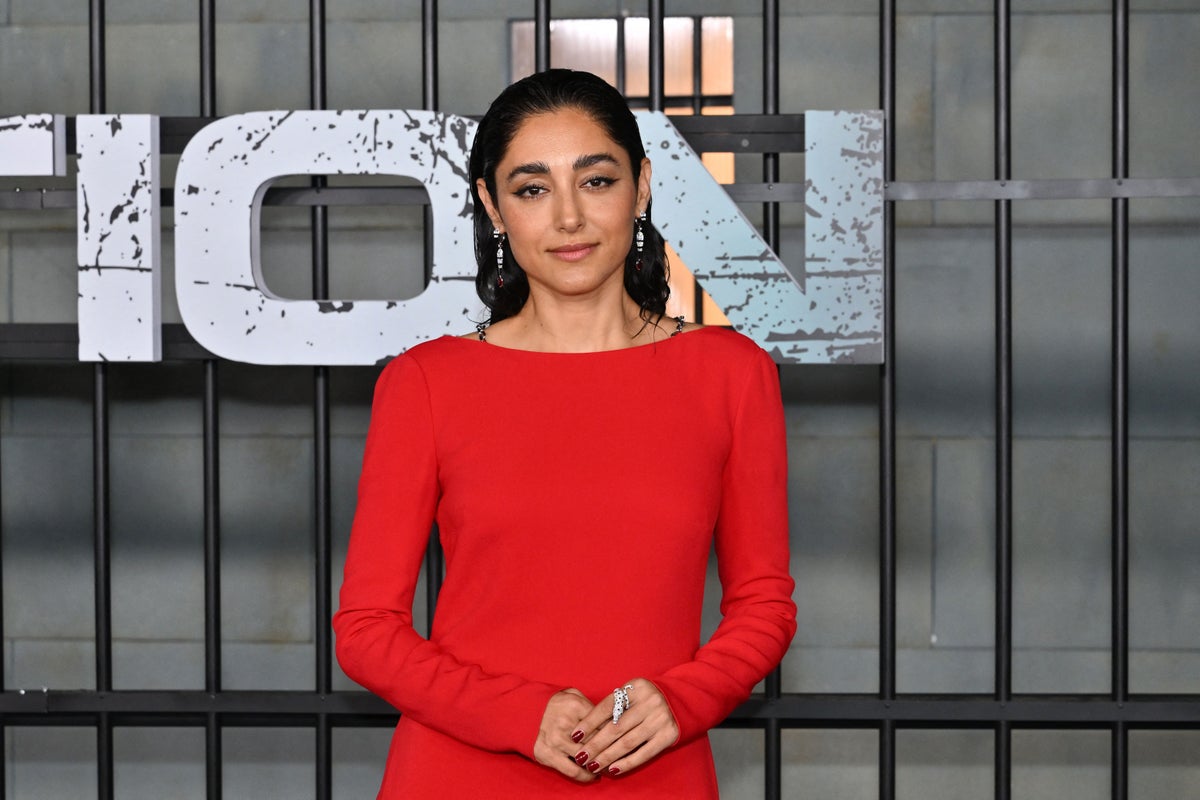
Golshifteh Farahani didn't choose to become a symbol of Iranian defiance, but she's lived that reality for nearly two decades. You might know her from a high-stakes Hollywood thriller or perhaps you saw her name trending recently alongside French President Emmanuel Macron. If you're wondering how an actress who shared the screen with Leonardo DiCaprio ended up at the center of a "slap" row involving French leadership, you're looking at a story of exile, art, and the messy intersection of celebrity and geopolitics.
She's much more than a tabloid headline. She represents a bridge between the rigid censorship of Tehran and the often chaotic freedom of the West. When she left Iran in 2008, she wasn't just looking for a better paycheck. She was escaping a system that viewed her very existence on a global stage as a threat to national morality. Don't forget to check out our recent post on this related article.
Why Golshifteh Farahani matters beyond the headlines
To understand why she's a lightning rod for controversy, you have to look at her beginnings. Born in Tehran in 1983, Farahani was a child prodigy. She was playing the piano at a level most adults couldn't reach by age six. By 14, she won Best Actress at the Fajr International Film Festival. In Iran, she was royalty. But royalty in a theocracy comes with strings attached.
The turning point came with Body of Lies. Ridley Scott cast her as Aisha, a nurse who catches the eye of DiCaprio’s character. This was a massive deal. No Iranian actress living in the country had appeared in a major Hollywood production since the 1979 revolution. The Iranian authorities weren't thrilled. They confiscated her passport. They interrogated her. They told her she was a tool of American propaganda. To read more about the background of this, Wall Street Journal provides an informative breakdown.
She eventually left for Paris, which has become her second home. But the price of that move was permanent exile. She can't go back. If she does, she faces prison or worse. That's the weight she carries every time she walks a red carpet or takes a role.
The Macron slap row explained
So, where does Emmanuel Macron fit into this? The recent "slap" row isn't about a literal physical strike against a politician—at least not in the way the internet initially buzzed about it. It’s about the optics of French involvement in Iranian dissent.
Farahani has been a vocal supporter of the "Woman, Life, Freedom" movement. This movement exploded after the death of Mahsa Amini in 2022. When Farahani appeared in public forums and high-profile meetings involving French officials, it sparked a PR war. Critics of Macron’s government accused him of using the actress and other activists as political props to distract from domestic French issues.
On the flip side, supporters of the Iranian regime used these interactions to paint Farahani as a puppet of Western imperialism. The "slap" is a metaphor for the perceived insult felt by various political factions—either by Macron's "interference" in Iranian affairs or by his perceived "performative" support for activists while maintaining diplomatic backchannels. It’s a messy, multi-layered dispute where Farahani’s face is used as a shorthand for the entire conflict.
Breaking the Hollywood mold
Most foreign actors get stuck in a loop. They play the "terrorist," the "mysterious stranger," or the "victim." Farahani refused that path. She’s worked with Jim Jarmusch in Paterson and starred in Extraction with Chris Hemsworth. She brings a specific kind of gravity to her roles that feels lived-in.
Why her career is a blueprint for exiled artists
- Language as a weapon. She acts in Farsi, French, and English. This isn't just about being bilingual; it’s about refusing to be boxed into a single cultural identity.
- Choosing depth over fame. She often takes roles in smaller, independent European films that challenge political norms rather than just chasing Marvel checks.
- Radical honesty. She’s been open about the trauma of exile. She doesn't sugarcoat how hard it was to lose her home, her family, and her language in one fell swoop.
Many people think she was "saved" by the West. That’s a lazy narrative. Farahani has been quite vocal about the fact that Western film industries have their own brands of sexism and racism. She traded one set of challenges for another.
The cost of a nude photo
You can't talk about Farahani without mentioning the 2012 scandal. She posed for a short film promoting the César Awards, and in one shot, she was partially nude. Later, she appeared on the cover of Madame Figaro.
In the West, it was a Tuesday. In Iran, it was an earthquake.
The Iranian government officially banned her from returning. They called it a "disgusting" display. For Farahani, it wasn't about being provocative for the sake of it. It was about reclaiming her body from a state that told her how to dress, how to act, and how to think. It was a declaration of ownership.
Moving beyond the victim narrative
It's easy to feel sorry for an exiled artist. But if you watch her interviews, she doesn't want your pity. She’s remarkably grounded. She lives in the French countryside when she’s not filming, stays away from the Hollywood "scene," and remains deeply connected to the Iranian diaspora.
Farahani represents the modern intellectual exile. She’s someone who uses their platform to keep eyes on the human rights abuses in her homeland while building a legitimate, merit-based career in a hyper-competitive industry. She isn't just "the girl from that Leo movie" anymore. She’s a veteran of both the screen and the street protest.
What you should watch to understand her range
If you only know her from the news, you're missing the point of her work. Start with The Patience Stone. She plays a woman in an unnamed war-torn country who talks to her comatose husband, revealing secrets she could never say while he was conscious. It’s a masterclass in acting. Then watch Paterson. She’s charming, whimsical, and provides the perfect counterpoint to Adam Driver’s quiet bus driver.
Farahani is a reminder that art is never just art when you come from a place where a song or a film can land you in a dark cell. She carries that tension in every frame.
The "slap" row will eventually fade from the news cycle. Macron will move on to his next crisis. But Farahani will still be there, working, speaking out, and reminding the world that some people pay a massive price just to say "no" to a script they didn't write. If you want to support her work, stop looking at the tabloid drama and start watching the films. That’s where the real rebellion happens.
Check out the independent Iranian film scene through platforms like MUBI or The Criterion Channel to see the kind of work that persists despite censorship. Support organizations like the Center for Human Rights in Iran to stay informed on the actual issues she’s fighting for, rather than just the political theater.