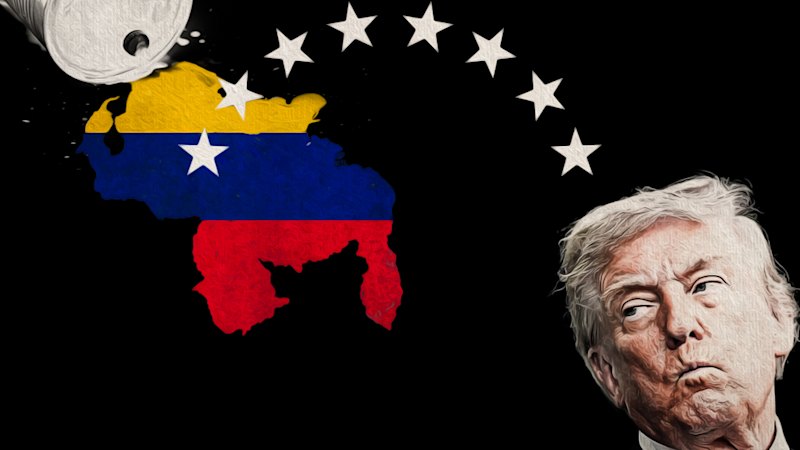
Big political announcements sound great on social media. Reality usually hits much harder once you look past the headlines. When Donald Trump declared a massive oil pact with Venezuela involving sixty-five billion barrels of reserves, financial markets barely blinked. Traders know a fundamental truth that politicians often ignore. Having oil trapped underground means nothing if you lack the infrastructure to pull it out.
You have to understand how oil extraction actually works on the ground. For decades, Venezuela's state-owned energy sector suffered from catastrophic neglect, rampant corruption, and heavy sanctions. Pipelines rusted. Refineries broke down. Expert engineers fled the country for better opportunities abroad. Pumping crude isn't like turning on a kitchen faucet. It takes years of steady capital injection and specialized technical labor to restore broken fields.
The administration claims this new agreement grants the United States effective operational control over massive chunks of Venezuelan production. They talk about a private operator securing century-long concessions to develop seventeen major fields. Yet major energy corporations remain deeply skeptical. If you talk to veteran energy sector executives, they will tell you they care about long-term fiscal stability and security above all else. Verbal promises from transient political figures do not protect multi-billion-dollar infrastructure investments spanning decades.
Another massive hurdle involves the physical quality of the crude itself. Much of Venezuela's underground wealth consists of extra-heavy, dense oil. Processing this sludge requires specialized upgrading facilities that are currently in shambles. It is far more expensive and technically demanding to refine than light sweet crude found in domestic shale plays. Pumping it directly into American strategic reserves or domestic refineries requires a complete overhaul of logistics chains that simply do not exist right now.
Geopolitical ripples add another layer of complexity. For years, nations like China relied heavily on discounted Venezuelan shipments to feed their domestic refiners. Shifting those supply lines toward American interests directly disrupts established trade routes. At the same time, global oil markets are grappling with broader supply dynamics and ongoing Middle Eastern shipping chokepoints. A headline-grabbing political pact with Caracas will not instantly slash domestic fuel prices at your local pump.
Do not expect a sudden flood of cheap gasoline anytime soon. Fixing Venezuela's broken oil patch requires billions in actual spending, years of hard labor, and a stable legal framework that protects foreign assets from future expropriation. Until physical tankers start moving massive volumes of upgraded crude on a consistent basis, treat these grand announcements as political posturing rather than an operational reality.