Accepting a $400 million luxury 747 from a foreign royal family while telling rural voters that Democrats want their guns sounds like two totally separate campaign themes. Honestly, they work together. Both are built around defiance, status, and telling critics to get lost.
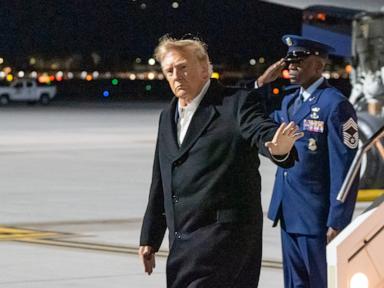
When President Donald Trump took the Qatar-gifted Boeing 747-8 on the road to boost Republican candidates, the plane itself became part of the show. Flying low over a desert airport in Bullhead City, Arizona, with a new red, white, blue, and gold paint job, the jet isn't just transportation. It's a rolling argument about power, foreign deals, and who gets to set the rules. Meanwhile, up in Kalispell, Montana, the pitch shifted hard toward the Second Amendment as Trump backed GOP hopefuls against Democratic rivals.
Most campaign coverage treats a foreign aircraft controversy and a gun-rights rally speech as separate stories. That misses why both land the way they do with base voters and why they keep colliding with ethics rules, pocketbook anxieties, and swing-district math.
Why the Qatar Gift Keeps Dogging the Administration
A free luxury jet sounds great until someone asks what comes attached to it. Critics across the political spectrum—and even some of Trump's own supporters—pushed back when the administration moved forward with accepting the Qatar-donated 747-8. Democratic lawmakers called it the "definition of corruption" and raised alarms over foreign influence and retrofit costs.
Trump's defense is straightforward and unapologetic. He has argued that he accepted the aircraft on behalf of the country, praised it as one of the finest 747s ever built, and compared taking the plane to accepting a "free putt" in golf rather than turning down something valuable. Earlier on, he framed it as a gesture of good faith and said it wouldn't become a personal post-presidency ride, pointing instead toward eventual decommissioning or a presidential library.
Still, two practical headaches won't go away easily:
- Retrofit and security reality: Turning a foreign VIP airliner into a secure presidential aircraft isn't like swapping seat covers. Even after the plane entered service mid-year and flew on campaign stops, questions lingered over the scope and timeline of security upgrades and operational readiness.
- Eye-watering flight costs: Running a 747 presidential fleet costs roughly $180,000 to $200,000 per flight hour—a massive leap from the $12,000 to $16,500 per hour Trump's own Boeing 757 cost to operate. That price tag makes a "free" jet a lot less free over time.
When voters in places like Mohave County, Arizona, deal with tighter household budgets, higher unemployment than national benchmarks, or worries about everyday affordability, a gleaming foreign-gifted jumbo jet cuts two ways. Loyalists see a president who gets big things done and ignores media scolding. Skeptics see a disconnect between populist rhetoric and gilded hardware.
How the Second Amendment Pitch Plays in Tight Races
In western Montana, the tone changed, yet the core playbook stayed familiar. Speaking in a Kalispell horse show arena to rally support for House candidate Aaron Flint alongside Senate hopeful Kurt Alme, Trump cast Democratic opponents as a direct threat to gun owners.
In rural and Mountain West districts, firearms aren't an abstract constitutional debate. People use rifles and shotguns for hunting, predator control, and personal protection. Flint faced off against Democrat Sam Forstag, a labor union leader and Forest Service smokejumper who described himself as a gun owner and hunter while backing expanded voluntary safe storage during mental health crises. Trump labeled Forstag "extreme," warned that Democrats would strip away firearms if given the chance, and pointed to National Rifle Association ratings—highlighting top marks for Republicans versus an "F" for Democratic Senate candidate Alani Bankhead and a question mark for Forstag over not filling out an NRA questionnaire.
That contrast shows how gun politics works in practice. Even when a Democratic candidate talks about hunting and rural life, labeling them a threat to gun rights—and leaning on gun-group scorecards—remains a fast way to rally base turnout. At the same time, independent and moderate voters often split their tickets or weigh local issues like public lands, cost of living, and candidate character alongside Second Amendment promises.
What This Means for GOP Candidates and Voters
Campaigning alongside a headline-grabbing aircraft and sharp cultural warnings is a high-energy strategy. It floods the zone with imagery and keeps the focus on loyalty and threat. Yet it also carries real trade-offs for candidates running in competitive districts who may want the crowd boost without owning every foreign-gift debate or controversial remark from the stump.
If you're following these races or sorting through the noise around the gifted Air Force One from Qatar and campaign-trail gun pitches, don't stop at viral clips. Look up the actual candidates on your ballot, check their exact positions on firearms and public spending rather than relying solely on shorthand labels, and read reporting from outlets with strong accountability desks like The Guardian and PBS News to separate showmanship from policy.
Trump defends Qatar-gifted Air Force One as he campaigns to boost Republicans in Arizona
This video clip shows how President Trump directly addresses the controversy over the Qatar-gifted 747 during a campaign rally stop.