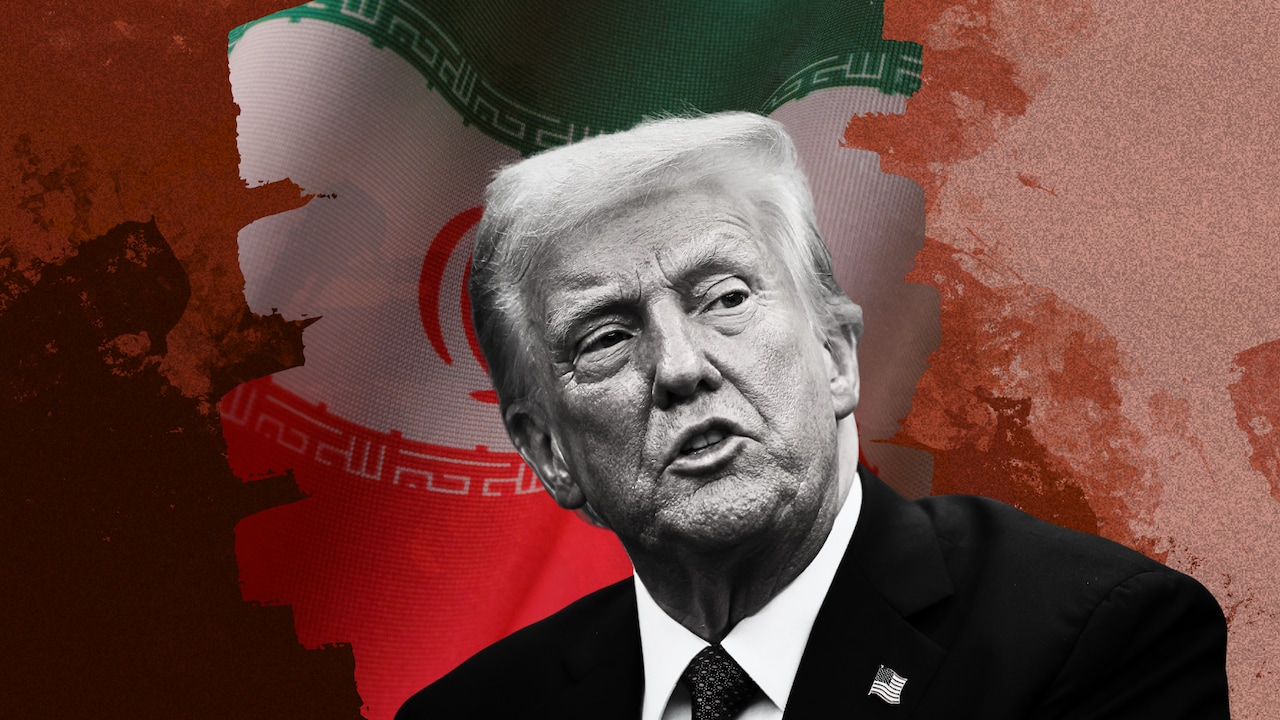
When President Donald Trump tells reporters that the United States' military confrontation with Iran is going to get wrapped up soon, he is speaking the language of a dealmaker who views armed conflict through the lens of transactional leverage. The promise of a swift resolution is designed to calm jittery energy markets, reassure weary voters, and project absolute control over an escalating crisis. Yet behind the confident rhetoric from the Oval Office lies a stark operational truth that seasoned military planners understand all too well: starting a limited campaign against a deeply entrenched regional adversary is easy, while dictating the exact terms and timeline of its ending is nearly impossible.
Wars rarely obey political schedules. In modern asymmetrical warfare, the side with superior conventional firepower often assumes that decisive strikes will force the weaker party to the negotiating table on an accelerated timeline. Washington has operated under this assumption for decades, and it is operating under it again today. However, Tehran's entire military doctrine is built specifically to neutralize American speed and technological dominance by stretching conflicts out, absorbing initial blows, and imposing sustained economic and political costs across the Middle East. Read more on a related subject: this related article.
To understand the gap between presidential optimism and battlefield reality, you have to look at how Washington defines victory versus how Tehran defines survival. For the White House, wrapping up the conflict means halting immediate threats to global shipping lanes, degrading Iranian missile and drone production facilities, and re-establishing deterrence without committing American ground troops to another protracted Middle Eastern quagmire. For the Islamic Republic, survival itself is victory. As long as the regime maintains command and control, keeps its proxy networks functional, and retains the capacity to disrupt the Strait of Hormuz, it has no incentive to grant an American president a clean, televised off-ramp.
The Illusion Of The Clean Exit
History offers plenty of warnings about the seduction of quick military timelines. Every modern administration has entered Middle Eastern engagements believing that calibrated force would yield rapid compliance. Time after time, those projections collided with local realities that refused to bend to Washington's timetable. More reporting by Associated Press delves into related perspectives on the subject.
Consider the mechanics of an exit strategy when the opposing side does not recognize your endgame. If the United States halts kinetic operations tomorrow and declares its objectives met, the conflict only ends if Iran agrees to stop shooting. A unilateral ceasefire is not a peace treaty; it is simply a pause that hands the initiative to the adversary. If Iranian-backed militias in Iraq, Syria, or Yemen continue launching drones at regional bases or commercial vessels the day after Washington declares victory, the political pressure to retaliate becomes overwhelming.
Trump's instinct has always been to pair maximum pressure with the open door of a bilateral deal. By signaling that the fighting will conclude shortly, he is attempting to create psychological momentum—telling domestic audiences that the crisis is temporary while signaling to Tehran that the window to cut a deal before even harsher measures arrive is closing fast. It is a classic coercive bargaining tactic. The problem is that coercive diplomacy relies on shared assumptions about what constitutes an unacceptable loss, and the ideological leadership in Tehran calculates loss differently than a Western executive.
Asymmetrical Endurance Versus Conventional Speed
The United States military is unmatched in its ability to project overwhelming force across the globe within hours. Carrier strike groups, stealth bombers, and precision-guided munitions can dismantle fixed infrastructure with surgical accuracy. Yet this very strength creates a strategic blind spot.
When Pentagon planners target radar installations, naval assets, or hardened storage sites, they measure success in physical destruction and degraded capability. Iran's Islamic Revolutionary Guard Corps (IRGC) measures success in disruption and endurance. They do not need to sink an American aircraft carrier to achieve their strategic goals; they only need to make insurance rates for oil tankers spike, force commercial shipping to reroute around Africa, and keep regional allies in a state of perpetual anxiety.
Suppose, as a hypothetical example, that a series of coordinated strikes destroys sixty percent of a nation's coastal missile batteries over a single weekend. On paper, that looks like a decisive blow that should force immediate capitulation. In practice, the remaining forty percent—dispersed on mobile launchers hidden in mountainous terrain—is more than enough to keep an entire maritime chokepoint contested for months. You cannot easily bomb dispersed, low-cost asymmetric threats into total submission without escalating to a scale of warfare that the White House explicitly wants to avoid.
The Proxy Network Complication
Even if direct hostilities between Washington and Tehran were to cool through backchannel negotiations, the broader architecture of the conflict remains intact. Over the past twenty years, Iran has invested billions of dollars into building a decentralized network of regional partners—often referred to as the Axis of Resistance—that operate with varying degrees of autonomy.
These groups are not simple puppets waiting for a single switch to be flipped in Tehran. While they rely on Iranian funding, intelligence, and weaponry, they also possess their own domestic political imperatives and local grievances. A diplomatic understanding reached between Washington and Tehran does not automatically guarantee that Houthi commanders in Sanaa or militia leaders in Baghdad will immediately stand down. If a rogue faction launches a strike that kills American personnel, the entire diplomatic framework collapses overnight, dragging the United States right back into the fight.
Economic Chokepoints And Global Markets
Beneath the military posturing sits the real driver of Washington's urgency: the global economy. No American president wants to govern through an energy shock, particularly when domestic inflation and consumer confidence remain fragile political fault lines.
Roughly a fifth of the world's petroleum passes through the Strait of Hormuz. Even the credible threat of sustained military action in those waters sends ripples through commodity exchanges from New York to Singapore. When Trump assures the public that the conflict will be wrapped up soon, he is speaking directly to energy traders and institutional investors who are pricing geopolitical risk into every barrel of crude.
| Strategic Factor | Washington's Objective | Tehran's Counter-Strategy |
|---|---|---|
| Timeline | Rapid de-escalation and immediate deterrence | Protracted attrition to exhaust US political will |
| Economic Impact | Stabilize oil prices and protect global shipping | Weaponize maritime chokepoints to raise global costs |
| Military Posture | Stand-off precision strikes without ground troops | Dispersed asymmetric warfare via missiles, drones, and proxies |
| Political Endgame | Verifiable containment and a favorable diplomatic deal | Regime survival and regional expulsion of US influence |
Tehran understands this vulnerability acutely. Iranian strategists closely monitor American election cycles, fuel prices at US gas stations, and congressional debates over war powers. They know that while the United States possesses vastly superior military hardware, its political tolerance for prolonged economic disruption is remarkably thin. By dragging out the confrontation, Iran attempts to turn America's domestic economic sensitivity into a weapon more effective than any ballistic missile.
Backchannel Diplomacy And The Face-Saving Trap
In every major confrontation between the United States and Iran since 1979, quiet diplomacy through third-party intermediaries has eventually played a decisive role. Oman, Qatar, and Switzerland have long served as the vital conduits through which messages are passed when public rhetoric makes direct talks impossible.
There is little doubt that backchannel communications are active right now, testing the boundaries of what a temporary off-ramp might look like. For any de-escalation to hold, however, both sides must be able to sell the outcome to their respective domestic constituencies as a triumph.
This creates a delicate face-saving trap. Trump needs to demonstrate that his willingness to use force compelled Iran to back down, validating his strongman approach to foreign policy. Simultaneously, Iran's Supreme Leader and the IRGC command cannot be seen domestically as capitulating to American threats, as perceived weakness invites internal unrest and fractures the ruling elite.
If Washington demands sweeping concessions—such as the total dismantlement of Iran's regional alliances or permanent abandonment of its nuclear infrastructure—as the price for stopping the strikes, Tehran will simply choose to endure the bombardment. Conversely, if the White House settles for a narrower arrangement that merely restores the pre-conflict status quo, critics in Washington will accuse the administration of failing to eliminate the underlying threat, leaving the door open for the exact same crisis to erupt six months later.
Domestic Politics And The War Powers Friction
A president's ability to sustain a military campaign—or abruptly end one—is also shaped by domestic institutional friction. In Washington, prolonged military engagements inevitably trigger constitutional debates over executive authority.
While the Commander-in-Chief enjoys broad latitude to order immediate defensive or retaliatory strikes, an open-ended conflict without formal congressional authorization becomes harder to defend as weeks turn into months. Skepticism toward Middle Eastern interventions spans both sides of the political aisle, uniting progressive Democrats concerned about civilian casualties and international law with populist conservatives who reject foreign entanglements as a drain on American resources.
Trump's own political coalition is deeply invested in the promise of avoiding "endless wars." His supporters view past interventions in Iraq and Afghanistan as catastrophic errors engineered by a detached foreign policy establishment. Consequently, the president faces intense internal pressure to prove that this confrontation is fundamentally different—sharp, decisive, and brief. Saying it will be wrapped up soon is a political necessity to keep his base aligned, even if commanders in the field are preparing for a much longer haul.
What History Tells Us About Declared Endings
We have seen this movie before. In 2003, a banner declaring "Mission Accomplished" hung behind a president who genuinely believed the major combat phase of a Middle Eastern war had concluded, only for years of brutal insurgency to follow. More recently, repeated declarations that regional terrorist networks had been defeated gave way to quiet redeployments and ongoing shadow conflicts that never truly vanished from the Pentagon's operational maps.
Modern conflicts rarely end with formal surrender ceremonies on the deck of a battleship. They fade into gray-zone stalemates characterized by intermittent cyberattacks, covert sabotage, proxy skirmishes, and tense maritime standoffs.
When an American president promises that a confrontation with a sophisticated, deeply entrenched regional power is nearly over, the statement reflects political desire rather than military certainty. The United States can choose when to stop launching cruise missiles, and it can choose when to declare its objectives achieved. What it cannot do is force a determined adversary to accept that the war is over simply because Washington is ready to move on.