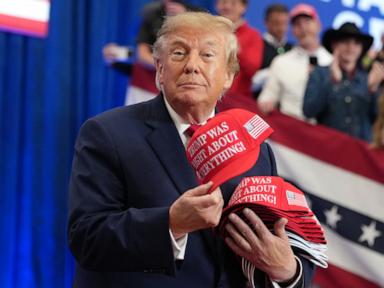
Donald Trump has one answer for every political problem. Put him on a stage, turn on the cameras, and let the rallies rip.
Right now, as Republicans stare down tough congressional races, Trump's cure for Republicans' midterm woes is simple. More Trump. More rallies, more endorsements, more daily headlines dominated by his grievances and promises. Will it work? Probably not the way GOP strategists hope.
I've watched midterm cycles play out from inside war rooms and press buses for nearly two decades. There is an iron law in American politics that nobody in Washington likes to admit out loud. The president's party almost always gets clobbered in off-year elections, and leaning harder into the president's personality rarely saves vulnerable House members in swing districts.
The Midterm Math Problem Nobody Wants to Admit
Look at the historical record. It's brutal. Since the Civil War, the president's party has lost House seats in nearly every single midterm election, with only rare exceptions like 1934, 1998, and 2002. You can't rally your way out of basic political gravity.
When a president saturates the news cycle during a midterm year, something predictable happens. The election stops being a choice between two local candidates and turns into a national referendum on the guy in the White House. That's fine if you're trying to juice turnout in a deep-red district in rural Ohio or northern Florida. It's a disaster in suburban districts around Philadelphia, Phoenix, or Detroit where independent voters decide who controls the gavel.
Swing voters get exhausted. Honestly, they just want the noise to stop for five minutes so they can focus on grocery prices, mortgage rates, and local schools. When Trump inserts himself into every Senate and House race across the map, he forces moderate suburbanites to vote on him again—even when his name isn't on the ballot.
What Happened Last Time Republicans Tried This
We don't have to guess how this plays out because we already saw the movie in 2018 and 2022.
In 2018, Trump held dozens of massive rallies across the country during the final stretch of the campaign. His base showed up in huge numbers. Republican turnout actually surged compared to typical midterm benchmarks. Did it save the House? No. Democrats picked up 41 seats because suburban college-educated voters and independents turned out in even larger waves to check the White House.
Then came 2022. Even out of office, Trump dominated the GOP primary process, hand-picking loyalists who echoed his 2020 election claims over more conventional, electable candidates in key battlegrounds. Republicans expected a massive red wave driven by inflation and Joe Biden's low approval ratings. Instead, they barely scraped together a razor-thin House majority and actually lost ground in the Senate.
The lesson from both cycles is glaringly obvious. Trump is unmatched at energizing his core supporters, yet his presence simultaneously acts as the single most effective turnout machine for Democratic voters. You can't separate the two effects. They're baked into the same cake.
Why GOP Strategists Feel Trapped
If the data is so clear, why are Republican leaders going along with an all-Trump midterm strategy? Because they don't have a choice.
Inside today's Republican Party, alienating Trump is political suicide. If a vulnerable House member in a purple district tries to keep the president at arm's length, they risk depressed turnout among base voters who only show up when Trump tells them to. If they embrace him fully, they alienate the moderate independents they desperately need to cross the finish line.
It's a classic Catch-22. Campaign managers in swing seats spend half their week begging national leadership to keep the focus on the economy, border security, and local issues. Then a single social media post or rally speech blows up their messaging discipline by Tuesday morning.
Here is how that tension usually breaks down behind closed doors:
- Base-heavy districts want Trump everywhere, cutting ads, hosting tele-rallies, and attacking Democrats nonstop.
- Swing-district incumbents quietly pray he stays focused on economic numbers and avoids culture-war tangents that dominate local evening news.
- National donors worry that money meant for ground-game voter registration gets swallowed up by legal battles, media spectacles, and intra-party loyalty tests.
The Turnout Trap in Off-Year Elections
Midterm electorates look nothing like presidential electorates. That's the part most pundits miss when they look at rally crowd sizes.
A stadium packed with 15,000 cheering fans makes great television. It convinces candidates they're winning. What those cameras don't show are the low-propensity voters who love Trump, buy the merchandise, attend the rallies, and still stay home on a rainy Tuesday in November when he isn't personally on the ballot.
Meanwhile, high-propensity suburban voters—the folks who vote in every single local school board and off-year election—watch those same rally clips on their local news. And they show up to vote against the chaos.
Research from institutions like the Pew Research Center and the Cook Political Report consistently shows that midterm voters skew older, wealthier, and more politically engaged than presidential-year voters. You can't easily replicate presidential-level base turnout without the president's actual name sitting at the top of the ticket. Trying to force it by turning every local House race into a proxy war for Trump's ego usually backfires.
Where Trump's Strategy Actually Helps Republicans
To be fair, writing off Trump's involvement completely would be a mistake. He isn't pure political poison everywhere on the map.
In Senate races across red-leaning states like Montana, West Virginia, or Ohio, a strong Trump endorsement and a late-October rally can completely clear the field and lock down conservative turnout. In primaries, his backing remains practically undefeated, allowing national Republicans to avoid messy, expensive intra-party brawls when he backs the strongest general-election contender early.
He also possesses an uncanny ability to nationalize economic frustration. When Trump sticks to pocketbook issues—hammering the cost of gas, housing affordability, and manufacturing jobs—he connects with working-class voters in ways polished Washington politicians simply can't match. Those voters trust his instincts on the economy even when they roll their eyes at his rhetoric.
The problem isn't Trump campaigning. The problem is discipline. Nobody around him has ever been able to keep him on a tight script for more than twenty minutes.
What Smart Campaigns Are Doing Instead
If you're watching these midterm races closely—or advising candidates on how to survive a wave environment—don't fall for the rally hype. Watch how individual campaigns localize their message while national headlines swirl around them.
The candidates who survive tough midterm cycles follow a very specific playbook. They acknowledge national leadership without letting national drama define their brand. They hammer hyper-local economic concerns, build independent voter contact operations that don't rely on national party infrastructure, and give swing voters a concrete reason to split their ticket.
Pay attention to three real indicators over the coming months rather than cable news chatter:
- Generic ballot polling in suburban counties. If Republicans are trailing by more than four or five points in places like Waukesha County, Wisconsin, or Chester County, Pennsylvania, no amount of rally energy will save their House majority.
- Independent voter sentiment on the economy. Watch whether voters blame current leadership for high prices or still view Republicans as the safer bet on inflation and jobs.
- Small-dollar fundraising velocity. When enthusiasm drops among grassroots donors, local field offices close early, and door-knocking operations stall out in October.
Trump will keep holding rallies because that's who he is and that's how he governs. Republicans will applaud every speech because they have no alternative path to turning out their base. Just don't confuse loud crowds with winning coalitions. In midterm politics, the loudest voice in the room is usually the one handing the opposition its best campaign ad.