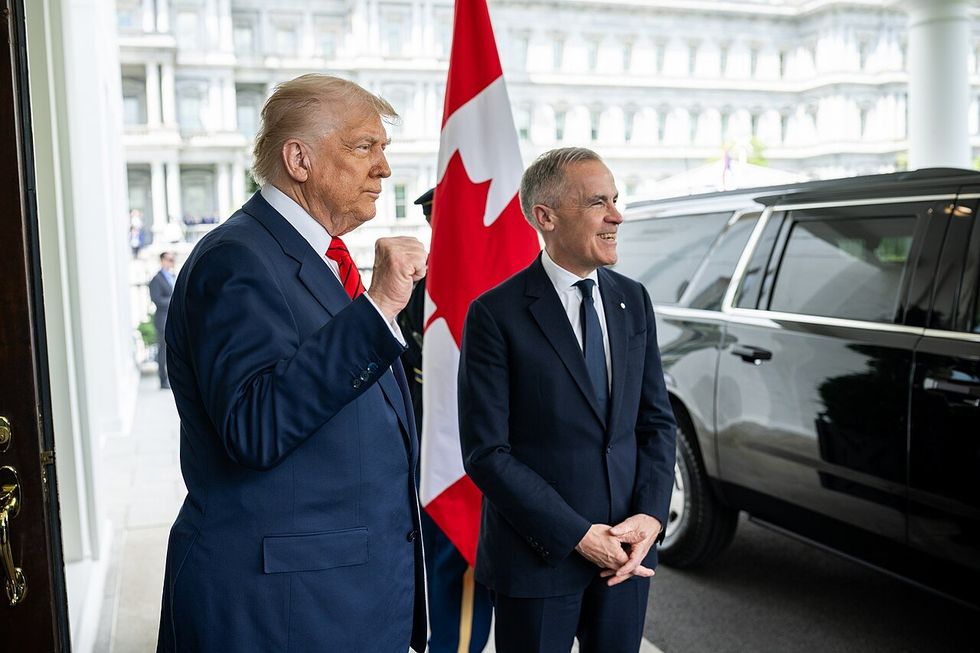
Donald Trump wants everyone to know he’s watching Canada’s economy struggle. When data dropped showing America's northern neighbor slipped into a technical recession for the first time since 2020, Trump didn't offer the usual diplomatic sympathies. He hopped onto social media to drop a two-word bomb: "51st State!"
It’s easy to dismiss this as classic late-night trolling. But the timing makes it sting a lot more for Ottawa. Just days ago, newly minted Canadian Prime Minister Mark Carney was standing before the Economic Club of New York, pitching a grand "new partnership" to rewrite the economic rules between the two nations. Trump’s blunt response basically signaled that if Canada wants closer integration, it might have to accept it on Washington's terms.
This isn't a new joke, either. The White House has been dropping hints about erasing the 5,525-mile-long border since Trump won his second term. What started as a seemingly offhand remark in late 2024 has steadily transformed into a recurring pressure tactic during a brutal trade war.
The Reality Behind Canada's Economic Slump
Let's clear up the numbers first. A technical recession happens when a country sees its Gross Domestic Product contract for two consecutive quarters on an annualized basis. That’s exactly what the latest data confirmed. In fact, three out of the last four quarters in Canada have shown negative growth.
Prime Minister Mark Carney is trying to manage the panic. He acknowledged the obvious economic weakness but urged people not to obsess over the raw data. He says his government is busy building a more independent economy.
But opposition leaders aren't buying the calm routine. Conservative Leader Pierre Poilievre immediately jumped on the news, demanding an emergency debate on the economy. He blamed the economic downturn entirely on Liberal policies, calling it the only recession currently hitting a G7 nation. Poilievre also brushed off Trump's annexation comments as a ridiculous distraction from the real pain Canadian consumers are feeling.
Why the 51st State Talk Is More Than a Joke
Trump thrives on leverage, and right now, Canada's economic vulnerability gives him plenty of it. By bringing back the "51st state" rhetoric, the White House is turning up the heat just as Canada pushes hard for a renewal of the Canada-United States-Mexico Agreement (CUSMA).
Ontario Premier Doug Ford quickly fired back on social media, writing that Canada will never be the 51st state and is absolutely not for sale. It’s a fiery stance, but the underlying geopolitical math is tricky. Trump’s U.S. Ambassador to Canada, Pete Hoekstra, even retweeted Trump’s comment, showing that the administration is aligned on using this aggressive posture.
Trump has previously talked about the border as nothing more than an "artificial line." He’s argued that Canada would see massive financial rewards if it simply integrated entirely with the American economy. To Trump, Canada is a country that thrives mainly because of its proximity to the U.S. market, a claim Carney has fiercely disputed by stating that Canada thrives because it is Canadian.
What It Actually Takes to Add a State
Let's look at the actual mechanics of what Trump is suggesting. Absorbing an entire sovereign country isn't something a president can do with an executive order. The legal hurdles under the U.S. Constitution are massive.
- The Admissions Clause: Article IV, Section 3 of the Constitution gives Congress the sole power to admit new states. It takes a simple majority in the House, but the Senate is a different story.
- The 60-Vote Hurdle: To beat a Senate filibuster, any statehood bill needs 60 votes. In a highly polarized Washington, getting 60 senators to agree on absorbing ten provinces and three territories is practically impossible.
- The Canadian Consent Problem: Canada would need to hold a national referendum to even consider joining the U.S. Given the fierce streak of national pride running through the country right now, that vote would fail miserably.
The proposal ignores the massive logistical nightmare of merging two distinct legal, healthcare, and political systems. It’s a fantasy. But as a psychological tool in trade negotiations, it works perfectly to keep Canadian policymakers on the defensive.
The Broader Global Strategy
This pressure tactic isn't happening in an isolated bubble. The Trump administration is squeezing trading partners across the board to reclaim American manufacturing dominance. Just look at the recent proposal to slap 25% tariffs on Brazil, despite the U.S. holding a massive $14 billion trade surplus with them.
Carney’s strategy has been to offer America critical resources—like aluminum, automobiles, and critical minerals—through a framework he calls the Canada Strong Fund. He argues that a strong Canada helps make America great again. But Trump has repeatedly shown he prefers economic dominance over traditional alliances.
Canada's economic future has been built on trusting open trade with the United States. With Washington rewriting those rules, Ottawa faces a tough road ahead.
If you want to understand where this relationship goes next, stop looking at the sensational headlines about annexation and focus on the upcoming CUSMA renewal talks. Watch how Canadian negotiators handle the tariff threats, and monitor whether the Bank of Canada can stimulate growth enough to pull the country out of this technical recession before the next round of trade talks begins.