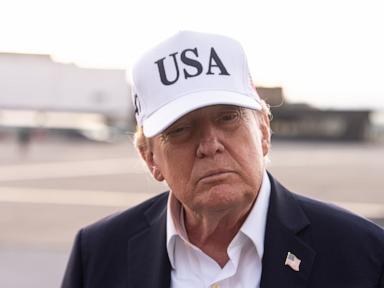
Donald Trump launched a blistering attack on the United States Supreme Court after the high bench refused to lift a block on controversial postal regulations designed to restrict mail-in ballots ahead of the midterm elections. The dispute centers on an executive order and subsequent U.S. Postal Service rules that sought to impose rigid administrative hurdles on mail voting, including mandatory unique barcodes and strict pre-approval lists compiled months before polling day. When the Supreme Court opted to leave a lower court injunction in place, maintaining standard state mail-in ballot procedures, Trump vented his frustration online. He accused the highest court in the nation of buckling under political pressure, directing specific ire at the three conservative justices he appointed during his first term. The confrontation exposes a widening fracture between executive ambitions of absolute electoral control and judicial reluctance to upend established voting machinery at the eleventh hour.
The Anatomy of an Executive Directive
Power is exercised through details. The administration did not attempt to rewrite state election codes directly through legislation. Instead, the mechanism relied on federal administrative levers, utilizing the postal service as a bottleneck for electoral administration.
Executive Order 14399 mandated that states supply the U.S. Postal Service with comprehensive lists of eligible voters sixty days before an election. It tasked the postal agency with generating unique tracking barcodes for every outbound ballot envelope and prohibited the delivery of any ballot not matching a centrally verified list.
Bureaucratic Friction at the Postal Service
The logistical reality of this mandate proved staggering. The postal service was built to sort paper and packages at high volumes based on destination addresses, not to act as an independent eligibility arbiter for fifty distinct state voting systems.
Internal whistleblowers warned that the digital systems required to process these new administrative requirements had undergone zero field testing. State election officials pointed out that implementing such sweeping procedural overhauls weeks before ballots dropped would result in massive voter disenfranchisement. Millions of citizens relying on mail delivery for their franchise would find their ballots delayed or rejected over technical mismatches.
Civil rights organizations mobilized instantly. Lawsuits flooded federal dockets across multiple jurisdictions. Plaintiffs argued that executive branch overreach violated statutory boundaries and infringed upon the core constitutional principle that individual states, rather than federal agencies, run American elections. Postal unions and election worker associations submitted amicus briefs detailing the operational impossibility of implementing the new sorting mandates mid-cycle.
Judicial Calculations and Emergency Dockets
Emergency applications move at a dizzying pace. When lower courts issued preliminary injunctions blocking the postal rules from taking effect for the midterms, the administration rushed upward to the Supreme Court seeking immediate relief.
The application asked the justices to stay the lower court orders on an expedited basis. Granting a stay requires showing a likelihood of success on the merits alongside the threat of irreparable harm to federal interests.
The majority of the court saw things differently. In a brief, unsigned order, the justices declined to step in. The operational chaos of altering election rules while voting was already underway weighed heavily on the judicial calculus. Courts historically shy away from altering election administration rules on the eve of an election, a principle known as the Purcell doctrine, which counsels against judicial intervention that disrupts ongoing voting processes.
Justice Brett Kavanaugh filed a concurring opinion noting that while the postal service might eventually possess statutory authority to regulate mail handling in certain contexts, applying these drastic changes immediately for the midterm elections would be arbitrary and capricious. The timing rendered enforcement unworkable for state and local election administrators who had spent months preparing under established protocols.
Trump Directs Anger at the Supreme Court
The rejection triggered a public outburst from the former president. Turning to social media, Trump castigated the court for its refusal to intervene.
He claimed the decision made mail-in voting vulnerable to widespread irregularities and handed opponents an open field. His anger extended far beyond the immediate mail ballot ruling. He broadsided the institution as a whole, arguing that the court had deteriorated into a shadow of its former self and blaming justices he appointed for failing to deliver expected outcomes on foundational conservative priorities.
He reserved his rare public praise solely for Justices Samuel Alito and Clarence Thomas, who registered formal dissents from the order. Alito argued that the plaintiff states could not claim the timing of the rule disrupted the equity of the election when lower court battles had consumed weeks of litigation. Alito maintained that the postal service held broad authority over postal operations.
The public rebuke marks a notable escalation in executive pressure on an independent judiciary. Appointing justices with lifetime tenure is traditionally viewed as a permanent ideological investment. When those justices prioritize administrative stability and procedural continuity over presidential preference, the friction exposes the limits of executive influence over constitutional benches.
The Midterm Stakes and Election Mechanics
Elections are massive logistical undertakings. Every deadline, barcode, envelope color, and drop-box location is governed by intricate statutory frameworks enacted by state legislatures and refined by decades of administrative practice.
Injecting a federal postal mandate into this delicate machinery weeks before millions of voters cast their ballots creates institutional gridlock. Local election boards operate on tight margins. A sudden shift requiring verification databases that do not exist or tracking systems that have not been tested invites widespread chaos.
The Supreme Court majority prioritized this operational reality. To alter the rules midstream is to invite catastrophe at the ballot box. Voters with disabilities, military service members stationed overseas, and rural residents far from physical polling locations rely entirely on predictable mail systems.
By refusing to disrupt the status quo, the court chose administrative survival over theoretical purity. State-run elections survived another administrative assault, keeping control decentralized and anchored in local procedures. Election administrators across the political spectrum breathed a collective sigh of relief, knowing that changing ballot acceptance criteria mid-stream would have overwhelmed local processing facilities.
The Broader Institutional Fallout
The friction between the executive branch and the judicial branch over election rules carries consequences that extend far beyond a single midterm cycle.
When a president publicly attacks the integrity and independence of the Supreme Court, public trust in foundational democratic institutions erodes further. The argument that courts are bullied by political movements undermines the perceived neutrality of the rule of law.
Yet the episode also demonstrates that the conservative majority on the court is not a rubber stamp for executive overreach. Legal scholars have noted instances where the bench checked presidential power when administrative actions lacked clear statutory backing or bypassed standard rulemaking procedures.
The administrative state operates under statutory constraints. Executive orders cannot override explicit legislative delegation or commandeer state administrative apparatuses without clear authorization from Congress. The court's refusal to grant emergency relief on mail-in ballots underscores a judicial reluctance to rewrite election laws from the bench under the pressure of emergency dockets.
Political strategies do not halt because a court issues a ruling. State-level political actors aligned with executive agendas are already looking ahead, planning legislative and administrative pushes to institutionalize tighter mail voting restrictions through proper statutory channels well before the next presidential cycle.
The battle over how Americans cast their votes remains fierce, continuous, and deeply polarized. The courtroom doors have closed on this specific emergency petition, but the underlying conflict over mail-in ballots, federal authority, and state sovereignty is only entering its next phase.