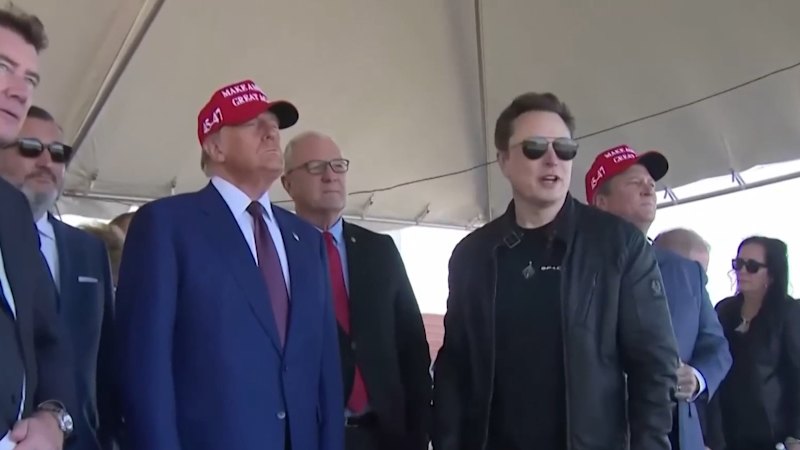
The mainstream press is salivating over the optics. They see a "bromance" between the world’s richest man and the leader of the free world. They see a "United Front" approach to Beijing. They see a masterclass in negotiation.
They are completely blind.
This isn’t a diplomatic mission. It’s a high-stakes, desperate extraction. Elon Musk isn’t going to China as an advisor to Donald Trump; he’s going as the collateral. If you think this trip is about "leveling the playing field" for American business, you haven’t been paying attention to the hard data coming out of the Shanghai Gigafactory or the reality of the Chinese Communist Party’s (CCP) long-game strategy.
The Myth of the Sovereign CEO
The lazy consensus suggests that Musk is a power broker who can bridge the gap between Trump’s protectionism and China’s manufacturing dominance. This narrative assumes Musk has agency. He doesn't.
Tesla is a Chinese company that happens to have its headquarters in Texas. Roughly half of Tesla’s global production comes from the Shanghai plant. More importantly, the margins that keep Tesla’s stock price in the stratosphere are entirely dependent on Chinese supply chain efficiencies and the grace of local regulators.
When Trump talks about 60% tariffs, he is threatening the very throat of Tesla’s business model. Musk isn't on that plane to help Trump negotiate; he’s there to ensure Trump doesn’t accidentally bankrupt him while trying to look tough on trade.
The Leverage Gap
In any negotiation, the person who can walk away holds the power.
- Trump can’t walk away because his "tough on China" brand requires a win that doesn't crash the S&P 500.
- Musk can’t walk away because his capital is physically trapped in Chinese soil.
- Beijing can walk away whenever they want.
China has already achieved what it needed from Tesla: the "Catfish Effect." By letting Tesla into the country in 2018, they forced local EV makers like BYD, NIO, and Li Auto to evolve or die. The locals evolved. Now, BYD is eating Tesla’s lunch in terms of volume, and the CCP no longer needs the American pioneer to show them how it’s done.
The FSD Trap: Why Musk is Selling Out American Data
People keep asking: "What does Musk want from this trip?" The answer is simple: Full Self-Driving (FSD) approval in China.
He is desperate to monetize his software stack in the world’s largest car market to offset slowing hardware sales. But here is the brutal truth that the "tech-optimist" crowd ignores: To get FSD approval, Musk will have to hand over the keys to the data.
The CCP’s Data Security Law isn't a suggestion. If Tesla wants to run its autonomous neural networks on Chinese streets, that data must stay in China, be processed in China, and be accessible to Chinese state security.
Imagine a scenario where the US government tries to restrict AI chip exports to China—a move Trump has championed—while the most prominent American tech mogul is simultaneously feeding petabytes of real-world driving data into servers that the CCP can audit at will. It’s a geopolitical absurdity.
Trump’s Economic Cognitive Dissonance
Trump’s platform is built on the "Made in America" ethos. Yet, his closest ally and largest donor is the king of "Assembled in China."
This creates a massive friction point that the media refuses to poke. You cannot be a hawk on Chinese trade while your primary tech surrogate is financially beholden to the Shanghai municipal government. Every time Trump suggests a policy that would actually decouple the two economies, Musk’s net worth takes a direct hit.
This isn't a "synergy." It’s a conflict of interest masquerading as a partnership.
The Real Cost of "Access"
I’ve spent years watching Western executives fly into Beijing thinking they are the ones doing the "art of the deal." They always lose. They trade their intellectual property for "market access," only to find that once the IP is transferred, the market access is revoked through "safety inspections" or "anti-monopoly" probes.
- Intel tried it.
- Apple is currently being squeezed out by Huawei’s state-backed resurgence.
- Tesla is next on the chopping block.
Musk’s presence on this trip isn't a sign of strength; it’s a sign that the squeeze has begun. He needs the President of the United States to act as his personal lobbyist just to keep his factories running.
Why "Decoupling" is a Fairy Tale
The "People Also Ask" sections of the internet are filled with questions about whether Trump and Musk will finally "bring manufacturing back" from China.
Stop asking that. It’s the wrong question.
The manufacturing isn't coming back because the US lacks the specialized supply chain clusters that exist in the Pearl River Delta. You can’t build a Tesla Bot or a Cybertruck at scale without the thousands of sub-tier suppliers located within a two-hour drive of Shenzhen.
Instead of asking how they will "win" against China, we should be asking how much of American tech sovereignty will be traded away to maintain the illusion of a profitable quarter.
The Hypocrisy of "Free Speech" vs. "Great Firewalls"
There is a glaring, nauseating irony in Musk—the self-proclaimed "free speech absolutist"—standing next to a President who wants to ban TikTok, while both are trying to charm a regime that maintains the most sophisticated censorship apparatus in human history.
Don't expect Musk to mention X (formerly Twitter) being banned in China. Don't expect him to mention the human rights record in Xinjiang.
Musk’s silence is the price of his lithium.
If you are a shareholder, you should be terrified. This trip isn't about opening new markets. It’s about managing a decline. It’s about trying to navigate a world where the US and China are moving toward a bipolar tech stack, and Tesla is the only major player trying to keep one foot in both graves.
The Actionable Reality for Investors
If you are holding Tesla because you think Musk’s proximity to Trump guarantees a "Golden Age" of deregulation and China dominance, you are reading the map upside down.
- Watch the Data Centers: The moment Tesla announces a "partnership" with a Chinese firm for FSD data processing, the US Department of Justice will (or should) launch a national security probe. You cannot serve two masters.
- Ignore the Handshakes: Pay attention to the Chinese "local content" requirements. If Beijing demands that Tesla’s batteries be 100% CATL-sourced with Chinese-owned IP, Tesla is no longer an American company. It’s a Chinese state-sponsored entity with an American CEO.
- Prepare for the Pivot: The most likely outcome of this trip isn't a trade deal. It’s a temporary truce that allows both leaders to save face while the structural rot of the US-China relationship continues to deepen.
The "Consensus" says this is a power move.
The "Reality" is that Musk is a man between a hammer and an anvil. Trump is the hammer. Xi is the anvil. This trip is just the sound of the impact.
Stop looking for a hero in a suit. Look at the balance sheet. Tesla’s future isn't being decided in the Oval Office; it’s being dictated in the Great Hall of the People, and no amount of "America First" rhetoric can change the fact that the world’s most famous entrepreneur is effectively a guest of the state whenever he lands in Beijing.
Sell the news. The hype is a smoke screen for a massive, structural surrender.