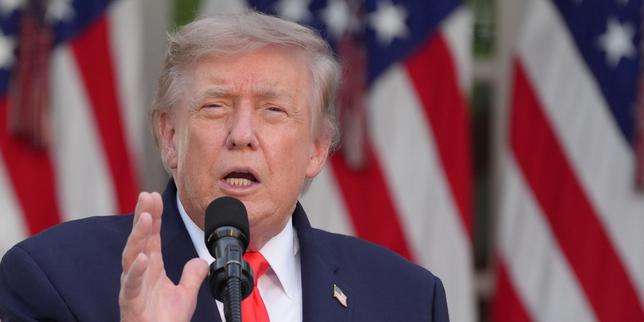
Donald Trump’s immediate reaction to the recent ship attack in the Strait of Hormuz—labeling it a "stupid violation" of the ceasefire by Iran—is exactly the kind of surface-level analysis that keeps Western foreign policy trapped in a cycle of predictable failures.
The political class and the mainstream media are rushing to copy-paste the same tired narrative. They paint a picture of a rogue state acting irrationally, breaking international law just to provoke a superpower.
They are entirely missing the point.
This was not a mistake, a provocation, or a "stupid violation." It was a highly calculated, economically sound chess move. If you view global shipping choke points through the lens of Western legalism, you will always be blindsided by nations operating on pure asymmetric realism.
The Flawed Premise of the "Ceasefire"
The media loves a clean narrative: a contract was signed, a ceasefire was established, and therefore, all hostile actions should stop. This assumes that international agreements are rigid rules. In reality, to a state under severe economic pressure, a ceasefire is merely a baseline from which to negotiate the next concession.
When a state actor targets a vessel in the Strait of Hormuz—a narrow waterway where roughly a fifth of the world's petroleum passes—they are not trying to start a war. They know exactly where the red lines are. They know that a full-scale military retaliation by the West is highly unlikely due to the catastrophic economic fallout it would trigger.
Instead, they are running a stress test on global supply chains.
I have spent years analyzing maritime risk profiles and trade vulnerability. Western analysts consistently assume that non-Western states care about the same metrics they do: GDP growth, international reputation, and diplomatic goodwill. They don't. When your back is against the wall economically, your primary currency is leverage. And nothing creates leverage faster than reminding the world that you hold the off-switch to global energy markets.
The Asymmetric Math of Maritime Disruption
Let us break down the actual mechanics of a choke-point attack. It highlights why calling these actions "stupid" reveals a profound ignorance of modern asymmetric conflict.
- The Cost Asymmetry: The cost to deploy a drone, a sea mine, or a fast-attack craft to damage a commercial tanker is negligible—often measuring in the thousands of dollars. The cost to defend against it requires carrier strike groups, continuous aerial surveillance, and millions of dollars per defensive missile intercept.
- The Insurance Multiplier: A single incident in the Strait doesn't just affect the targeted ship. It instantly spikes War Risk Insurance premiums for every single vessel planning to traverse the region.
- The Psychological Tax: By injecting unpredictability into the market, the actor forces international shipping conglomerates to re-route vessels around the Cape of Good Hope. This adds weeks to transit times and drives up consumer prices globally.
Imagine a scenario where a state can manipulate the inflation rates of its geopolitical rivals by simply moving a few pieces on a naval chessboard, all without firing a shot at a military target. That isn't a stupid violation. It is incredibly efficient geopolitics.
Addressing the Clueless Questions
The public discourse surrounding this event is dominated by fundamentally flawed questions. Let us dismantle the most common ones circulating right now.
"Why would Iran risk a military conflict when their economy is already weak?"
This question assumes that the status quo is tolerable for them. When a nation is choked by sanctions, stability is not their friend; stability means slow economic death. Instability, however, forces the international community back to the negotiating table. By creating a crisis, they create an opportunity to trade compliance for sanction relief. The weakness of their economy is precisely why they take these risks, not a reason to avoid them.
"Won't this turn global allies like China against them?"
The West loves to believe that China is a responsible stakeholder in the rules-based international order. It is an illusion. China is a consumer of cheap energy. Disruptions in the Strait certainly annoy Beijing, but they also give China massive leverage to negotiate deeper discounts on back-channel oil purchases from sanctioned states. The disruption does not alienate their allies; it deepens their dependency.
The Brutal Reality for Global Business
If you are running a logistics firm, a hedge fund, or an energy company, relying on presidential tweets or mainstream media analysis to guide your strategy is a guaranteed way to lose capital.
The Western response to these incidents is always predictable: deploy more naval assets, issue stern statements, and promise more sanctions. But this traditional projection of naval power is built for a century that has already passed. It cannot effectively neutralize low-cost, deniable, asymmetric threats without grinding commercial traffic to a halt anyway.
The uncomfortable truth that no politician wants to admit is that the Strait of Hormuz cannot be permanently secured by force. It is a geographical vulnerability that will always be exploited as long as the underlying geopolitical friction exists.
Stop expecting state actors in the region to behave like Western corporate executives who fear a drop in quarterly profits. They are playing a multi-decade game of survival, and they are fully aware that the West's appetite for prolonged economic disruption is incredibly low.
The attack was not an act of desperation. It was a demonstration of control. Treat it as anything less, and you are guaranteed to be blindsided by the next one.


