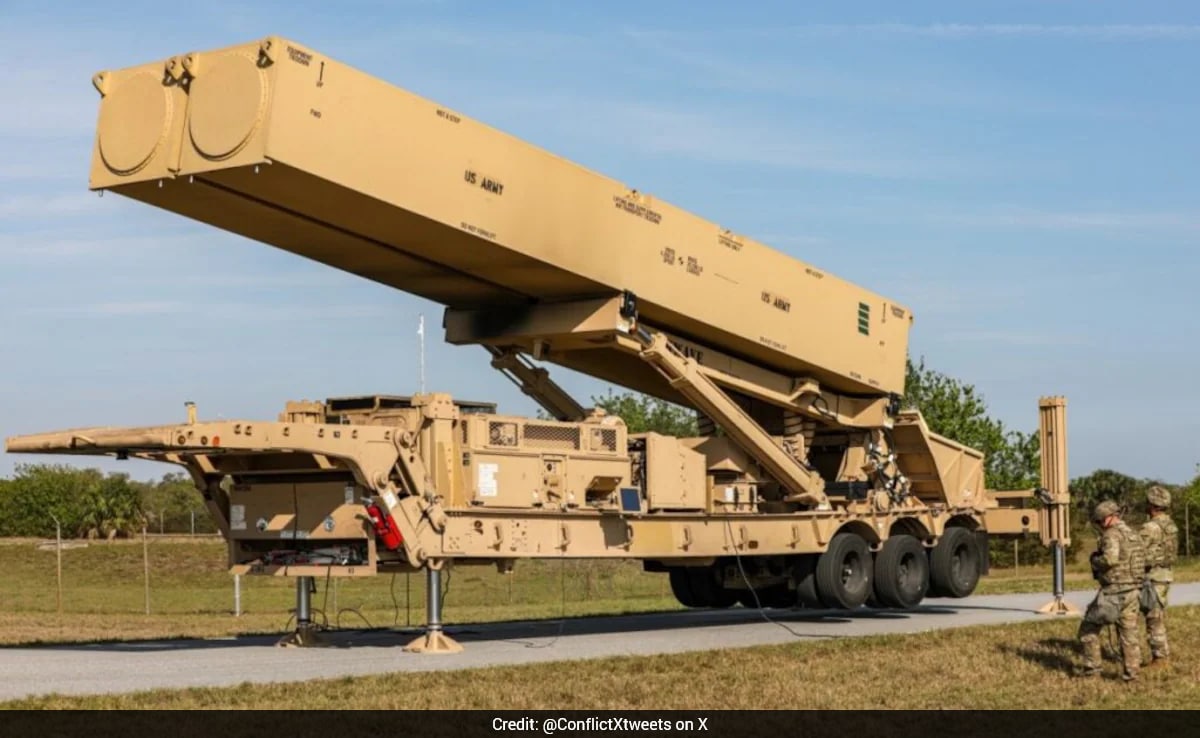
You’ve probably heard the name "Dark Eagle" floating around defense circles lately. It sounds like something out of a Tom Clancy novel, but it’s actually the U.S. Army’s first operational hypersonic weapon, formally known as the Long-Range Hypersonic Weapon (LRHW). With tensions with Iran heating up again in early 2026, there’s a lot of chatter about whether the Trump administration should pull this trigger.
The short answer? It’s a terrible idea.
Using a $40 million missile to do a job that a $2 million Tomahawk or a precision airstrike can handle isn't just bad math—it's bad strategy. While the allure of hitting a target in Tehran at Mach 17 is tempting, the reality on the ground is way messier. We’re talking about a weapon system that only recently entered full production and has a limited inventory. Burning through your "silver bullets" on a regional conflict when you need them for genuine peer-level deterrence is the kind of short-term thinking that keeps analysts up at night.
The Problem of Using Silver Bullets on Plywood Targets
The Dark Eagle isn't your run-of-the-mill cruise missile. It’s a specialized tool designed to punch through the world's most sophisticated air defenses—the kind you find in places like the South China Sea or the suburbs of Moscow. Iran has some decent hardware, like the S-300, but they don't have the kind of "impenetrable" bubbles that justify a hypersonic glide vehicle.
[Image of hydrogen fuel cell]
If you use a Dark Eagle to hit a mobile Iranian missile launcher, you're basically using a Ferrari to deliver a pizza. It’s overkill. More importantly, it’s a waste of a very finite resource. Reports from the 2026 production contracts suggest the Army is only cranking these out at a rate of maybe one or two a month. If Trump orders a strike using a handful of these, he’s effectively depleting a significant chunk of the national stockpile for a "demonstration of force" that might not even change the outcome of the conflict.
Why Speed Isn't Everything in the Middle East
The main selling point of hypersonics is time-sensitivity. You see a target, and you hit it before it moves. But here’s the catch: the "kill chain" still relies on human intelligence and satellite feeds. If it takes your commanders 20 minutes to verify a target, the fact that the missile gets there in five minutes instead of thirty doesn't always matter.
- Risk of Miscalculation: When a missile moves that fast, the "decision window" for the other side shrinks to zero. Iran might see a launch and, unable to tell if it's conventional or something worse, react with everything they've got.
- Intelligence Gaps: Speed doesn't fix bad intel. If you're aiming at where you think a launcher is, and it's already moved, a Mach 17 missile misses just as badly as a subsonic one.
- The Cost Factor: At roughly $40 million a pop, each Dark Eagle launch represents a massive chunk of the defense budget. In a prolonged conflict, those costs become unsustainable fast.
Testing in a Live War Zone is a Massive Gamble
Let's be honest about where the Dark Eagle stands. While the Pentagon awarded a $2.7 billion production contract in early 2026, the system has had a rocky testing history. There have been aborted tests at Cape Canaveral and issues with the booster stages. Using an "unproven" weapon in a live combat scenario against Iran is a huge PR risk.
Imagine the headlines if a Dark Eagle—the pinnacle of American engineering—suffers a technical failure and crashes in a desert or, worse, hits a civilian area because of a guidance glitch. You don't "test" your most expensive toys during a geopolitical standoff unless you're absolutely certain they'll work. Right now, the data suggests we're not there yet.
Strategic Signaling or Desperate Flexing
There’s an argument that using Dark Eagle would "send a message" to China and Russia. It says, "Look, we have hypersonics that work." But the opposite is also true. If we use them against a secondary power like Iran, it looks like we're desperate or that we don't have enough faith in our standard carrier-based assets.
True deterrence comes from having a weapon that the enemy knows you have but hasn't seen the full extent of. By revealing the flight profile and the exact capabilities of the Dark Eagle in an Iranian strike, we're giving away the "secret sauce" to every electronic intelligence ship in the region. We'd be handing Russia and China a front-row seat to record the sensor data they need to build better interceptors.
The Logistics Nightmare of Middle East Deployment
The Dark Eagle isn't just a missile; it’s a whole caravan of Transporter Erector Launchers (TELs) and command vehicles. Moving a battery of these into the Middle East is a logistical headache that signals our moves weeks in advance.
- Transport Vulnerability: These units are large and hard to hide. In a region crawling with drones and proxies, keeping a Dark Eagle battery safe is a mission in itself.
- Maintenance Needs: New tech requires specialized technicians. You can't just fix a hypersonic glide body with a wrench and some spare parts from a local base.
- Environmental Toll: The heat and dust of the region have historically played havoc with sensitive electronics. We don't know how the Dark Eagle’s specialized thermal tiling will hold up after weeks in the desert sun.
Focus on Proved Systems Instead
If the goal is to neutralize Iranian threats, the U.S. already has a massive toolbox that doesn't involve gambling with hypersonics. We have stealth bombers, Tomahawk missiles, and a fleet of drones that have been refined over decades of actual combat.
- B-21 Raider: If we need to get into defended airspace, use the stealth tech designed for it.
- PrSM (Precision Strike Missile): The Army already has these. They're faster than traditional rockets but way cheaper than a Dark Eagle.
- Cyber Operations: Sometimes the best way to stop a missile launch is to kill the software before the engine ever starts.
Instead of rushing a high-stakes, high-cost weapon into a theater where it isn't strictly necessary, the smart move is to keep the Dark Eagle in the hangar. Use the current production run to build a real stockpile that actually scares our major rivals. Don't waste the future of American missile tech on a conflict that can be won with the tools we already have.
Stop treating hypersonics like a "win button." They're a specific tool for a specific problem—and Iran isn't that problem.