You can't make this stuff up. Right now in Washington, a fierce political battle is brewing over a piece of paper that doesn't even legally exist yet.
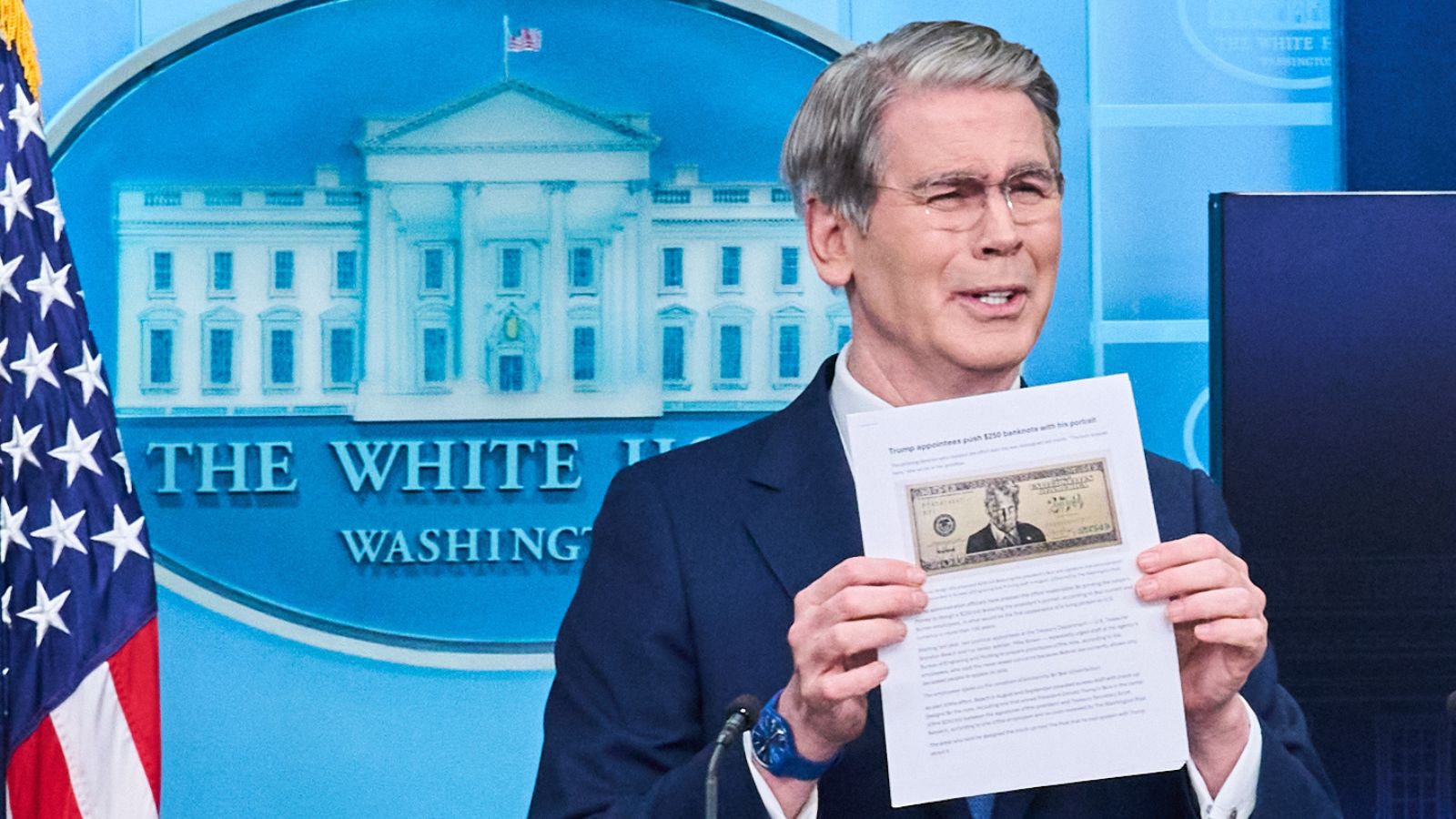
Capitol Hill Republicans are pushing hard to get Donald Trump’s face printed on a brand-new $250 Federal Reserve note. Treasury Secretary Scott Bessent even stood at a White House press briefing holding up a prototype. The administration is openly admitting that the Bureau of Engraving and Printing is already doing the prep work. Also making news lately: The Geopolitical Cost Function of Enforced Disappearances in Balochistan.
There is just one massive, 160-year-old problem standing in the way. It is completely illegal.
Since the days of the Civil War, federal law has strictly prohibited any living person from appearing on US paper currency. To put Trump on a banknote while he is sitting in the Oval Office, Congress has to literally rewrite the rules of American money. Here is the real story behind this unprecedented currency play, why it's happening right now, and the slim odds it actually has of ending up in your wallet. Further insights on this are detailed by Reuters.
The Secret Origins of the Trump Currency Push
This isn't just a sudden whim. The groundwork for this legislative stunt was quietly laid a while ago.
Back in early 2025, Representative Joe Wilson, a South Carolina Republican, quietly introduced the "Donald J. Trump $250 Bill Act." For over a year, the bill gathered dust inside the House Financial Services Committee. Most people ignored it, assuming it was just typical political theater.
Then came the explosive reporting from The Washington Post, revealing that Trump administration political appointees weren't waiting around for Congress to act.
US Treasurer Brandon Beach and senior adviser Mike Brown spent months leaning on career staff at the Bureau of Engraving and Printing. They repeatedly demanded mock-ups and prototypes of the new bill. Career officials reportedly pushed back, pointing out that doing this kind of design work for a living person flew right in the face of federal statutes.
But the pressure worked. The administration brought in a British artist named Iain Alexander to create the early concept design. Alexander, who has worked as a royal portrait artist, later revealed that Trump personally reviewed the artwork. The president didn't just look at it; he gave active design notes. Trump explicitly requested modifications, telling the artist to weave in the colors of the American flag and a special custom logo.
The Historic 1866 Rule Trump Wants to Break
To understand why career Treasury staff were so freaked out by these requests, you have to look at why American money looks the way it does.
Since 1866, the law has been ironclad. Section 5114 of Title 31 of the United States Code explicitly states that only the portrait of a deceased individual may appear on US currency and securities.
Congress didn't pass that law out of some abstract philosophical modesty. They did it because of a wild, bizarre 19th-century bureaucratic scandal involving a man named Spencer Clark.
During the Civil War, the US was facing a massive shortage of metal coins. To fix this, the government authorized the printing of fractional currency—paper notes worth 5 cents, 10 cents, and 25 cents. Spencer Clark happened to be the superintendent of the National Currency Bureau.
When Congress authorized a new 5-cent paper note, they intended for it to feature William Clark, the famous explorer from the Lewis and Clark expedition. Instead, Spencer Clark used the vague wording of the mandate to print his own face on the money.
The public was furious. Congress felt insulted by the bureaucrat's immense ego. To make matters worse, Spencer Clark was soon implicated in a massive scandal involving the alleged mistreatment of female employees and the printing of counterfeit money inside the Treasury building.
Disgusted by the whole ordeal, lawmakers immediately passed a law declaring that no living person's face could ever be placed on greenbacks again. George Washington, Abraham Lincoln, Benjamin Franklin—they all had to die before they could get on a bill.
If Joe Wilson’s bill passes, Trump would become the first living person to break this streak in more than a century and a half.
What the Proposed Note Actually Looks Like
We already know exactly what this bill looks like because Scott Bessent proudly teased it to reporters.
The design centers around a specific presidential portrait of Trump, where he sports a characteristically intense, glowering expression. The artwork, heavily modified based on Trump's personal feedback, includes:
- The striking colors of the American flag blended into the traditional greenback aesthetic.
- A custom logo celebrating the United States Semiquincentennial.
- Trump's own distinct, bold signature emblazoned right on the front of the note.
The choice of the $250 denomination isn't random. The White House is tying the entire project to the country's upcoming 250th anniversary of independence on July 4, 2026.
Bessent argued at the podium that there is absolutely "nothing untoward" about honoring the sitting president during such a massive milestone year. The administration is trying to frame this as a historic commemorative collectible rather than a weird ego trip. They are using the exact same playbook they used for a recently approved 24-karat gold commemorative coin featuring Trump, which the Treasury managed to clear by arguing that special coins don't fall under the same rigid paper currency restrictions.
The Brutal Math on Capitol Hill
Can the Republicans actually pull this off? Honestly, the math looks incredibly bleak.
For this bill to become reality, it has to pass both chambers of Congress before the 119th Congress wraps up. If it doesn't, the bill expires completely, and lawmakers have to start from scratch in the next session.
The House of Representatives
The bill has a real shot here. Republicans hold a majority, and House Financial Services Committee members have reportedly greenlit the legislation for an official hearing. While House Democrats are universally united against it, the GOP can likely muscle it through on a party-line vote if leadership decides to put it on the floor.
The United States Senate
This is where the plan hits a brick wall. Even though Republicans hold a 53-seat majority in the Senate, federal legislative rules mean this bill would need a 60-vote threshold to overcome a guaranteed Democratic filibuster. That means Republicans would need to convince at least seven Democrats to cross the aisle and vote to put Trump's face on a $250 bill.
That is not going to happen. House Democratic Leader Hakeem Jeffries quickly took to X to deliver a scathing reality check, writing a "hard no on a Trump $250 bill." Jeffries added, "Get over yourself. The upcoming July 4th anniversary is not about a wannabe King. It's about celebrating the American journey."
With that kind of fierce opposition, the bill is effectively dead on arrival in the Senate.
The Real Agenda Behind the Currency Debate
If the bill has virtually zero chance of overcoming a Senate filibuster, why is the White House wasting precious political capital pushing it so aggressively?
It's all about messaging, branding, and distraction.
Trump has always viewed his personal brand as his most valuable asset. Putting his face and signature on official government property—from massive banners on federal buildings to limited-edition passports—is a core part of his political identity. By forcing a high-profile fight over a $250 bill, the administration achieves two things.
First, it creates a highly visible loyalty test for congressional Republicans. Lawmakers are forced to go on the record showing exactly how far they are willing to go to defend and honor the president.
Second, it serves as a massive culture-war distraction. While reporters are busy shouting questions at Scott Bessent about a hypothetical banknote, they are spending less time digging into more painful economic realities, like the ongoing affordability crisis that has everyday Americans struggling to buy groceries. When asked by reporters if a $250 vanity bill was a good look during a time of high inflation, Bessent quickly pivoted, trying to reassure the room that energy prices would soon drop once foreign conflicts wind down.
What Happens Next
Don't expect to see a crisp $250 Trump note ATM-ready anytime soon. The Bureau of Engraving and Printing will keep quietly working on their "due diligence" mock-ups, but their hands are legally tied until Capitol Hill acts.
Keep a close eye on the upcoming House Financial Services Committee hearings. That is where the public will get its first formal look at the official Treasury designs and where lawmakers will trade blows over the legacy of the 1866 currency law.
If you want to track the actual progress of this fight, keep an eye on the Senate docket. Unless you see prominent centrist Democrats signaling a sudden, shocking willingness to entertain the bill, you can safely assume this entire currency push will remain a collector's item of political trivia rather than actual legal tender.