In a nondescript office in Brussels, the air smells of stale coffee and the low-frequency hum of server racks. A mid-level analyst stares at a screen where a map of the Mediterranean is overlaid with jagged red lines. These lines represent more than just flight paths or shipping lanes. They are the nervous system of the modern world. Somewhere off the coast of Cyprus, a GPS signal flickers, dies, and then reappears three miles to the east.
It is a ghost in the machine.
To the average vacationer on a budget flight to Larnaca, this is a minor annoyance—a glitch in the moving map on the seatback screen. To the North Atlantic Treaty Organization, it is a pulse check on a fever that refuses to break. The shadow of the conflict in Iran is no longer confined to the dusty plains of the Middle East. It has drifted north and west, settling over Europe like an invisible, choking fog.
We often talk about war in the past tense, as something that happens with bayonets and muddy trenches. We think of alliances like NATO as a giant, sleeping bear that only wakes when a border is crossed. But the border has changed. It is no longer a line on a map. It is the data stream from a satellite 12,000 miles above the Earth. It is the steady flow of liquefied natural gas through a pipeline beneath the Baltic Sea.
The heat is rising.
The Invisible Front Line
Consider the case of a fictional but entirely representative character named Elena. She is a logistics manager at a medium-sized German engineering firm. Elena does not think about the Iranian Revolutionary Guard when she wakes up. She thinks about her three-year-old’s daycare and the rising cost of electricity.
Last Tuesday, Elena’s world wobbled.
A sudden spike in regional GPS jamming, attributed to electronic warfare systems deployed in the Mediterranean theater, delayed a shipment of critical sensors. This delay rippled through her supply chain. A factory in Munich paused. Two hundred workers went home early. A contract was missed. Multiply Elena by ten thousand, and you start to see the outline of a ghost war.
This is the friction of a conflict that hasn’t officially begun for the West. The Iranian war, though physically distant, radiates outwards in waves of electromagnetic interference and soaring maritime insurance premiums. It is a slow-motion tightening of the throat.
NATO members are feeling this heat, but the thermometer is broken.
The alliance is built on a foundation of ironclad certainty: Article 5. It is the famous "one for all, all for one" pact that states an attack on one member is an attack on all. For decades, this was easy to define. If Soviet tanks rolled through the Fulda Gap, the sirens would wail.
What happens when the attack is a digital shadow?
Suppose a cyberattack, traced back to Tehran-linked groups, knocks out the power grid in Warsaw for forty-eight hours. Is that an act of war? Suppose a merchant ship flying the French flag is harassed by drones in the Strait of Hormuz. Does that trigger a collective military response?
The bar for the bloc to act is not just high. It is shrouded in a legalistic fog that makes it almost impossible to step over without tripping. The ambiguity is the point.
The Calculus of Restraint
Behind the heavy oak doors of the North Atlantic Council, the conversation is rarely about fire and brimstone. It is about definitions.
Diplomacy is the art of saying "no" while making it sound like "not yet." The member states are currently locked in a struggle of competing interests and varying levels of skin in the game. On one side, you have the Baltic states and Poland, who see every provocation as a precursor to a wider collapse of order. On the other, you have nations further west, insulated by geography and more concerned with the economic fallout of a direct confrontation.
The Iranian war acts as a catalyst for these internal tensions.
Imagine a spiderweb stretched across a doorway. If you pull on one strand in the bottom left corner, the whole structure vibrates. But where do you repair the web? If NATO retaliates against Iranian-backed maritime harassment, it risks an escalation that could spiral into a regional firestorm. If it does nothing, the credibility of the alliance erodes, one "glitch" at a time.
The statistics back this up. Maritime traffic through the Red Sea and the Persian Gulf has faced unprecedented disruption, with some routes seeing a 40% drop in volume. This isn't just a number on a spreadsheet. It is the reason your new dishwasher is on backorder for six months. It is the reason the price of a gallon of gas at the pump in Ohio is twenty cents higher than it was last month.
The invisible stakes are the quiet erosion of the standard of living in the West.
The Cost of a Clean Conscience
There is a psychological weight to this stalemate. We like to believe that we are the masters of our own destiny, that our borders are secure and our technology is infallible. The Iranian conflict exposes the fragility of that belief.
A high-ranking military official once whispered in a private briefing that the greatest threat to NATO isn't a missile. It is a loss of collective will.
When the bar for action is set too high, it creates a vacuum. In that vacuum, doubt grows. People start to ask if the alliance is still relevant in an age of hybrid warfare. They wonder if the "heat" they feel is just the new normal.
The technical reality is even more sobering. The electromagnetic spectrum is now a battlefield as real as any hillside in Verdun. GPS spoofing—where a receiver is tricked into thinking it is somewhere it isn't—can lead to ships running aground or drones being hijacked.
This is a weapon that leaves no fingerprints.
If a missile hits a building, there is rubble. There is a "where" and a "who." If a navigation system is spoofed, there is only a confused captain and a ship in the wrong place. How do you invoke Article 5 for a software error?
The dilemma is profound.
A House Divided by a Thousand Cuts
The reality of the situation is that NATO is currently being tested not by a hammer, but by a thousand needles.
Each needle pricks a different member in a different way. Turkey, a NATO member with its own complex relationship with Iran and Russia, views the conflict through a lens of regional hegemony. The United States sees it as a distraction from the Pacific. The United Kingdom views it as a threat to its historical role as a guardian of the seas.
These divergent views make the "high bar" for action a moving target.
The consensus required for a bloc-wide response is a relic of a simpler time. In 1949, the threats were existential and obvious. In 2026, the threats are incremental and deniable. The "heat" isn't a sudden explosion; it's a slow boil.
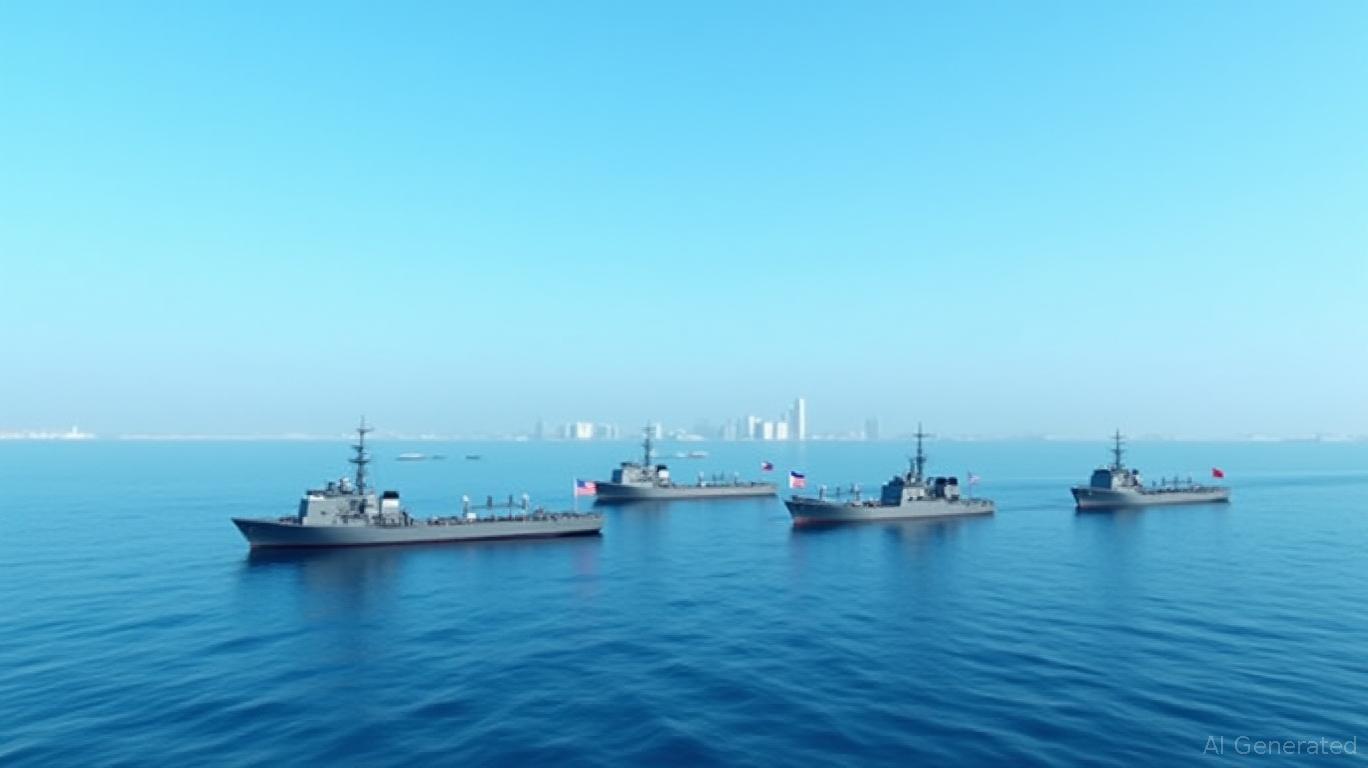
The human cost is often found in the people tasked with maintaining the illusion of calm. The sailors on the destroyers in the Gulf of Aden, the technicians monitoring the undersea cables, the diplomats who haven't slept in forty-eight hours—they are the ones holding the line.
They are the ones who know that the bar for action isn't just a legal threshold. It is a psychological one.
The world is watching.
The Silent Ticking of the Clock
At some point, the heat becomes unbearable.
Whether it is a catastrophic cyberattack on a major European financial hub or a lethal encounter in international waters, a moment will arrive when the legalistic fog must lift. The question isn't whether NATO can act. It is whether it will still be the same alliance when it finally does.
The Iranian war has proven that modern conflict is a spectrum. We are no longer in "peace" or "war." We are in a state of permanent friction. This friction generates heat, and that heat is slowly melting the certainties we have relied on for seventy-five years.
Back in that Brussels office, the analyst watches the screen. The red lines are still there. The GPS signal on the map off Cyprus flickers again.
It isn't a ghost.
It is a warning.
The system is designed to wait for a catastrophe before it moves. It is built for the big explosion, the unmistakable invasion, the clear and present danger. But the world has learned how to bleed us without making a sound. The danger isn't that the bar is too high. The danger is that while we argue about where the bar should be, the ground beneath it is being washed away.
The hum of the server racks continues. Outside, the rain begins to fall on the cobblestones of the Grand Place. Life goes on, for now, in the shadow of a war that is both thousands of miles away and right inside our pockets.
The clock is ticking, but you can't hear it over the sound of the world trying to pretend everything is fine.
The screen in Brussels goes dark for a second. A reset. A breath. Then the red lines reappear, slightly closer this time.
Would you like me to analyze the specific technological vulnerabilities of European power grids to the types of hybrid warfare tactics currently being observed in the Mediterranean?