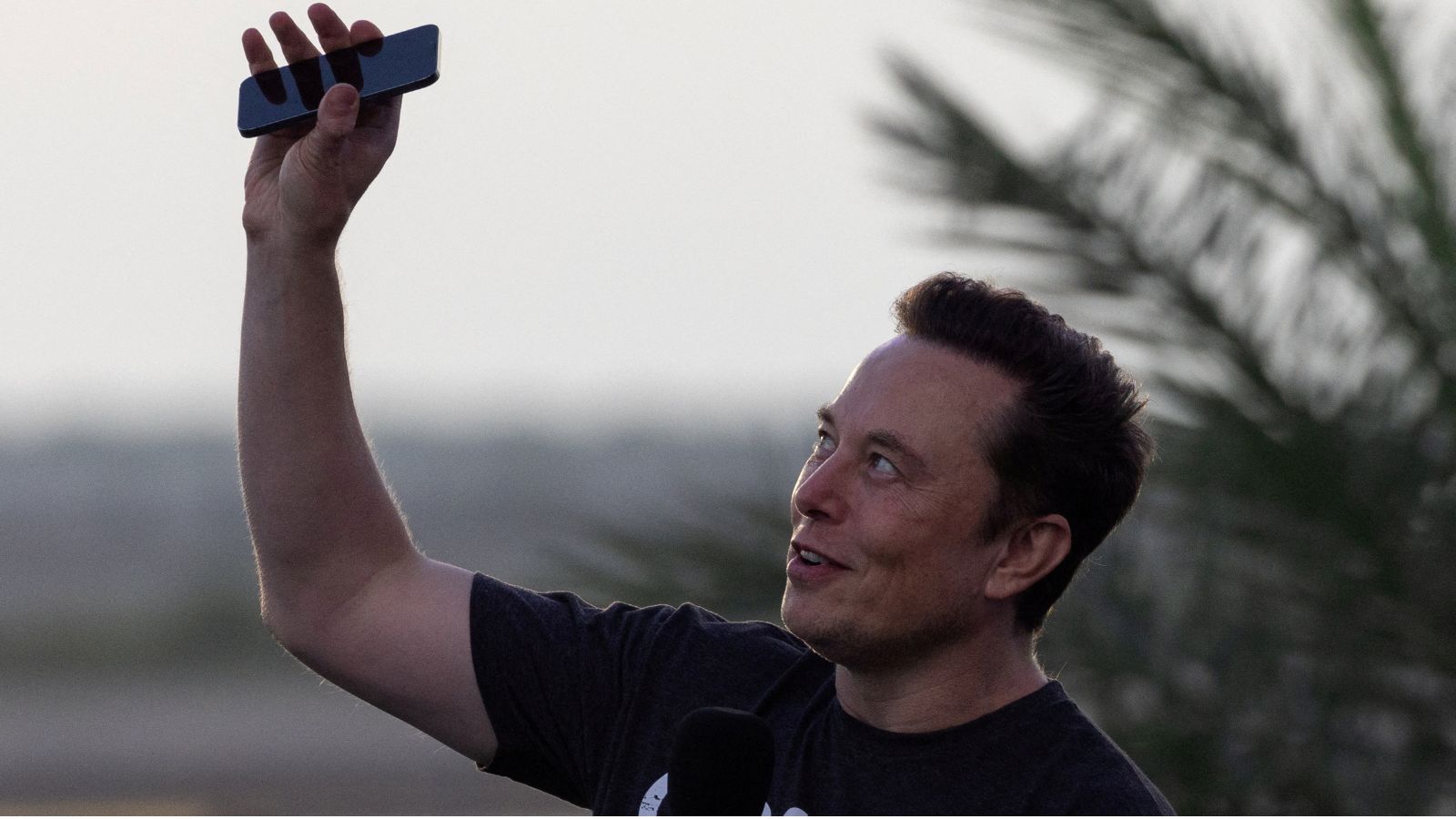
Elon Musk just crossed a line no human being has ever touched. On Friday, June 12, 2026, the tech eccentric officially became the world's first trillionaire. This did not happen because of a sudden surge in Tesla shares or another viral social media stunt. It happened because Space Exploration Technologies Corp. finally made its long-awaited debut on the Nasdaq exchange under the ticker symbol SPCX.
The public offering did not just push Musk into a new tax bracket; it shattered global financial records. Selling 555.6 million shares at an unyielding, take-it-or-leave-it price of $135 each, SpaceX raised a staggering $75 billion. That haul completely obliterates the previous global IPO record held by Saudi Aramco, which pulled in $29 billion back in 2019.
When the opening bell rang, the market did what it usually does with Musk ventures: it went into a frenzy.
Breaking Down the Initial Market Surge
Though the shares were priced at $135 on Thursday night, institutional and retail demand was massively oversubscribed. Buyers put in more than $350 billion in orders before the opening. When trading actually commenced around midday on Friday, the stock bypassed the offering price entirely, opening at $150 a share. Within minutes, volatile trading pushed the price to an intraday high of $168.75.
Take a look at how those numbers translate to overall corporate scale. At the $135 entry point, SpaceX held a market valuation of roughly $1.77 trillion. With the midday stock price hovering around $165, the company's market cap surged past $2.18 trillion. This instant valuation vaults SpaceX to the position of the sixth-largest public company in the United States, sitting just behind the tech elite of Nvidia, Alphabet, Apple, Microsoft, and Amazon.
What makes this valuation distinct is the underlying structure of the business itself. Investors are not just buying a rocket launcher. The modern iteration of SpaceX that went public is a massive, multi-pronged entity. It includes the core Falcon and Starship rocket business, the expanding Starlink satellite internet network, and Musk's artificial intelligence startup, xAI, which was recently wrapped into the corporate structure.
How the Personal Wealth Formula Works
To understand how Musk hit the trillion-dollar mark on paper, you have to look closely at the regulatory filings. Net worth calculations for tech founders are often murky, but the SEC paperwork for the SPCX offering outlines the exact math.
- Core Stock Ownership: Musk owns roughly 4.8 billion shares of SpaceX, representing about a 42% economic stake in the firm.
- Stock Options: He holds 350 million vested options that can be exercised at a rock-bottom price of $8.39 per share.
- The Valuation Delta: Before Wall Street priced the IPO, wealth trackers like Forbes and Bloomberg valued Musk's total fortune at roughly $813 billion. That calculation assumed a private market value of around $500 billion for his SpaceX holdings.
When the official $135 price tag went live, his public equity stake instantly became worth $648 billion. Add the $44.3 billion intrinsic value of his cheap stock options, and his SpaceX holdings alone reached nearly $700 billion.
Combined with his $300 billion stake in Tesla—which dipped a minor 1% on Friday to trade around $395—and his minority stakes in X, Neuralink, and The Boring Company, his total net worth hit $1.005 trillion before a single public trade occurred.
Because every single dollar that SPCX moves above the $135 baseline adds roughly $5.2 billion to his personal balance sheet, the midday jump to $168 pushed his net worth to an astonishing $1.18 trillion.
To put that wealth in perspective, Musk is now more than three times richer than the second wealthiest person on Earth, Google co-founder Larry Page, who sits at approximately $288 billion. Only 19 countries on the planet have an annual Gross Domestic Product higher than Musk's paper net worth. His personal fortune eclipses the entire economic output of developed nations like Taiwan, Ireland, and the Netherlands.
Inside the Loss-Making Massive Capital Buildout
The most polarizing aspect of this multi-trillion-dollar market debut is the balance sheet. SpaceX is not a highly profitable cash engine like Meta or Apple. In fact, it operates at a significant loss.
Internal financial metrics show that last year, SpaceX pulled in a massive $18.7 billion in revenue. However, it also logged an operating loss of $4.3 billion. The company is burning through capital at an unprecedented rate, and Musk was entirely transparent about why he brought the firm to the public markets after nearly 25 years of private operation.
He needs money. A lot of it.
During an interview ahead of the listing, Musk stated that the company is entering an aggressive capital growth phase. The plan involves launching over 100,000 communication satellites to satisfy the data demands of global AI networks and autonomous robotics. More experimental is the company's plan to build out actual AI data centers in Earth's orbit. According to Musk, putting data infrastructure into space will be the primary mechanism for scaling raw compute power without hitting local energy grid limitations on the ground.
This means public investors are entering a high-stakes deal. They are funding a business that requires billions in capital expenditures to build infrastructure for technologies that are still unproven at scale.
The Broader Implications for Main Street
While Musk captures the headlines, the IPO is changing lives across the corporate ladder. The New York Times reported that roughly 4,400 current and former SpaceX employees became overnight millionaires when the stock began trading. Out of that group, an estimated 400 early engineers and executives secured stakes worth $100 million or more.
For the average retail investor, the impact is more indirect and carries structural risks. Wall Street underwriters, led by Goldman Sachs and Morgan Stanley, arranged for rapid distribution into major index funds. This means the stock will be integrated into broad market portfolios much faster than typical public listings, though it will skip immediate inclusion in the S&P 500.
Because retirement accounts, target-date funds, and mutual funds will rapidly acquire SPCX shares to match market weighting, millions of average workers will soon hold exposure to this volatile asset. If Musk’s space-based AI datacenters succeed, those retirement portfolios will benefit. If the massive capital burn results in a market correction, everyday investors will absorb the shock.
For those looking to manage their exposure or trade the volatility, the immediate path forward requires checking your institutional holdings. Review your technology sector funds and active mutual portfolios over the coming weeks to see exactly how much SPCX exposure your asset managers are adding. Do not buy into the initial retail hype at the top of the opening day pop; let the early volatility settle before allocating direct capital to a company carrying billions in operational losses.