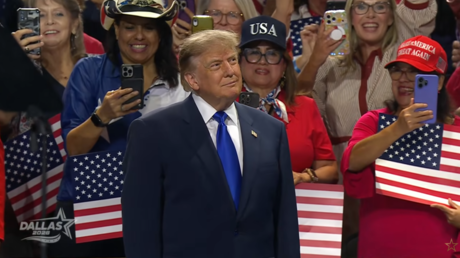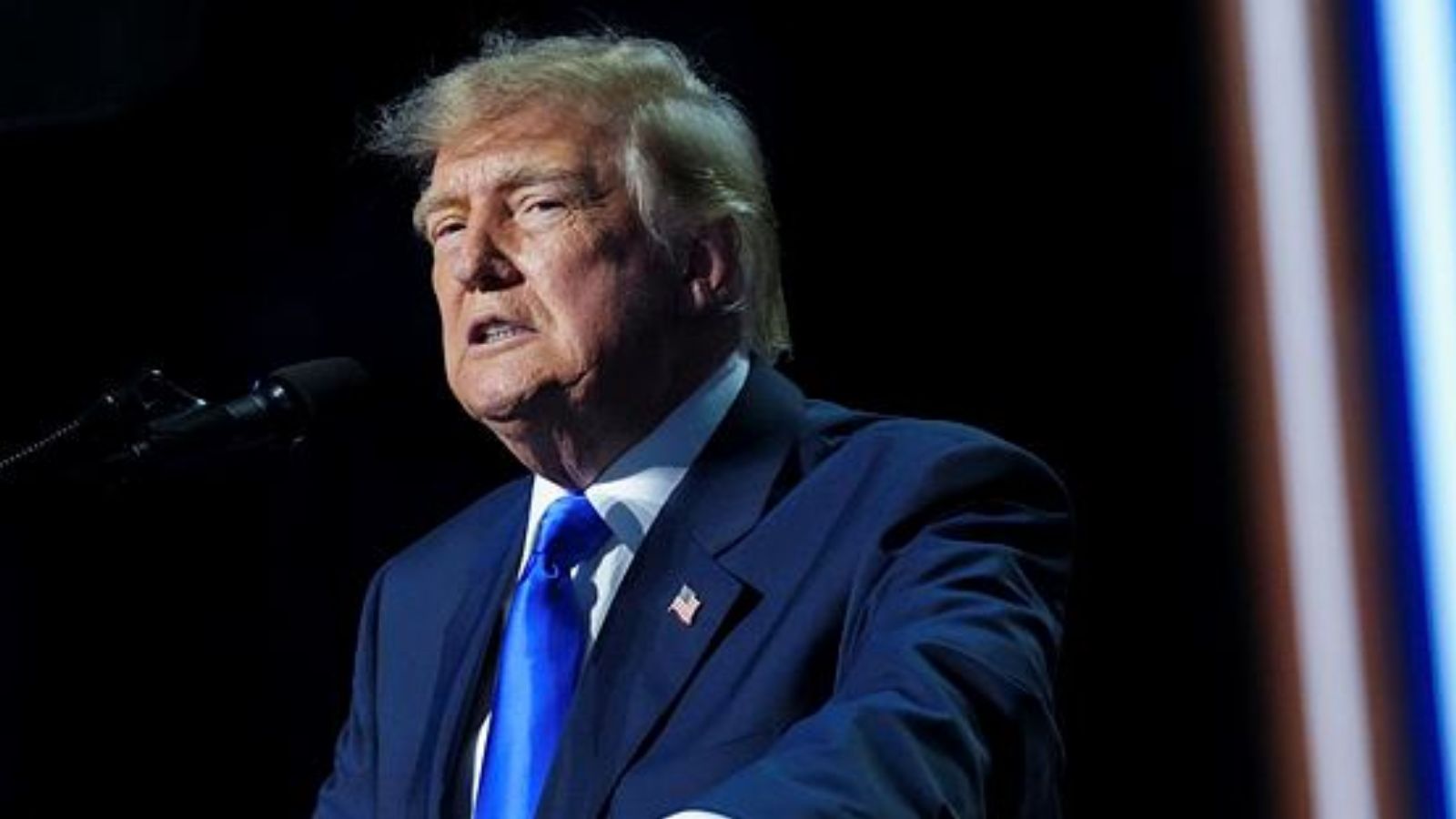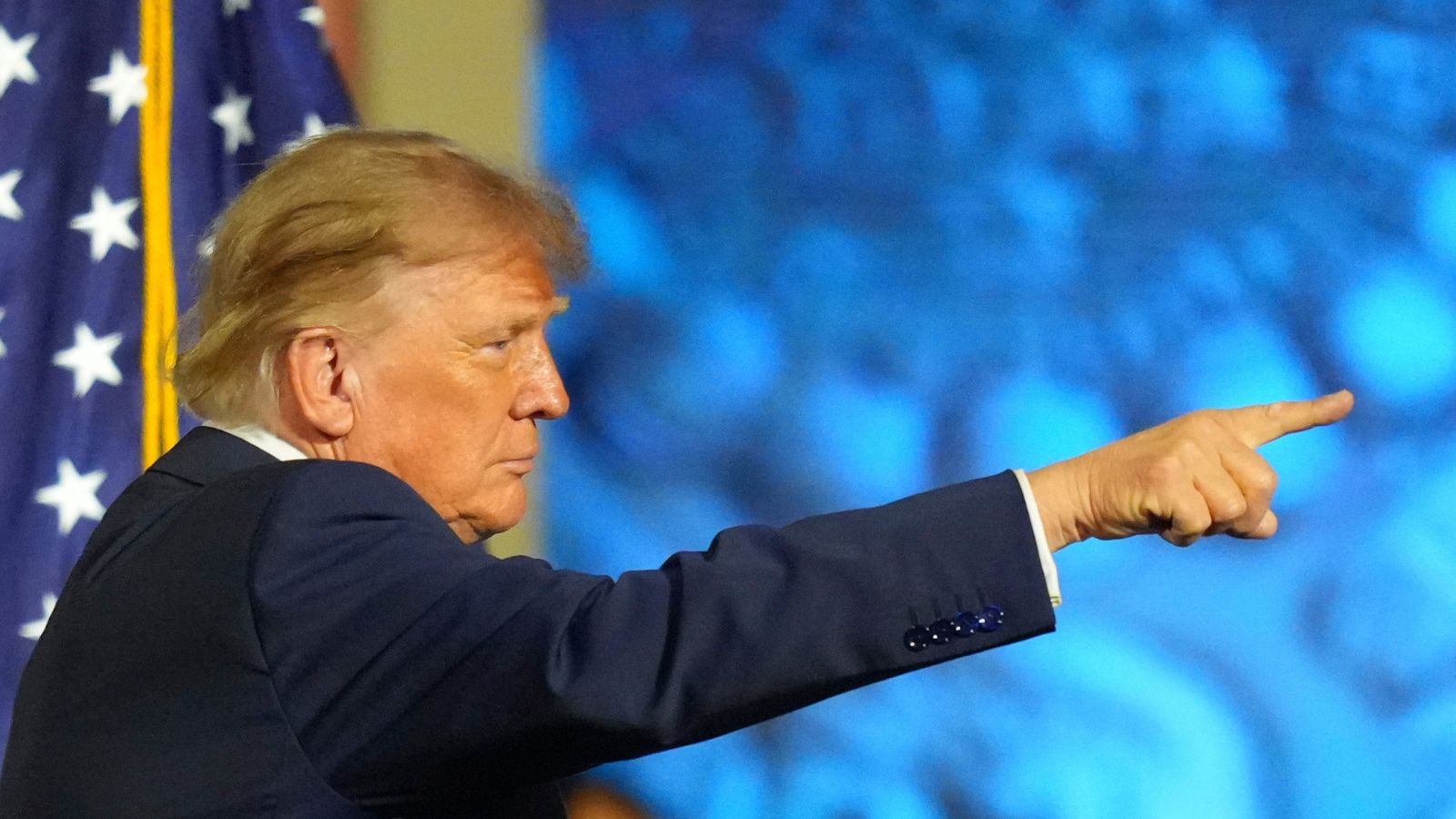
President Donald Trump’s promise to deliver a $5,000 "Trump Dividend" to every adult American citizen—conditioned explicitly on a Republican sweep of both the House and Senate in the upcoming midterm elections—carries a staggering price tag of roughly $1.35 trillion. Unveiled during the first-ever Republican midterm convention in Dallas, Texas, this extraordinary financial gambit represents roughly three percent of the entire U.S. gross domestic product.
Veterans of fiscal policy and congressional budget battles immediately recognized the pitch for what it is: an unprecedented attempt to bypass normal appropriations pathways by dangling direct monetary relief in exchange for legislative survival. Yet, beneath the political theater of campaign-style rallies lies a web of structural impossibilities, inflationary hazards, and constitutional hurdles that define the modern American fiscal crisis.
The Mechanics of a Trillion-Dollar Check
Where does a trillion dollars come from? According to the administration's initial framing, the funding would rely heavily on incoming revenue generated by protectionist tariffs. There is a glaring mathematical disconnect here. Annual tariff collections historically yield a fraction of what would be required to disburse five thousand dollars to approximately 270 million adult Americans. Even before factoring in judicial pushback—such as federal court rulings narrowing executive tariff authority—import duties cannot bridge a multitrillion-dollar gulf without plunging the federal deficit deeper into the red.
The national debt has already breached the $40 trillion threshold. Injecting another trillion-plus dollars of unbacked liquidity directly into consumer hands echoes the pandemic-era stimulus checks of the early 2020s. Economists across the political spectrum point out that those earlier relief measures, while politically popular, poured rocket fuel onto the consumer price index, igniting the worst inflation cycle in a generation. Replaying that playbook on a partisan conditional basis threatens to reignite price spirals precisely when voters are already expressing profound exhaustion with high costs.
The Legal and Constitutional Gray Zone
Electoral mechanics in the United States are governed by strict federal statutes designed to prevent the outright purchase of votes. Federal law prohibits offering tangible inducements to influence how a citizen casts a ballot. When a sitting president stands before a convention and explicitly links a massive government payout to the electoral retention of his party's congressional majority, legal experts immediately divide along predictable lines.
Critics argue this crosses the line from standard policy platforming into systemic vote-buying. Conversely, defenders point to broad First Amendment protections and argue that political promises regarding tax rebates, regulatory dividends, or economic distributions have long been staple elements of campaign rhetoric.
Consider a hypothetical household of four adults. Under the proposal, a successful Republican midterm outcome would theoretically trigger a $20,000 cash influx to that single roof line, provided they spend those funds strictly within domestic markets. Monitoring such a domestic spending restriction introduces an administrative nightmare. Would the federal government track retail receipts? Would merchants act as enforcement agents? The logistical framework required to audit hundreds of billions of consumer transactions dwarfs any existing oversight apparatus.
Congressional Reality and Party Anxiety
The most immediate barrier to the Trump Dividend is Article I of the Constitution. The executive branch does not possess the power of the purse. Congress—and Congress alone—authorizes federal spending.
For the proposal to manifest, a newly seated post-midterm Congress would have to draft, debate, and pass a multi-trillion-dollar appropriations bill. Even under a nominal Republican majority, fiscal hawks within the party—those historically obsessed with balancing the budget and curtailing national debt—would face an existential dilemma. Voting for a $1.35 trillion direct-payment scheme contradicts decades of conservative orthodox opposition to large-scale entitlement expansions.
Behind closed doors, Republican strategists have expressed anxiety that leaning into unconventional gimmicks underscores deep vulnerabilities on standard bread-and-butter economic issues. Opinion polls consistently show public frustration regarding inflation, housing costs, and foreign entanglements. Offering cash rewards feels less like a sustainable economic strategy and more like an acknowledgment that conventional legislative achievements are failing to move public opinion.
The Broader Precedent of Direct Patronage
Direct financial distributions tied to political alignments are rarely seen outside of fragile petro-states. Importing this mechanism into the world's largest economy shifts the baseline of democratic engagement toward transactional patronage. If voters begin expecting direct cash transfers conditioned on electoral outcomes, future cycles risk devolving into open bidding wars funded by the public treasury.
The administration’s proposal relies on the assumption that short-term financial gratification overrides long-term systemic concerns about currency devaluation, national debt trajectories, and institutional norms. As November approaches, the debate over the Trump Dividend moves past campaign rhetoric into a stark test of whether American democratic and fiscal institutions can absorb a proposal designed to turn the ballot box into a ledger sheet
The Trump Dividend Announcement
This video provides footage and primary audio of the speech where the proposal was introduced to the public.
http://googleusercontent.com/youtube_content/1