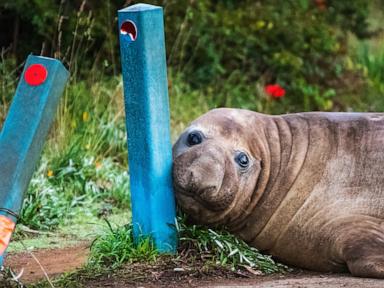
The internet has a dangerous obsession with turning massive, unpredictable apex predators into cuddly neighborhood mascots. Look no further than the collective meltdown over Neil, the 600-kilogram southern elephant seal frequenting the roads and front yards of Tasmania.
The media loves this narrative. Government officials plead with the public to "respect Neil’s privacy" as if he’s a Hollywood A-lister hiding from the paparazzi. Local residents post TikToks of him blocking traffic, treating a multi-ton marine mammal like an eccentric neighbor who refuses to mow his lawn. For a closer look into this area, we suggest: this related article.
This entire approach is fundamentally flawed. Anthropomorphizing wild animals does not protect them. It actively endangers them, distorts public understanding of ecology, and wastes precious conservation resources on public relations campaigns instead of actual habitat management. We need to stop asking people to "respect the privacy" of a creature that cannot comprehend the concept, and start enforcing hard boundaries based on cold, hard biology.
The Myth of the Gentle Giant
The lazy consensus among wildlife onlookers is that if an animal seems relaxed, it’s harmless. People see a seal lounging on the tarmac and assume he’s just a goofy guy looking for a nap. For additional details on this development, in-depth analysis is available on TIME.
Let's look at the actual biology. Southern elephant seals ($Mirounga$ $leonina$) are built for extreme survival. During the breeding season, alpha males engage in brutal, bloody combat to establish dominance over harems. They possess massive canine teeth, crushing jaw pressure, and an aggressive drive driven by pure testosterone.
When a seal enters a suburban area, it isn't trying to be friends. It is navigating a deeply altered coastal ecosystem. Treating a 1,300-pound carnivore like a local celebrity creates a false sense of security. I have watched wildlife management agencies spend hundreds of hours managing human crowds rather than managing the wildlife itself, simply because local communities throw a tantrum if a wild animal is moved or handled with necessary firmness.
The premise of the standard public plea—"just give him space and he’ll be fine"—ignores human nature. Human beings are inherently selfish when it comes to social media clout. Tell a crowd to stay 20 meters away, and they will edge forward to 19 meters, then 15 meters, all for a viral video.
The False Economy of Local Mascot Culture
Wildlife authorities waste thousands of dollars in taxpayer money erecting temporary barriers, deploying rangers for crowd control, and printing signage every time a marine mammal decides to haul out on a public boat ramp or highway.
This is reactive, superficial conservation. It serves the egos of the local community rather than the long-term health of the species.
| Management Strategy | Public Perception | Ecological Reality |
|---|---|---|
| Social Media Pleas | Appreciated, seen as "educational" and humane. | Entirely ineffective. Drives more traffic to the area. |
| Passive Barriers | Accepted, creates a photo opportunity. | Easily bypassed by determined onlookers or the animal itself. |
| Active Relocation | Criticized as "harsh" or stressful for the animal. | Necessary to prevent habituation and protect human infrastructure. |
When we treat an animal like an individual celebrity, we lose sight of the broader population. Southern elephant seals face real threats: climate change altering their sub-Antarctic foraging grounds, commercial overfishing reducing their prey base, and plastic pollution. Yet, the public discourse centers on whether Neil the Seal got a parking ticket or blocked a doctor's driveway.
Dismantling the Habituation Trap
People frequently ask: "If the seal is used to humans, why can't we just leave him alone?"
This question is deeply naive. Habituation is a death sentence for wild animals. When a predator loses its natural fear of humans, it stops avoiding human infrastructure. It starts crossing roads, entering car parks, and interacting with domestic pets.
Imagine a scenario where a habituated elephant seal crushes a child’s car seat because it wanted to scratch an itch against the bumper. Or worse, imagine a startled reaction that leads to a human fatality. The moment a habituated animal inflicts serious harm on a human, the public affection evaporates instantly. The "quirky mascot" is immediately rebranded as a public menace, and authorities are forced to euthanize the animal to mitigate liability.
By tolerating these close encounters under the guise of "coexistence," we are actively setting the animal up for a lethal confrontation. True conservation means maintaining a stark, unyielding barrier between human civilization and wild fauna.
Stop Asking the Wrong Questions
The media continuously asks: "How can we keep Neil safe while he visits our town?"
The real question we should be asking is: "Why are our coastal management policies so weak that a major marine predator can freely roam a suburban street without immediate intervention?"
The solution isn't better signage or polite press releases asking teenagers to stop taking selfies. The solution is immediate, professional intervention. If a massive marine mammal hauls out in a high-density human zone, it must be safely and swiftly relocated to a remote habitat, regardless of how much the local tourism board or TikTok influencers cry about it.
We must strip the romance out of wildlife management. Animals are not characters in a children's book. They are biological entities driven by instinct, resource availability, and survival.
Stop viewing the natural world through the lens of internet content. Step away from the barricade, put down the smartphone, and let the professionals do their job without the burden of public opinion.