The High-Seas Illusions of Victory
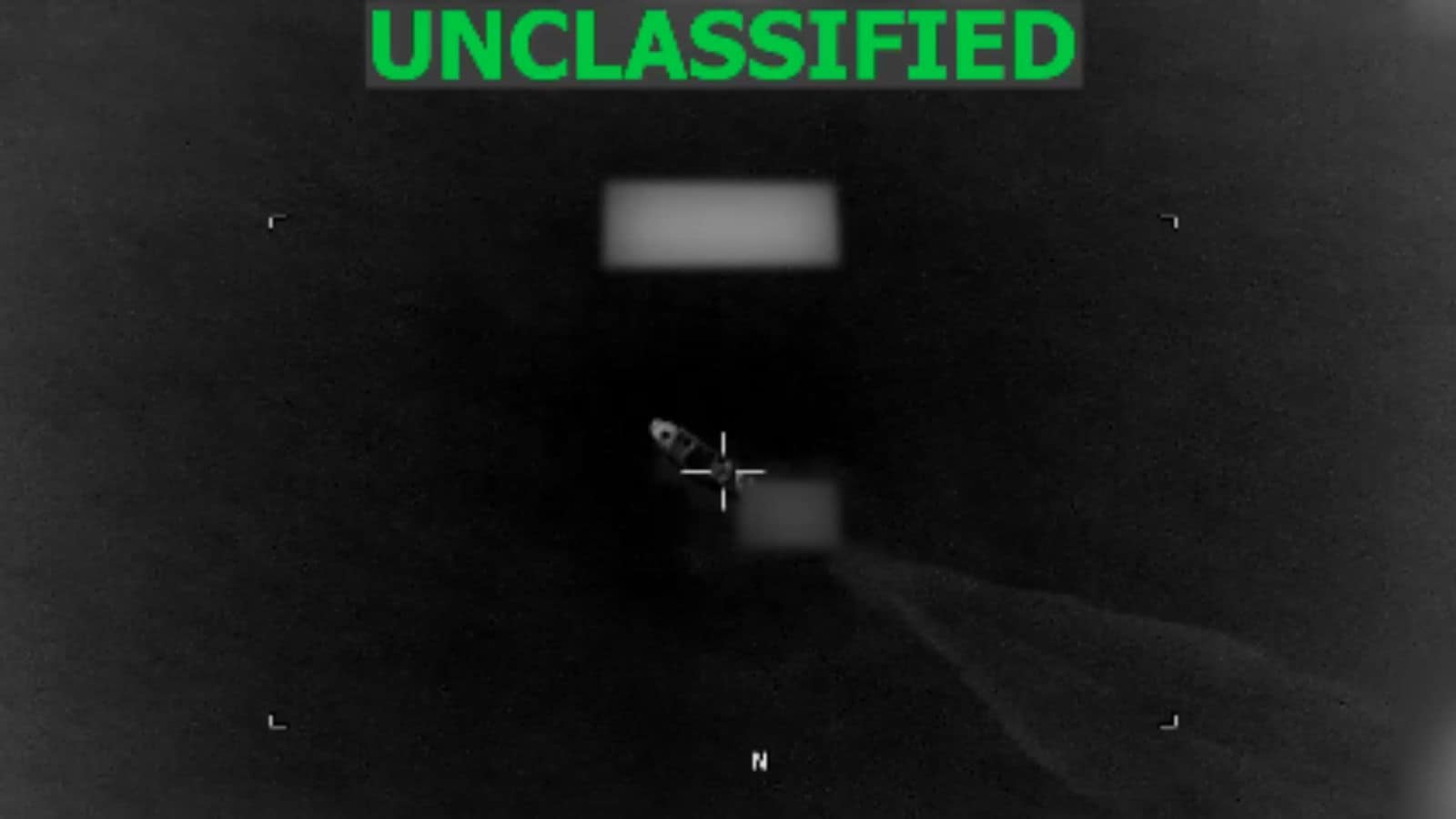
Military forces intercept a low-profile vessel in the Eastern Pacific. Shots are fired. A high-speed pursuit ends with three people dead and a massive shipment of contraband seized. The official press releases frame the event as a triumph of maritime security, a vital blow against transnational criminal organizations.
This framing is fundamentally flawed.
Treating high-seas interdictions as decisive victories ignores the basic mechanics of illicit global supply chains. For decades, the strategy has remained unchanged: deploy multi-million-dollar naval assets to intercept low-cost, disposable vessels. It is a mathematical failure masquerading as a security strategy. When an operation ends in loss of life, it highlights the human cost of a policy built on a misunderstanding of market dynamics. You cannot solve an economic problem with kinetic naval force.
The Mathematical Certainty of Supply Chain Redundancy
The fundamental error in traditional maritime security reporting is the belief that seizing a shipment disrupts the supply chain. In reality, transnational trafficking networks operate with a high degree of calculated redundancy.
The Cost-of-Doing-Business Metric
For a trafficking organization, a low-profile vessel—often called a "semi-submersible"—is not a capital asset. It is a disposable container. These vessels are constructed from cheap fiberglass and wood in remote jungle estuaries. The outboard motors are standard commercial hardware. The crew members are frequently impoverished fishermen recruited for a single transit, making them entirely expendable to the network leaders.
Consider the basic economics of a maritime shipment:
- Production Cost: The cost to manufacture the illicit cargo at the source is a fraction of its wholesale value at the destination.
- Logistical Overhead: The vessel, fuel, and crew stipends represent a negligible upfront investment.
- Risk Premium: Trafficking networks factor an expected loss rate into their business models. If maritime authorities seize two out of every ten vessels, the profits from the remaining eight easily absorb the losses and fund future operations.
When maritime forces intercept a vessel, they are not crippling an enterprise. They are merely collecting a tax that the enterprise has already budgeted for.
The Balloon Effect in Maritime Domains
Decades of data from organizations like the Washington Office on Latin America (WOLA) and the United Nations Office on Drugs and Crime (UNODC) demonstrate the "balloon effect." When law enforcement squeezes supply in one geographic corridor, it inevitably pushes it into another.
[Increased Naval Patrols in Eastern Pacific]
                   │
                   ▼
[Temporary Reduction in Local Maritime Traffic]
                   │
                   ▼
[Traffickers Shift to Caribbean Routes or Land-Based Transit]
Squeezing the Eastern Pacific simply diverts traffic to the Caribbean, or prompts a shift toward commercial containerized shipping, where illicit cargo is hidden among millions of legal twenty-foot equivalent units (TEUs). Naval interdiction does not reduce the total volume of illicit goods moving toward consumer markets; it merely alters the coordinates of the transit points.
Dismantling the Consensus on Maritime Interdiction
Public perception of maritime security is shaped by curated media access, showing dramatic footage of helicopter snipers and high-speed boat chases. This coverage reinforces several key misconceptions.
Misconception 1: Interdiction Creates Scarcity
The most common justification for high-seas operations is that seizing tonnage reduces the availability of illicit substances on the streets of destination nations. The data contradicts this entirely.
According to wholesale price indices tracked by federal enforcement agencies over the last thirty years, the street-level price of illicit narcotics has consistently trended downward or stabilized, while purity levels have remained high. If interdiction were successfully creating scarcity, basic economic theory dictates that prices would skyrocket and purity would plummet. The steady metrics prove that supply continuously meets or exceeds market demand, regardless of how many tons are intercepted at sea.
Misconception 2: Naval Might Deters Trafficking Organizations
The assumption that deploying advanced naval technology acts as a deterrent fundamentally misjudges the adversary. Transnational criminal syndicates are agile, decentralized networks, not state actors with fixed infrastructure. They do not have a capital city to defend or a traditional military apparatus that can be deterred by a show of force.
When a naval vessel intercepts a smuggling craft, the network adapts by upgrading its concealment methods, altering its routes, or utilizing corruption to bypass checkpoints entirely. The asymmetry of the conflict favors the network: a cartel can adapt its tactics in a matter of weeks, while naval procurement and strategic deployment cycles take years.
The Flawed Logic of "Success Metrics"
┌──────────────────────────────────────────────────────────┐
│             The Interdiction Paradox                    │
├─────────────────────────────┬────────────────────────────┤
│ If Seizures Increase:       │ "Our strategy is working;  │
│                             │  give us more funding."    │
├─────────────────────────────┼────────────────────────────┤
│ If Seizures Decrease:       │ "The threat is growing;    │
│                             │  give us more funding."    │
└─────────────────────────────┴────────────────────────────┘
This structural paradox ensures that bureaucratic institutions are never forced to re-evaluate the core utility of the mission.
The Real-World Costs of a Flawed Strategy
The persistence of this strategy has severe consequences that extend far beyond wasted taxpayer funds.
The Escalation of Violence
When maritime interdiction operations become more aggressive, trafficking networks respond by arming their transport crews or employing more dangerous evasion tactics. High-speed pursuits in international waters inherently carry a high risk of capsizing, collision, and fatal firefights. The death of three individuals in the Eastern Pacific is a direct consequence of treating a economic enforcement issue as a kinetic military engagement.
Geopolitical Distortion
Utilizing military and naval assets for law enforcement functions blurs crucial legal and operational lines. Coast guards and navies are designed for national defense and maritime safety, not for waging a perpetual war against market forces. Forcing these institutions into an endless cycle of interdiction diverts critical resources away from legitimate state-level challenges, such as monitoring illegal, unreported, and unregulated (IUU) fishing, responding to environmental disasters, and maintaining territorial integrity against sovereign competitors.
Shifting the Paradigm from Interdiction to Disruption
If high-seas interdiction is an exercise in futility, how should state actors address the challenges of transnational illicit flows? The answer requires moving away from dramatic maritime theater and focusing on the structural vulnerabilities of organized crime.
Target Financial Architecture, Not Hull Designs
The true vulnerability of any transnational criminal organization is its money, not its cargo. A cartel can replace a lost vessel and a lost shipment instantly. It cannot easily replace access to the international banking system or laundered real estate portfolios.
- Follow the Electronic Ledger: Shift funding from maritime patrol hours to forensic financial intelligence.
- Target Professional Enablers: Focus enforcement actions on the legitimate professionals—lawyers, accountants, and shell-company creators—who facilitate the integration of illicit capital into the global economy.
- Enforce Beneficial Ownership Transparency: Eliminate the anonymous corporate vehicles used to hide the profits of global smuggling operations.
Disrupting a network's ability to store, move, and utilize its wealth creates a far greater systemic shock than seizing a hundred low-profile vessels.
Address the Root of Demand
The maritime transit zone exists only because a massive, insatiable consumer market exists at the destination. As long as demand remains constant or grows, the economic incentives to supply that market will overcome any physical barrier or naval blockade. Spending billions to police international waters while underfunding domestic public health, harm reduction, and addiction treatment infrastructure is an attempt to treat a systemic disease by applying a bandage to the symptom.
The Mirage of Security
The images of seized vessels and bound suspects provide a comforting illusion of control. They suggest that the state is actively protecting its borders and winning a tangible fight. But this is a mirage.
Every high-seas seizure is a monument to a policy that refuses to learn from its own failures. The three lives lost in the Eastern Pacific did not alter the trajectory of global supply chains. The cargo seized will be replaced before the naval vessel even returns to port. Continuing to measure maritime security by the tonnage of intercepted contraband is a form of strategic blindness. It is time to stop celebrating the futile spectacles of the drug war at sea and start addressing the economic realities that drive it.


