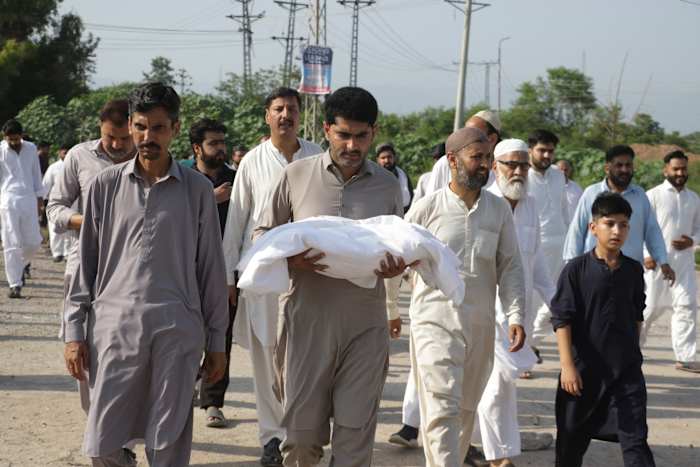
Fourteen newborns died in a hospital nursery fire in Pakistan, exposing a recurring institutional collapse that extends far beyond a single faulty wire or a negligent night shift worker. Investigators reviewing the disaster face an entrenched culture of administrative neglect, underfunded municipal infrastructure, and regulatory indifference that treats public healthcare facilities as holding pens rather than centers of healing.
When smoke billowed through the neonatal intensive care unit, the immediate response laid bare the absence of basic safety protocols. Fire extinguishers were outdated or missing. Emergency exits were locked to prevent unauthorized access or theft of equipment, converting a life-saving ward into a concrete trap. Nurses and doctors on duty fought the flames with buckets of water while parents watched from the corridors, helpless against an inferno fueled by aging electrical grids and a complete lack of passive fire containment materials. You might also find this related story useful: Why Russia Keeps Escalating Its Air War Over Ukraine.
This catastrophe is not an anomaly. It is the predictable outcome of decades of deferred maintenance and structural starvation within state-run medical facilities across South Asia.
The Anatomy of Institutional Decay
Public sector healthcare spending in Pakistan hovers well below international benchmarks. The state allocates a fraction of its GDP to health, forcing regional hospitals to operate on shoe-string budgets where every rupee is contested. As reported in detailed articles by TIME, the implications are significant.
Maintenance budgets are the first to face cuts when fiscal targets tighten. Electrical wiring installed decades ago remains overloaded by modern medical equipment, air conditioning units, and improvised heaters brought in during winter months. Circuit breakers are often bypassed with copper wire when they trip too frequently from chronic power surges.
Facility managers operate in a vacuum of accountability. Oversight bodies exist on paper, but inspection reports gather dust on bureaucratic desks. Bribes bypass safety certifications, and procurement departments routinely purchase substandard electrical supplies to pocket the difference.
The human cost of this corruption is paid entirely by families who have no alternative to the public health system. Private care remains financially out of reach for the vast majority of citizens. When a parent brings a premature infant to a government hospital, they are placing their child inside a structure where safety standards are treated as optional recommendations.
Structural Failures Beyond the Ward
The investigation into the nursery fire quickly focused on individual culpability. Authorities detained junior staff, suspended low-level administrators, and formed high-profile inquiry committees.
This narrow focus serves a political purpose. Blaming a shift supervisor or an electrician shields higher-ranking officials from scrutiny. It diverts attention from structural decisions made years prior, such as freezing hiring caps for safety officers, slashing infrastructure upgrades, and failing to implement mandatory national building codes for healthcare facilities.
True accountability requires examining the procurement chain. Where did the funds for the hospital's annual maintenance go? Why were smoke detectors non-functional in a high-risk unit housing vulnerable infants? Who signed off on electrical safety clearances when the grid was visibly compromised?
Investigators who have worked similar cases point to a pervasive culture of impunity. Bureaucratic inertia ensures that by the time an inquiry report is finalized, public outrage has faded, the media has moved to the next crisis, and the officials responsible have been quietly transferred to other departments.
The Regulatory Void
Building codes for medical facilities in Pakistan exist within a fragmented legal framework. Municipal authorities, provincial health departments, and federal oversight boards share jurisdiction, which translates to complete abdication of responsibility.
- Hospitals are rarely re-certified after initial construction.
- Fire safety drills are treated as administrative paperwork rather than life-saving training.
- Evacuation plans, where they exist, do not account for non-ambulatory patients such as newborns in incubators.
Staff training programs lack practical modules on disaster response. Nurses receive no instruction on how to safely evacuate multiple infants during a power outage or a sudden fire. The equipment required for rapid evacuation, such as specialized transport incubators with independent oxygen supplies, is absent from standard ward inventories.
Breaking the Cycle of Tragedy
Preventing future disasters demands a fundamental restructuring of how public hospitals are managed, funded, and monitored. Incremental reforms will not suffice when the foundation is rotten.
Independent safety commissions must be established, reporting directly to the judiciary rather than the health ministries that oversee the hospitals. These commissions must possess the authority to shut down non-compliant wards immediately, regardless of political pressure or bed shortages.
Capital investment must be redirected toward modernizing electrical infrastructure in legacy hospitals. Upgrading grid capacity, installing industrial-grade fire suppression systems, and replacing aluminum wiring with copper are expensive interventions, but they are non-negotiable prerequisites for operating a modern medical facility.
Transparency must replace bureaucratic secrecy. Maintenance logs, fire safety audit results, and budget allocations for public hospitals should be accessible to the public in real time. When civil society and independent journalists can audit facility safety, institutional negligence becomes much harder to conceal behind closed doors.
The fourteen infants who died in that nursery did not succumb to an unpredictable act of nature. They were victims of a deliberate, systemic failure to value human life within institutions designed to protect it. Until the state treats hospital safety as a matter of national security rather than a budgetary inconvenience, these wards will remain sites of preventable grief.