The Buzz of the Plastic Bee
A child’s birthday gift shouldn't be the most terrifying weapon in a modern arsenal.
Imagine a young technician in a makeshift workshop somewhere in Southern Lebanon. He isn’t handling enriched uranium or complex ballistic guidance systems. He is unboxing a drone—the kind you’d buy for a teenager at a mall or order from a massive e-commerce site for a few hundred dollars. He’s tinkering with off-the-shelf plastic, carbon fiber, and a lithium-ion battery. He swaps the camera for a small explosive charge and modifies the software to follow a GPS coordinate.
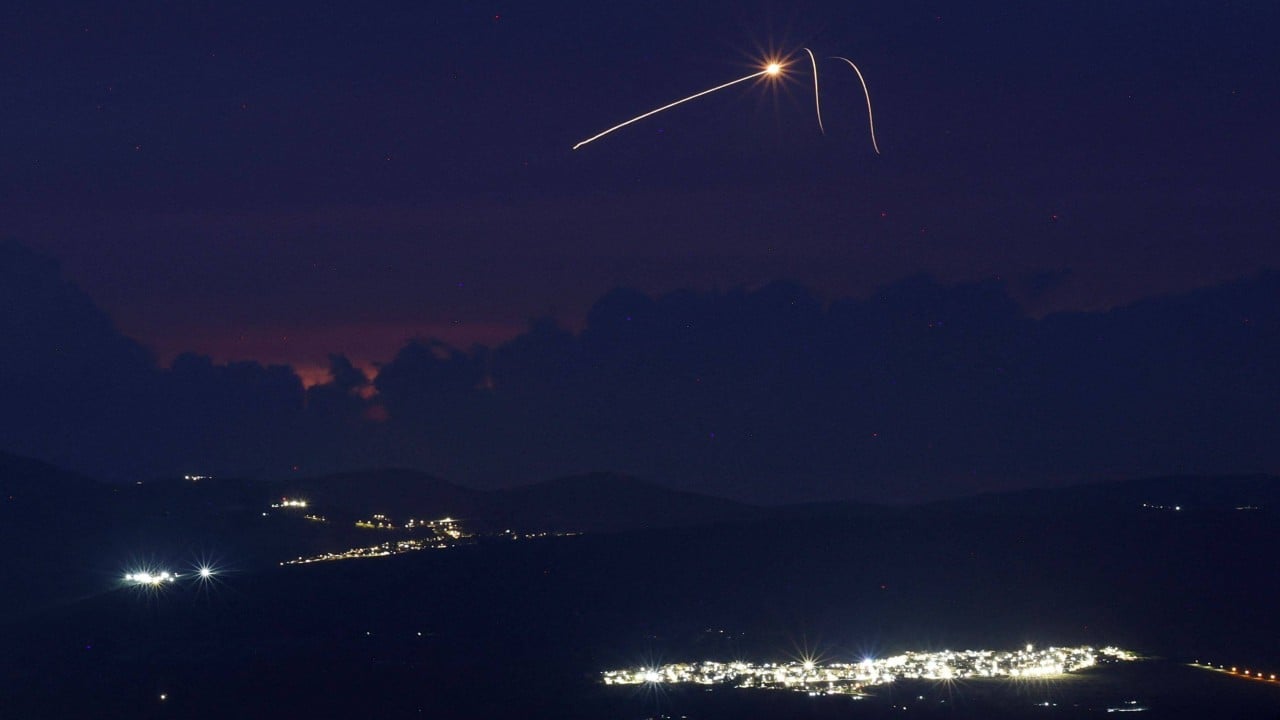
On the other side of the border, in Northern Israel, an Iron Dome operator sits before a multi-million-dollar radar screen. This system is a marvel of engineering, designed to swat supersonic rockets out of the sky with the grace of a digital god. But today, the radar is struggling. It sees the flock of birds. It sees the wind-tossed debris. It struggles to distinguish those from the slow-moving, low-flying plastic bee that costs less than the operator’s smartphone.
This is the asymmetry of the new era. It is a war where the high-tech shield is being chipped away by the low-tech chisel.
The Geometry of a Cheap Death
The math of modern defense is traditionally a game of prestige. You build a faster jet; I build a better missile. You build a better missile; I build a smarter interceptor. But Hezbollah has flipped the script by embracing the mediocre.
Standard rockets follow a predictable, parabolic arc. When a Katyusha is fired, the radar calculates its trajectory in milliseconds. The interceptor—a Tamir missile costing roughly $50,000—launches and obliterates the threat. The trade-off is expensive, but it works.
Drones, specifically the Mirsad-1 or the Ababil variants used by Hezbollah, do not play by these rules. They crawl. They hug the contours of the Earth. They hide in the "clutter"—the technical term for the noise created by hills, trees, and buildings that reflects radar waves. By the time the defense system realizes the "bird" is actually a bomb, it’s often too late.
Consider the physical reality of an intercept. To hit a small, slow-moving drone with a high-speed missile is like trying to hit a fly with a sniper rifle from a mile away. The closing speeds are mismatched. The heat signature is often too low for traditional seekers to lock onto reliably.
The financial exhaustion is even more brutal. If an attacker sends twenty drones that cost $1,000 each, and the defender uses twenty interceptors at $50,000 each, the defender has spent $1 million to stop $20,000 worth of plastic. The attacker doesn’t even need to hit a target to win; they just need to make the defender go bankrupt or run out of ammo.
The Sound of the New Normal
Walk through the streets of Metula or Kiryat Shmona. The psychological weight of this technology isn't found in a massive explosion, but in a persistent, mechanical hum.
When a jet flies overhead, it is a roar that signals power. When a drone hovers, it is a whine. It feels invasive. It feels like being watched by an unblinking eye that could turn into a fireball at any moment. Because these devices are so cheap, Hezbollah can afford to lose them. They send them on reconnaissance missions just to see which way the Israeli sensors turn. They send them to bait the air defense systems into revealing their positions.
A resident might look up and see what appears to be a hobbyist’s toy. There is a moment of cognitive dissonance. How can something so flimsy, something that looks like it belongs in a park on a Sunday afternoon, force an entire city into bomb shelters?
The answer lies in the democratization of destruction. We are witnessing the end of the state monopoly on precision-guided munitions. In the past, if you wanted to hit a specific window from ten miles away, you needed a Pentagon-sized budget. Now, you just need a stable Wi-Fi connection and a basic understanding of hobbyist flight controllers.
The Blind Spot in the Clouds
Military analysts often talk about "the fog of war," but this is more like "the noise of war."
The Israeli Defense Forces (IDF) are among the most technologically advanced on the planet. They have pioneered directed-energy weapons like the Iron Beam—a laser system designed to incinerate threats for the cost of a kilowatt-hour. In theory, the laser is the perfect answer. It’s cheap, fast, and never runs out of bullets.
But lasers have a weakness that a child understands: clouds. Or smoke. Or heavy dust.
If Hezbollah launches during a Mediterranean storm or under the cover of a thick fog, the "cutting-edge" laser becomes a very expensive flashlight. The low-tech drone, meanwhile, continues its slow, methodical path, guided by simple inertial sensors that don't care about the weather.
This creates a terrifying gap in the armor. On a clear day, the shield is impenetrable. On a hazy Tuesday, the toy becomes a terror. The high-tech solution is fragile; the low-tech threat is resilient.
Why We Can’t Just Jam Them
The most common question asked by those watching from afar is simple: Why not just jam the signal? If these are "toys," surely we can just turn off their brains with a radio wave?
Electronic warfare is a silent, invisible chess match. Yes, you can jam the GPS signal. You can flood the frequency the drone uses to talk to its pilot. But the "toys" are getting smarter. Modern drones can be programmed with "dead reckoning"—the ability to calculate their position based solely on their last known location, speed, and direction, without needing a single satellite ping.
Some are being equipped with basic optical sensors. They don't need a pilot to tell them where the target is; they see the shape of the building and "know" to hit it. When you jam the radio, the drone doesn't fall out of the sky. It simply goes onto autopilot, becoming a blind, flying pipe bomb.
The vulnerability isn't in the hardware. It’s in the philosophy of defense. We built a world designed to stop giants. We are now being bitten to death by a thousand mosquitoes.
The Shadow on the Porch
The true stakes are not found in the casualty counts or the debris fields. They are found in the change of human behavior.
When a war involves massive tanks and screaming jets, there is a clear boundary. You are either on the front or you are not. But when the weapon is a silent, ubiquitous plastic frame, the front is everywhere. It is over the schoolyard. It is hovering near the hospital wing. It is staring at the power plant.
Hezbollah isn't just looking for tactical victories. They are conducting a long-form experiment in psychological exhaustion. They want to prove that the most sophisticated nation in the region can be humbled by a trip to a hobby shop. They want to show that the "toys" can do what the heavy artillery couldn't: make the routine of daily life feel impossible.
There is no "mission accomplished" in this scenario. There is no single factory to bomb that stops the flow, because the components are everywhere. They are the same components used in delivery drones, photography rigs, and agricultural sensors. You cannot ban the technology without banning the modern world.
As the sun sets over the Galilee, the sky seems empty. But the ears of the soldiers and the civilians are tuned to a different frequency now. They are listening for that high-pitched, plastic whine—the sound of a world where the line between a plaything and a predator has finally, irrevocably vanished.
The drone doesn't need to be a masterpiece. It only needs to be cheap enough to fail, and frequent enough to never be ignored.