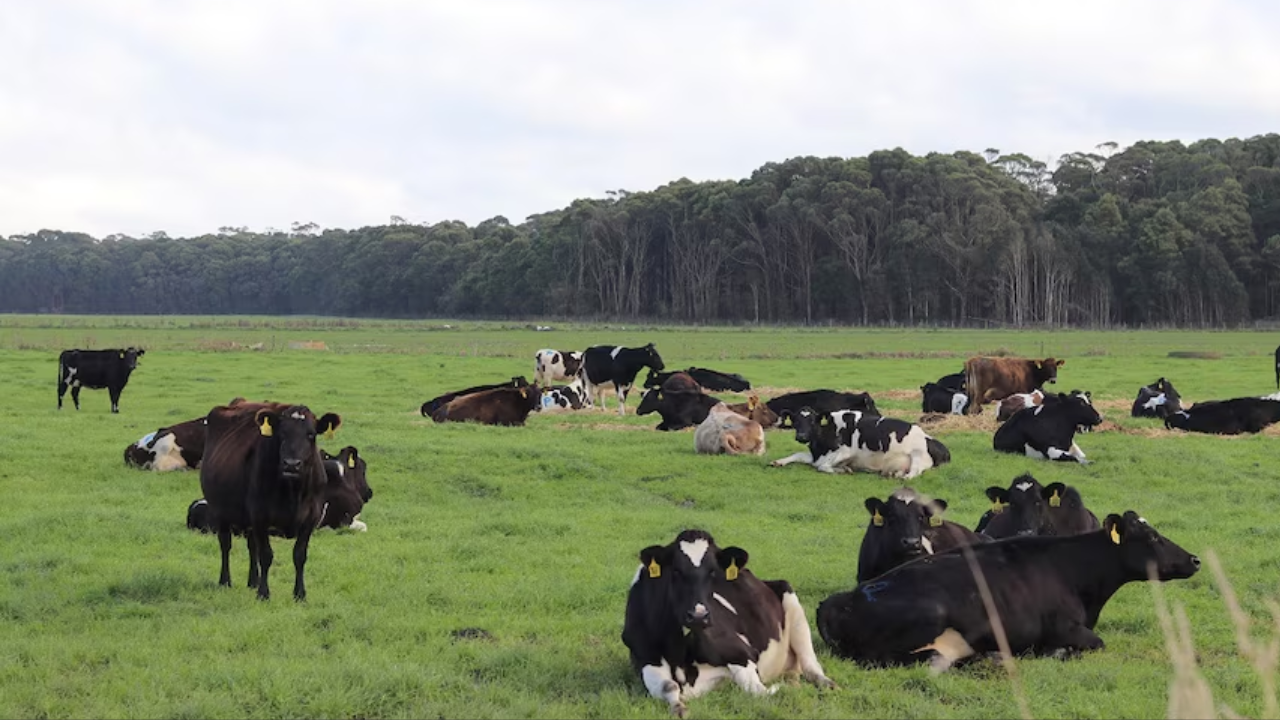
A single decimal fraction stood between Xianfeng Lu's corporate group and a crushing A$23.4 million bill. When the Full Court of the Supreme Court of Tasmania handed down its ruling in October 2026, the judges wiped out a stamp duty assessment—along with penalties and interest—tied to the 2016 acquisition of the Woolnorth dairy estate in north-west Tasmania.
Look closely at the numbers behind that reversal. Under Tasmania's old "land-rich" rules in the Duties Act 2001, a private company crossed the statutory line only if land holdings hit 60% or more of the relevant asset measure. When the court applied a consistent, "like-with-like" valuation at the agreement date, the land proportion came out to roughly 59.007%. If you liked this piece, you should look at: this related article.
Just under the line. Barely shy of 60%.
In cross-border agribusiness and corporate structuring, margins that thin feel almost surreal. A decade after Moon Lake Investments Pty Ltd agreed to buy Woolnorth for about A$280 million, the Full Court—Chief Justice Chris Shanahan, Justice Michael Brett, and Justice Stephen Estcourt—backed the taxpayers' appeal and dismissed the State Revenue Office's cross-appeal. For another look on this story, check out the recent update from Forbes.
How a 2016 Dairy Deal Turned Into a Decade-Long Tax Fight
To understand why this case dragged on for years, you have to trace the corporate plumbing behind the deal rather than just the cows and pastures.
In late 2015 and early 2016, Xianfeng Lu's investment vehicle, Moon Lake Investments Pty Ltd (later renamed Van Dairy Group Pty Ltd), moved to acquire the Woolnorth properties and related farming assets from the Van Diemen's Land Company side of the transaction—specifically involving entities tied to Tasman Land Company, Van Diemen's Land Company, and Tasman Ferndale Pty Ltd. Along the way, share transfers occurred between Mr Lu, Ningbo Moon Lake Investment Company (Ningbo), and Van Dairy (Hong Kong) Group Ltd.
Tasmania's State Revenue Office looked at those share movements and concluded that Moon Lake was a "land-rich" private corporation at the relevant times. If a target entity is land-rich and a relevant acquisition of shares happens, stamp duty can bite even when the property itself isn't being conveyed by a standalone land transfer. Factoring in duty, penalties, and interest, the disputed exposure reached roughly A$23.4 million across assessments hitting Ningbo and Van Dairy's holding structure.
Earlier stages of litigation were messy and split across different legal points. Revenue authorities had reduced initial numbers on objection, lower courts had adjusted or upheld aspects of penalty and interest relief, and in November 2024 Acting Justice Shane Marshall dismissed appeals from both sides. Many observers treating the dispute as a routine stamp duty fight missed what was actually at stake: whether revenue authorities could value land and non-land assets using mismatched yardsticks to push a company over the 60% threshold.
Why Apples-to-Apples Valuation Decided the Appeal
If you ever work on corporate restructurings or M&A tax modeling, this is the part you read twice.
The Commissioner of State Revenue argued that Moon Lake crossed the land-rich mark by treating the full value of the land one way while valuing non-land assets essentially as a right to sue for damages under a warranty clause—a clause capped at A$10 million—while ignoring unpaid purchase price mechanics in a way that skewed the ratio well above 60%.
The Full Court wasn't buying that asymmetry.
First, the judges pointed out a contract reading error: that A$10 million cap applied to non-title warranties, whereas title warranty claims reached the full purchase price. Second, and far more important for tax law, the court leaned on High Court authority (Commissioner of State Revenue v Placer Dome Inc) to enforce statutory consistency. When a statute asks whether a company's value comes predominantly from land, you can't measure land at full unencumbered market value on one side of the ledger and shrink non-land property into a distorted, mismatched figure on the other. Doing so creates a warped picture where a company looks "land-rich" before completion and suddenly doesn't afterward.
Once land and non-land assets were measured consistently on a like-with-like basis at the agreement date, the land ratio sat at 59.007%. Not 60.01%. Not 60.00%. Just below the line.
Notice something else here, though, because people often misread wins like this. The Full Court did not let the taxpayers off the hook on every argument. Arguments that the share sale agreement wasn't an agreement for the sale of land, that share transfers didn't validly occur, or that unchanged ultimate beneficial ownership automatically wiped out duty exposure were rejected by the court. The judges addressed those grounds cleanly so the record was complete, while winning the case squarely on the land-rich valuation threshold.
That nuance matters. Honestly, one of the biggest mistakes founders and dealmakers make is assuming, "Hey, the same person or group owns the shares at the top, so moving shares around inside our structure won't trigger stamp duty." Under corporate law and state duty statutes, separate legal entities have separate capacities, and shifting shares before or around completion can still trigger scrutiny. Common economic ownership is not a magic shield.
Woolnorth, Fonterra, and a Shifting Tasmanian Dairy Footprint
This tax ruling didn't land in a vacuum. It arrived years after the commercial bloom of the 2016 deal had already been tested by harsh operational realities in Australian dairy.
Woolnorth isn't just another farm. Located in Tasmania's far north-west, the wider estate spans roughly 9,500 hectares—with over 4,200 hectares dedicated to dairy operations—and carries deep historical roots tied to the Van Diemen's Land Company, chartered in Britain in 1825 and granted massive tracts in north-west Tasmania. Over two centuries, the region shifted from wool and early colonial land grants to intensive pasture-based dairy.
When Mr Lu bought in during 2016 for around A$280 million, ambitions around large-scale dairy supply and exports—including links to Asian demand—were front and center. Yet operating at that scale in Australia comes with brutal exposure to milk processors, farmgate pricing, feed and input swings, and capital intensity. In early 2024, Van Dairy lost a major milk supply contract with Fonterra, prompting herd reductions and asset sales. By early 2025, Van Dairy had begun divesting major pieces of the estate, including selling Denium Dairy—the largest dairy farm at Woolnorth—to Victorian dairy farmers Harper and Oonagh Kilpatrick while marketing remaining land parcels.
Think about the timing irony there. Clearing a A$23.4 million contingent tax liability in late 2026 is huge for balance sheets and historical winding-up or asset consolidation, even after substantial operational downsizing and land sales already reshaped the footprint. In high-capital agriculture, legal certainty often arrives years after the market cycle has already moved on.
What This Ruling Changes—and What It Doesn't
If you're looking for a blanket loophole you can copy-paste into your next acquisition, slow down.
Tasmania replaced its old "land-rich" percentage test in 2017 with "landholder" provisions that don't rely on that same ratio test. That means future deals in Tasmania won't simply replay the exact 60% math test from 2016.
Still, the reasoning carries real weight across Australian stamp duty disputes:
- Valuation symmetry is a weapon: Revenue offices cannot cherry-pick valuation methods that inflate land weight while artificially shrinking non-land assets. If a statute measures asset composition, consistency across asset classes matters.
- Contract drafting has teeth: Clauses covering warranties, liability caps, and procurement obligations between parent and subsidiary entities are read carefully. Sloppy assumptions about which cap applies to which claim can cost millions.
- Pre-completion share shuffles carry risk: Moving shares between holding entities before a deal settles—or restructuring mid-transaction—can create unexpected duty triggers unless exemptions or thresholds genuinely protect the move.
Also, keep in mind a practical caveat: Supreme Court Full Court rulings in Tasmania are persuasive rather than binding across every other Australian state or territory, and state duty laws differ in detail. Tax isn't uniform across borders, and disputes over penalties and interest often depend on exact statutory timing and conduct.
Practical Next Steps If You're Structuring a Property or Share Deal
Whether you're advising on a commercial acquisition, buying rural land, or tidying up holding companies, don't wait for an assessment notice five years later to check your exposure.
- Map every entity and share transfer before signing: Write down who holds what before, during, and after completion. Flag any intra-group share transfers or nominee arrangements early with a local duty specialist.
- Audit your asset split and valuation basis: When buying a business that holds real estate, equipment, water rights, livestock, or goodwill, document defensible market values across all asset categories at the relevant date—not just the land.
- Check warranty caps against asset categories: Make sure limitation-of-liability clauses clearly separate title issues from operational or non-title warranties so tax calculations don't get tripped up by ambiguous drafting.
- Stress-test commercial assumptions beyond tax: Even a clean court win won't fix a broken milk contract, high debt service, or weak farm margins. Model your cash flows conservatively before committing capital to large-scale rural assets.