The humidity in Phnom Penh does not just sit on your skin; it presses down like a warm, wet palm over your mouth. Standing near the Mekong, watching the river churn a heavy, coffee-colored brown, you can smell the exhaust of a million motorbikes mingling with the sharp, sweet tang of grilled river fish. This is a city built on the muscle of survival. It is a place that has stared down the barrel of history, blinked, and decided to keep trading, building, and moving forward.
Yet, beneath the chaotic symphony of horns and street vendors lies a high-stakes balancing act. It is a dance performed in the quiet corridors of power, far from the chaotic street markets. In related updates, read about: Why the Fight Against Enforced Disappearances in Pakistan Is Moving to the Streets of London.
Consider Sothea. I met him outside a quiet coffee shop near the Independence Monument, a man in his late forties with skin the color of aged teak and eyes that missed nothing. Sothea is a hypothetical name for a very real archetype: the mid-level Cambodian bureaucrat who watches the great powers of the world circle his homeland like monsoon clouds. He doesn't talk in geopolitical jargon. He talks about rent, about his daughter’s tuition at the university, and about the quiet anxiety of keeping a small nation upright while giants step on the grass.
"We are like the bamboo," Sothea told me over a glass of iced black coffee laced with condensed milk, the ice melting faster than we could drink. "When the storm comes from the west, or the wind blows from the north, we bend. If we try to stand too rigid, we snap." BBC News has also covered this important subject in extensive detail.
For years, the wind from the north has blown very warm indeed.
Walk through Sihanoukville, down on the coast, and you will see the physical manifestation of that warmth. Neon signs in Mandarin glow against the humid night. Skyscrapers rise from red-dirt lots where sleepy fishing villages used to rest. Billions of dollars in foreign investment poured in, transforming skylines and drawing accusations that Cambodia was becoming an outpost for Beijing's expanding maritime ambitions, specifically at the Ream Naval Base. Western intelligence agencies squint through satellite imagery at the dredging work, whispering about gray-hull warships and exclusive access.
Washington watches. And worries.
For a long time, the relationship between Phnom Penh and the United States was frayed, bruised by old disagreements, human rights concerns, and a growing suspicion that Cambodia had chosen its side for good. The doors of joint military exercises—the Angkor Shield drills that once brought American and Cambodian troops slogging through the mud together—were quietly closed. Suspended. Put on ice.
Relations chilled. The diplomatic air conditioning was set to arctic.
Then came the pivot that confused the observers in Washington and raised eyebrows in Beijing.
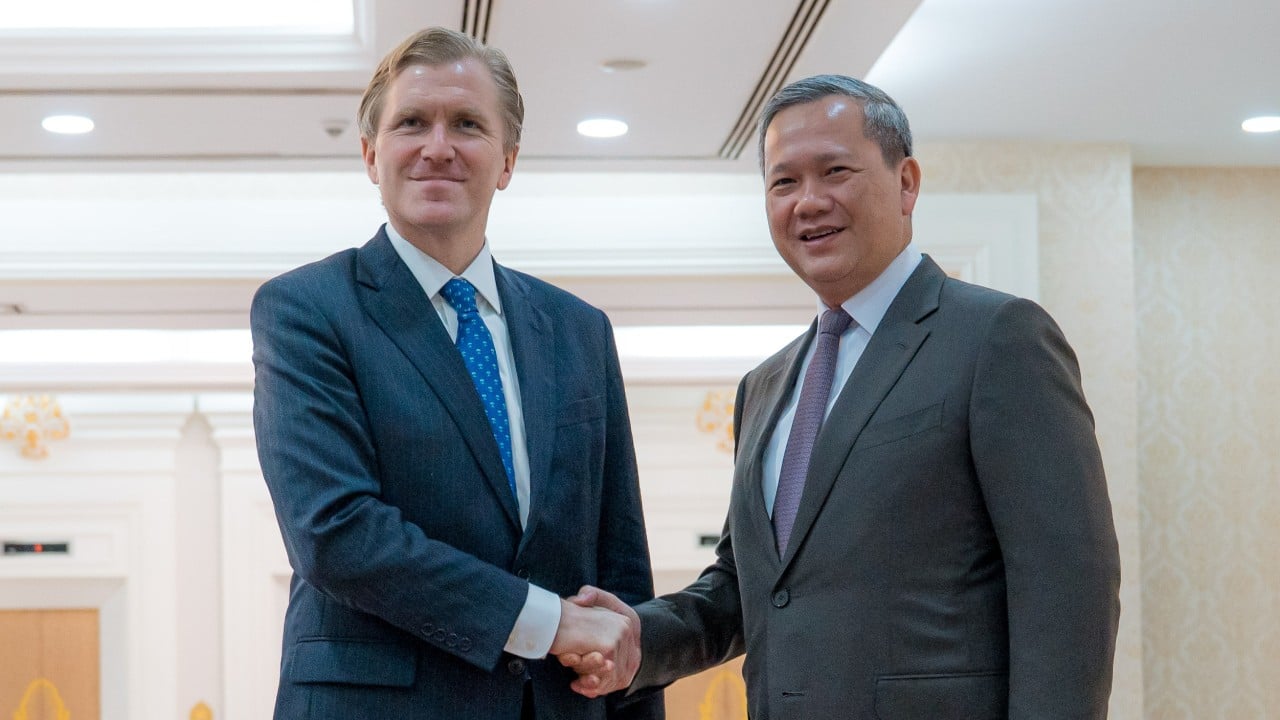
Cambodia is reviving US military drills.
Why? Because the bamboo knows how to catch the breeze from both sides.
To understand this move, you have to abandon the childish binary that nations are either friends or enemies. Geopolitics is not a playground scrap; it is a permanent poker game where the chips are sovereignty, economic survival, and strategic breathing room. Cambodia’s leaders are pragmatic architects. They look at the South China Sea, they look at the shifting tides of global trade, and they realize a terrifying truth.
Dependency is a cage.
If you lean too heavily on any single superpower, your sovereignty becomes a tenant farmer's lease. You wake up one day and realize you no longer own the land you farm. By cautiously opening the door back up to American military engagement—modest exchanges, humanitarian assistance drills, disaster relief training—Phnom Penh is signaling something subtle.
We are nobody's backyard.
It is a delicate choreography. Every time a Cambodian officer shakes hands with an American counterpart in camouflage, a quiet calculation is happening in a boardroom elsewhere. It says to Beijing: We value our partnership, but we have options. It says to Washington: We are open for business, but do not take us for granted.
Risk is the price of admission.
Imagine the general sitting in the Ministry of Defense, looking at the schedule for the resumed exercises. He knows the risks. Push too far toward the West, and the financial lifeline from the north tightens. Lean too far into the embrace of the dragon, and the Western trade tariffs and diplomatic isolation bite deep into the local economy.
So they walk the wire. Step by careful step.
The Angkor Shield drills are not about preparing for a massive war. They are about muscle memory. They are about communication channels remaining open when the weather turns truly foul. When floods wash out rural provinces, or when maritime security demands a collective response, isolation is a luxury no small nation can afford.
Back by the Mekong, the sun begins to drop. The sky turns the color of a bruised plum, streaked with amber and sudden, violent violet. The motorbikes thicken into a roaring river of headlights.
Sothea finishes his coffee, crunching on the last remaining ice cube. He looks out at the street, where young couples share bowls of noodles and children chase stray dogs through the shadows of French-colonial arcades.
"People think we are trapped between choices," he says, standing up and adjusting his shirt. "They think we have to pick a master. But we have already had masters. What we want now is friends who know how to leave when the sun goes down."
The water keeps moving past the capital, indifferent to the treaties signed in air-conditioned rooms, carrying the silt of an ancient land toward a vast, uncertain sea.