A Whisper Before the Roar
In the early morning silence, long before light slices through the horizon, the air over the desert feels almost frozen. It hangs heavy with dust and humidity, motionless, dead quiet. Then, a faint vibration ripples through the earth beneath your boots. It is not an earthquake. It is a tremor felt in the ribs before it hits the ears.
Thirteen miles up, hidden behind a sheet of dark clouds, four GE F101 turbofan engines are burning through thousands of gallons of fuel every minute. They drag an eighty-ton metal bird across thousands of miles of airspace without stopping for rest. Meanwhile, you can explore similar events here: Why Showing a Photo in Tibet Can Land You in Prison for Incitement.
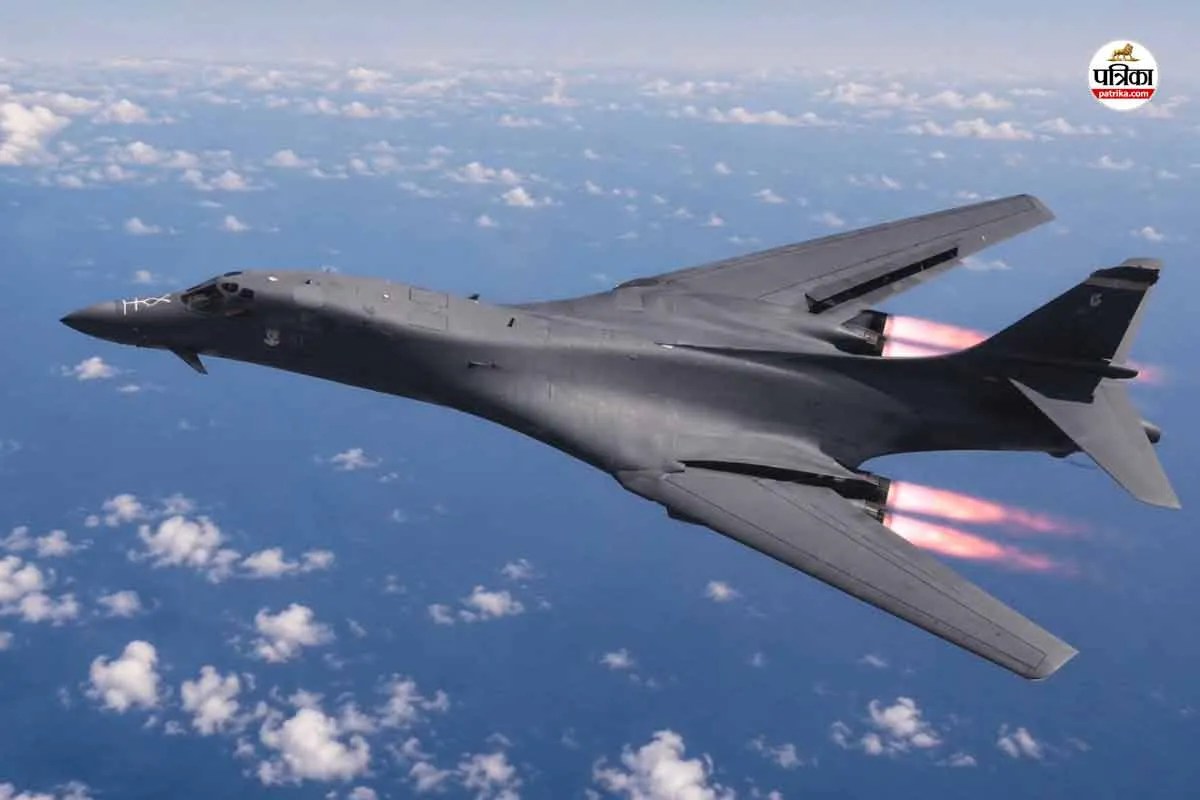
This is the B-1B Lancer. Pilots call it the Bone.
When standard news reports cover a strike or a sudden deployment in the Middle East, they offer clean, sterilized words. They speak of deterrence, tactical sorties, and targeted strategic assets. They reduce hundreds of thousands of hours of human engineering, nerve-wracking diplomatic tightrope walks, and terrifying kinetic power down to a three-line ticker at the bottom of a cable news screen. To understand the bigger picture, check out the detailed analysis by BBC News.
What those tickers miss is the raw, human reality of what happens when a machine designed during the cold tension of the late twentieth century appears over skies where regional powers least expect it. The sudden arrival of heavy bombers does not merely alter tactical maps. It shifts the psychology of nations overnight.
Heavy Metal in High Altitude
To understand why the world reacts with sudden alarm when these aircraft move, you have to look past the political grandstanding and look closely at the hardware itself.
The B-1B was never meant to be a quiet observer. Built with variable-sweep wings, it can pivot its wings backward to slice through the air at supersonic speeds low above the terrain, flying beneath enemy radar networks. Or it can sweep them forward to crawl efficiently across global distances.
Imagine driving a vehicle as large as a three-story building down a narrow dirt road at six hundred miles per hour, thirty feet off the ground, in complete darkness. That was the original mission profile. While modern operational tactics have adapted over time to higher altitudes and long-range precision munitions, the underlying mechanical intent remains brutal and efficient.
It carries seventy-five thousand pounds of ordnance internally. That is not just a high number on a specifications sheet. That is thirty-four tons of high explosives moving through international airspace at the speed of sound.
When a nation dispatches fighter jets, it sends a message of localized defense or quick tactical pressure. Fighter jets are agile, fast, and limited by fuel and payload. When a nation dispatches long-range heavy bombers, the message changes completely. It signals that distance has been erased. It means the strike can originate from halfway across the planet, refuel mid-air over open ocean, drop a staggering volume of firepower with pinpoint accuracy, and turn back home before the ground team has even cleared the radar warnings.
The Human Core Inside the Machine
Behind every headline about military movements, four human beings sit squeezed inside an armored, pressurized aluminum tube.
There are no wide windows or comfortable quarters inside the cockpit of a B-1. The pilot and co-pilot sit up front, staring at walls of switches, glass displays, and flight controls. Behind them sit the offensive and defensive weapons systems officers. They sit in tight, low-light stations, bathed in the soft blue and green glow of radar monitors, targeting systems, and electronic warfare displays.
They eat cold sandwiches out of plastic bags. They drink stale coffee. They manage the bone-deep exhaustion that sets in after twelve hours of flying over featureless ocean waves, listening to the static hum of radio channels.
"A long-range mission is ninety percent relentless, grueling monitoring punctuated by ten minutes of absolute, heart-stopping focus."
Consider a hypothetical crew member—call him Captain Thomas—sitting in the right-hand seat during an intercontinental transit toward a volatile flashpoint. His knees press against the lower instrument panel. His neck aches from the weight of his helmet and night-vision equipment. Outside the cockpit, the air temperature is minus fifty degrees Fahrenheit. Inside, his gloves are damp with sweat.
He knows that below him, in radar command centers across multiple sovereign borders, technicians are suddenly watching a large, fast-moving radar reflection appear on their screens. He knows that telephone lines between defense ministries are lighting up. He knows that one small error in navigation or communications could turn a planned projection of strength into an irreversible international catastrophe.
That burden does not show up in official press briefings. It lives entirely inside the cockpit.
The Geography of Fear
Why did the recent presence and actions of heavy bombers in regional airspace send such immediate shockwaves across foreign capitals?
Because air defense systems are built on math, and heavy bombers ruin the math.
A standard defense array calculates risk based on time, range, and missile capacity. If an adversary knows you can only launch ten precision missiles from a nearby naval vessel or a localized airbase, they can calculate their defensive intercept odds. They can position anti-air batteries, shelter critical infrastructure, and prepare counter-measures.
The insertion of a heavy bomber group breaks those calculations.
A pair of these aircraft can deliver more precision-guided munitions in a single pass than an entire squadron of standard tactical jets. They can loiter outside radar bubbles, launch standoff weapons from hundreds of miles away, or penetrate deep into defended airspaces under the cover of specialized electronic jamming aircraft.
When those aircraft fly near hostile or contested borders, defensive command centers face an impossible choice. Do they turn on their active tracking radars to get a solid lock, thereby revealing their own positions to intelligence-gathering aircraft? Or do they stay blind and pray the bombers are merely performing a patrol?
This uncertainty creates a psychological weight. It forces military commanders to sit in darkened bunkers, watching radar sweeps, wondering if a sudden turn on a flight tracker means routine training or the opening moves of a massive strike.
The Illusion of Separation
Sitting thousands of miles away in comfortable living rooms, reading updates on a smartphone screen, it is easy to view these events as a distant movie. We see low-resolution infrared video clips of targets on night-vision cameras. We hear sterile terminology like "operational readiness" and "strategic messaging."
We tell ourselves that these movements belong to a foreign world, disconnected from our daily routines.
That is an illusion.
The movement of heavy airpower across international boundaries ripples directly into global markets, fuel prices, supply chains, and political stability. When a major power signals that it is willing to fly its heavy assets into volatile regions, the financial markets react instantly. Shipping lanes alter their routes. Insurance rates for international cargo vessels skyrocket. World leaders cancel planned summits to hold emergency security sessions.
The heavy bomber is not just a weapon of war. It is a massive, flying instrument of geopolitics. Its presence changes the value of oil per barrel before it ever drops a single payload. It alters trade agreements, shifts diplomatic alliances, and reshapes regional power balances in real time.
Beyond the Noise
The engines eventually quiet down when the aircraft touches down on a remote, secure runway halfway around the globe. The ground crew maneuvers the boarding ladders into place. The four crew members step out, blinking against the harsh sunlight, their flight suits soaked through, their ears ringing from hours of continuous engine noise.
They walk into a debriefing room to hand over their data drives, log their flight hours, and report on system performance.
Outside, the news cycle moves on to the next breaking story. The headlines fade. The analysts on television pivot to new topics.
Yet, high above the desert sands, the air remains subtly changed. The memory of that low, ground-shaking roar lingers in the minds of the people who watched the sky, the commanders who monitored the radar screens, and the crew members who piloted seventy-five tons of iron through the dark.
The machine is back on the tarmac, parked under cold floodlights, waiting for the next time the earth needs to shake.

/https://i.s3.glbimg.com/v1/AUTH_e84042ef78cb4708aeebdf1c68c6cbd6/internal_photos/bs/2026/g/B/3vpkvHQKizRKAfzDxjXA/vini-jr-antes-e-depois.jpg)