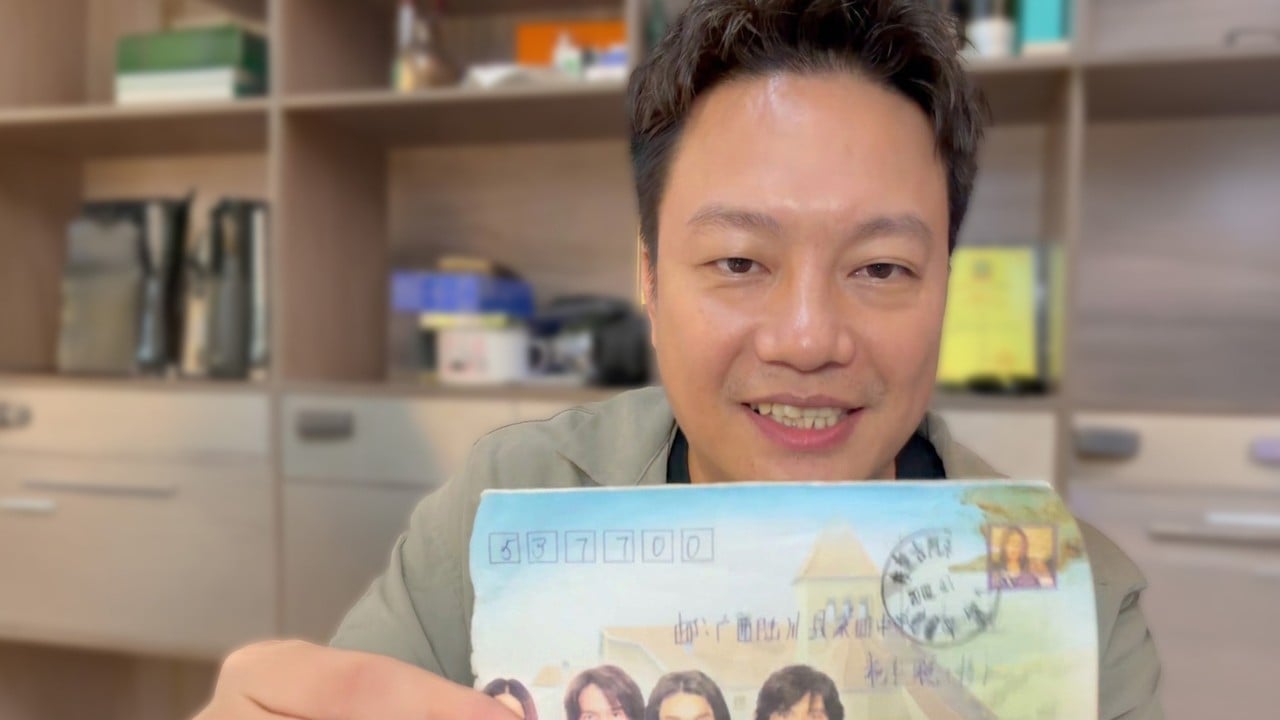
Paper yellows. Ink fades into a ghost of itself. We live in an age where a human being can be summoned by a glowing rectangle in our palm within three seconds, yet we spend our lives mourning the sudden, silent exits of people we once knew.
Twenty-four years ago, two teenagers across China exchanged addresses. They did not have handles. They did not have notifications. They had blue lines on ruled paper, adhesive stamps, and the slow, agonizing machinery of the postal service. Then, life happened. The letters stopped. Addresses dissolved into shifting concrete and steel as an entire nation tore down its old neighborhoods to build a hyper-modern future.
Most people would have kept the memory tucked inside an old shoebox, buried beneath tax forms and broken phone chargers. Most people would have surrendered to the sheer impossibility of finding a needle in a continent of one point four billion souls.
Jiang Suzhou did not surrender.
He packed a bag. He set out on a three thousand kilometer journey across China to find a pen pal he had not heard from in nearly a quarter of a century.
The Geography of Longing
Distance is not measured in kilometers. Distance is measured in the weight of what remains unsaid.
When Jiang started walking toward his past, he was stepping into a ghost town of memories. Think about how much a landscape changes in twenty-four years. Entire districts vanish. Brick alleys are replaced by glass monoliths. People move for jobs, for marriage, for survival, leaving behind nothing but disconnected phone numbers and landlords who have long since forgotten their names.
To search for someone from the analog era is an act of quiet defiance against modern transience. Today, we collect thousands of connections that carry zero weight. Back then, a single letter carried the entire emotional gravity of a growing mind.
Jiang carried a single faded address and a name. That was all. No digital footprint. No social media profile to scrape for clues. Just a stubborn refusal to let a meaningful human connection fade into absolute nothingness.
The Weight of Paper
There is a distinct sensory memory to old correspondence. The scratch of a fountain pen catching on cheap pulp. The faint smell of damp basement air trapped inside a drawer. The way a corner of an envelope curls upward when it has been handled too many times by anxious fingers.
When Jiang looked for his childhood friend, he was searching for the physical proof that his own youth actually happened.
We often forget that memory is a fragile ecosystem. Without external anchors, our past feels like a movie we watched once on a flight home—distant, blurry, and ultimately unreal. Finding that old pen pal wasn't just about locating another human being. It was about reclaiming a discarded piece of himself.
He knocked on doors that no longer existed. He spoke to strangers who looked at him with polite confusion. Every dead end could have been the moment he turned back. Every closed door whispered that time always wins in the end.
Yet he kept going.
The Anatomy of a Reunion
When the search finally bore fruit, it did not happen in a cinematic explosion of tears under a spotlight. Real life is rarely that tidy. It happened in the quiet, awkward space where time tries to fold back over itself.
Twenty-four years. Think of the wrinkles that carved themselves into their faces. Think of the choices made, the grief endured, the quiet mornings and restless nights that filled the decades between the last stamp and the current handshake.
They sat together. They looked at each other. The boy with the ink pen was gone. The girl who waited for the mail carrier had transformed into someone else entirely. Yet beneath the altered bone structure and the graying hair, the frequency remained the exact same.
The internet gives us speed, but it steals our patience. It trains us to discard what is difficult and swipe away what requires effort. Jiang Suzhou’s journey reminds us of a forgotten truth. The things that cost us the most are the only things worth keeping.
A train ticket across a massive country. A worn piece of paper carried across mountains and rivers. A lifetime of silence broken by a single, desperate knock on a wooden door.
The ink never truly dries. It just waits for someone brave enough to read between the lines again.


