Silence.
That is the actual sound of nuclear diplomacy—not the roar of a silo door grinding open in the Montana prairie, nor the static crackle of a submarine surfacing beneath Arctic ice, but the flat, fluorescent hum of a Geneva conference room where three men stare at a bowl of untouched mints. Also making waves lately: What Really Happened When Russian Missiles Hit Poland and Why Donald Tusk Warned of Tough Months Ahead.
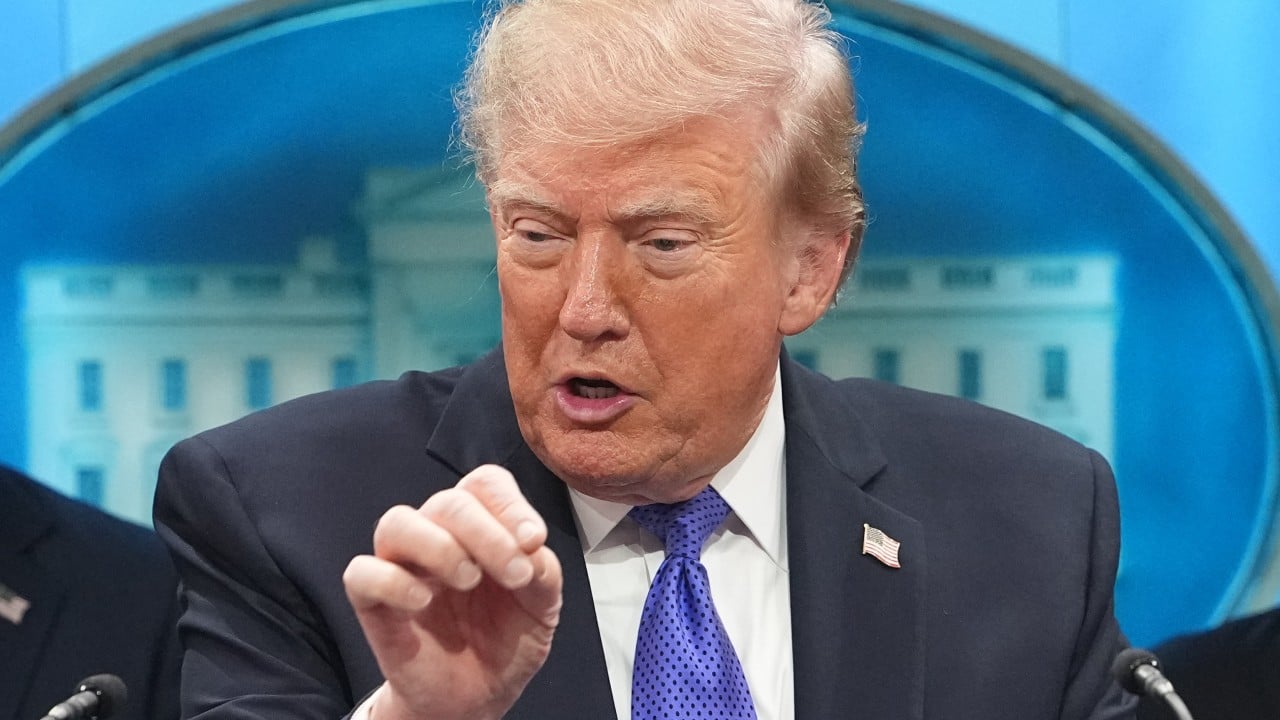
For decades, the arithmetic of the apocalypse was brutally simple. Two chairs. Washington and Moscow. Two exhausted giants locked in a cold, predictable stare across a narrow table, counting warheads like poker chips until both sides knew every bluff, every tell, and every card up the other's sleeve. When Donald Trump recently remarked that China had agreed to join trilateral nuclear talks despite its deep reluctance—while openly pointing out the vast gap between Beijing’s arsenal and those of the United States and Russia—the headline landed like a dry diplomatic memo.
Look closer at the table, though. A third chair has just been scraped across the linoleum. And nobody in the room agrees on the rules of the game. Further information on this are explored by The Washington Post.
The Ghosts of Reykjavik
To understand why a three-way negotiation terrifies strategists far more than a two-way standoff, you have to step back into the freezing rain of October 1986.
Inside Hofdi House in Reykjavik, Iceland, Ronald Reagan and Mikhail Gorbachev sat across from each other with no prepared speeches and no safety net. The air smelled of damp wool and stale coffee. Over two frantic days, two men who held the power to incinerate human civilization in thirty minutes came within a hair’s breadth of abolishing nuclear weapons entirely. They failed over a single disagreement on space-based missile defense, walking out into the drizzle looking pale and shaken.
Yet even in failure, Reykjavik proved a vital truth about bilateral deterrence. When only two powers hold the triggers, stability rests on a grim kind of symmetry. Picture two men standing waist-deep in a room flooded with gasoline, each holding a book of matches. Neither strikes a match because both know the exact size of the room and the exact speed of the fire. That mutual vulnerability—what Cold War theorists dryly labeled Mutually Assured Destruction—kept the peace through Berlin, Cuba, and Able Archer.
Now, as a hypothetical scenario to grasp what happens when China enters the room, put a third person in that gasoline-soaked basement.
This third person holds only three matches while the other two hold boxes of fifty. Naturally, the person with three matches refuses to throw two of them into a puddle just because the others agree to toss away ten. From Beijing’s perspective, the math is an insult disguised as statesmanship. Why cap a smaller force while Washington and Moscow still possess enough warheads to end the world several times over?
The Arithmetic of Reluctance
Numbers tell the story with cold precision. According to independent estimates from the Federation of American Scientists and the Stockholm International Peace Research Institute, the United States and Russia each maintain total inventories hovering around five thousand nuclear warheads, with roughly seventeen hundred strategic warheads deployed on missiles and bombers ready to launch at a moment’s notice.
China sits in an entirely different weight class, though one that is bulking up at breakneck speed. Pentagon assessments estimate Beijing’s operational stockpile has climbed past five hundred warheads and is on a trajectory to exceed one thousand by 2030.
Five hundred against five thousand. That is the nuclear gap Trump explicitly noted when describing Beijing’s hesitation.
To appreciate why Chinese diplomats have spent years dodging American invitations to trilateral arms control, consider a fictionalized composite of the negotiators who actually inhabit these rooms—let us call him Director Lin, a veteran career official in Beijing’s Ministry of Foreign Affairs who spent twenty years studying American missile defense interceptors in Alaska and California.
For Lin, opacity is not stubbornness; it is survival. When you have fewer weapons than your rivals, secrecy acts as a force multiplier. If Washington does not know whether a concrete silo in the Gansu desert holds a live intercontinental ballistic missile or an empty concrete tube, American planners must target all of them. Transparency, the bedrock of every successful U.S.-Soviet treaty from SALT to New START, strips away China’s cheapest shield.
Lin looks across the table at his American counterpart—let us call her Sarah, a seasoned arms-control veteran who cut her teeth inspecting Russian rail-mobile launchers in Siberia during the 1990s. Sarah remembers the tactile reassurance of boots-on-the-ground verification: inspectors measuring missile canisters with calipers, verifying telemetry data, watching bomber wings get sheared off by giant guillotines in the Arizona desert.
To Sarah, unverified trust is a fairy tale. Without data exchanges, on-site inspections, and notification rules for missile tests, a signature on a treaty is worth less than the ink used to write it.
Between Lin and Sarah sits Moscow’s envoy, a diplomat watching the collapse of the old bilateral order with cynical calculation. With the New START treaty—the final surviving pillar of U.S.-Russian nuclear limits—reaching its expiration horizon in February 2026, the guardrails that prevented an unrestrained arms race for over half a century have eroded down to bare concrete. Russia insists that if China joins the table, Britain and France must pull up chairs too, knowing full well that expanding the guest list to five nuclear powers guarantees decades of procedural paralysis.
The Invisible Stakes in Your Living Room
It is easy to treat nuclear posture reviews and trilateral summits as high-altitude chess played by gray-haired men in distant capitals. We have grown numb to the vocabulary. Throw-weight. First-strike survivability. Triad modernization. The words wash over us like weather reports from another planet.
I felt that numbness shatter once in a windowless basement archive in Washington, holding a declassified 1962 Strategic Air Command target list. The pages were yellowed, brittle at the edges, typed on manual Remingtons. Flipping through the columns of coordinates, I saw industrial rail yards, power substations, and municipal water plants listed beside airfields. They were not abstract grid squares. They were towns where people bought groceries on Saturday mornings and coached Little League on Tuesday nights.
That is the invisible stake behind Trump’s push for a three-way deal.
When arms control dies, the consequences do not stay locked inside Pentagon briefing rooms. They bleed directly into the lives of ordinary families in three quiet, relentless ways:
- The Return of Hair-Trigger Alert: Without agreed limits and hotlines linking Washington, Beijing, and Moscow, military planners in all three capitals must assume the worst-case scenario. If a radar glitch over the Pacific or an ambiguous hypersonic test launch occurs during a crisis over Taiwan or Eastern Europe, leaders have less than ten minutes to decide whether incoming blips are an atmospheric anomaly or a decapitating strike. Ambiguity breeds panic.
- The Trillion-Dollar Drain: Every dollar poured into building new submarine-launched missiles, stealth bombers, and hardened silos is a dollar pulled away from bridges, hospitals, scientific research, and tax relief. The Congressional Budget Office has projected U.S. nuclear modernization costs exceeding seven hundred fifty billion dollars over a single decade—a bill that balloons instantly if the ceiling on warheads disappears.
- The Domino Effect of Proliferation: Non-nuclear nations watch the big three closely. If South Korea, Japan, Iran, or Saudi Arabia conclude that Washington, Moscow, and Beijing have abandoned restraint in favor of an unconstrained nuclear buildup, the half-century taboo against building the bomb collapses. A world with three nuclear superpowers is unstable; a world with fifteen nuclear-armed states is a fuse waiting for a spark.
Why Reluctance Is Not the End of the Story
Critics of the trilateral approach argue that demanding China cap its arsenal before reaching parity with the United States and Russia is diplomatic theater—a convenient excuse to walk away from bilateral treaties while blaming Beijing for the wreckage. There is real merit to that skepticism. History shows nations rarely freeze their military capabilities while sitting in second or third place.
Yet dismissing any Chinese willingness to talk as meaningless misses how nuclear diplomacy actually begins.
Look back at the late 1960s, when Lyndon Johnson and Richard Nixon first tried to lure the Soviet Union into the Strategic Arms Limitation Talks. Moscow initially balked. At the time, the Soviet Union trailed the United States significantly in intercontinental missiles and strategic bombers. Soviet generals argued fiercely behind closed doors that entering talks from a position of numerical inferiority would lock in American dominance forever.
They came to the table anyway. Not because they suddenly embraced altruism, but because an unchecked race promised economic ruin and existential terror for everyone involved.
Even if China refuses to accept equal numerical caps tomorrow morning, getting Beijing into a structured trilateral dialogue cracks open doors that have been welded shut for decades. Arms control does not have to start with counting warheads. It can start with rules of the road.
Consider what happens next if negotiators set aside the impossible demand for instant numerical parity and focus instead on behavioral guardrails:
- Crisis Communication Links: Establishing dedicated, tested, nuclear-specific hotlines connecting the Pentagon, Zhongnanhai, and the Kremlin so a misunderstood satellite launch does not spiral into catastrophe.
- Launch Notification Agreements: Requiring all three powers to notify one another at least twenty-four hours before testing any ballistic missile or space-launch vehicle, eliminating the sudden radar shock that triggers false alarms.
- Autonomous Systems Bans: Agreeing explicitly that artificial intelligence will never be granted launch authority over nuclear weapons—keeping a human finger, and human conscience, firmly on the safety catch.
These steps cost Beijing zero warheads. They preserve China’s cherished ambiguity while giving Washington and Moscow the predictability they desperately need. Most importantly, they establish the habit of sitting in the same room before the sirens start wailing.
The Weight of the Empty Chair
Truthfully, nobody knows whether Trump’s assertion of Chinese agreement marks a genuine diplomatic breakthrough or merely an opening gambit in a much longer, bruising negotiation. Diplomatic history is littered with announcements of "agreements in principle" that dissolved the moment lawyers sat down to draft the definitions of a strategic delivery vehicle. Beijing’s public posture remains cautious, hedged with caveats about American and Russian responsibilities to cut their arsenals first.
We should resist both naive optimism and lazy cynicism. The nuclear gap is real, the mistrust between Washington and Beijing runs deeper than at any point since the 1970s, and the technical hurdles of verifying three unequal arsenals simultaneously have never been solved by any diplomat alive.
Still, pause and picture that conference table in Geneva again.
For thirty years after the Berlin Wall fell, the world pretended nuclear weapons had faded into history, relegated to museum exhibits and late-night movie thrillers. We stopped looking up at the sky. Meanwhile, the silos were being refurbished, the submarines were being welded together in dry docks, and the math was quietly shifting from two players to three.
A reluctant seat at the table is infinitely better than an empty chair. Because in the end, nuclear deterrence is not an engineering problem, and it is not a ledger of warheads. It is a fragile conversation between mortal human beings trying to make sure tomorrow morning arrives on schedule.
Out on the Montana prairie, the prairie wind still blows over buried steel hatches, and four thousand miles away in the Gansu desert, red dust settles across newly poured concrete—while three diplomats sit around a quiet table, deciding whether the rest of us get to keep living in a world where the silence holds.



