The air inside a French government jet has a specific scent. It is a sterile mix of recycled oxygen, expensive leather, and the faint, metallic tang of relief. For Cécile Kohler and Jacques Paris, that scent was the first proof that the world was no longer made of concrete walls and iron bars.
They sat in those plush seats as the aircraft cut through the night sky toward Paris. Behind them lay nearly four years of silence. Behind them lay Evin Prison.
To understand what it means to be a "state hostage," you have to stop thinking about law and start thinking about chess. In the geopolitical game between Tehran and the West, human beings are often treated like high-value tokens. Cécile and Jacques, two French educators and union activists, weren't soldiers. They weren't spies. They were tourists who made the mistake of visiting a country that saw their passports as leverage.
The Weight of a Locked Door
Imagine waking up every morning for over a thousand days without knowing if the sun is shining. In the high-security wings of Iranian detention centers, time doesn't flow; it stagnates. You measure the passage of months by the chill in the floor tiles or the way the light hits a specific crack in the ceiling.
Cécile and Jacques were arrested in May 2022. The official charge was "collusion against national security," a phrase so broad it can cover everything from a stray protest photograph to a conversation with the wrong person at a café. But the reality was far more cynical. Their detention coincided with a period of frost-bitten diplomacy between France and Iran, fueled by disputes over nuclear deals and the imprisonment of Iranian agents in Europe.
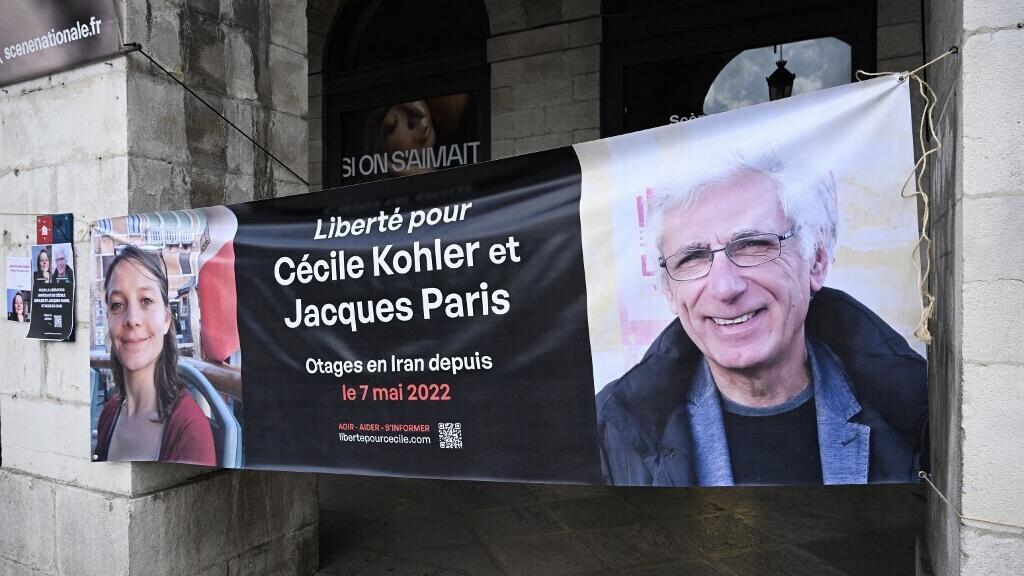
For the families waiting in France, the ordeal was a slow-motion car crash. They lived in a purgatory of "maybe." Maybe there would be a phone call. Maybe the Quai d'Orsay had made a breakthrough. Maybe they were being fed. The "Free Cécile and Jacques" posters that appeared across French towns weren't just political statements; they were anchors for families who felt themselves drifting into despair.
Consider the psychological toll of the coerced confession. In late 2022, Iranian state media aired a video of the pair. They looked exhausted. They looked like people who had forgotten what it felt like to be safe. They "confessed" to being agents of chaos, a narrative pushed by a regime desperate to blame foreign interference for domestic unrest. To the world, it was a staged performance. To Cécile and Jacques, it was likely the only price they could pay for a moment of relative peace.
The Invisible Architecture of the Swap
Diplomacy is often described as a bridge, but when it comes to hostage releases, it is more like a dark tunnel. You don't see the movement until you reach the exit.
The release of Kohler and Paris didn't happen because of a sudden change of heart in Tehran. It happened because of a grueling, invisible marathon of negotiations. French officials, working alongside international intermediaries, had to navigate a landscape where every concession was scrutinized and every demand carried a hidden cost.
The mechanics of these deals are rarely public. They involve "humanitarian gestures," the unfreezing of assets, or the quiet release of individuals held in Western jails. It is a transactional morality. It feels dirty because it is. We are forced to trade pieces of justice for pieces of humanity.
But when the wheels of that plane touched down at Vélizy-Villacoublay air base outside Paris, the ethics of the deal vanished. All that remained was the sight of two people walking down a ramp.
The First Breath of Home
They looked older.
The cameras captured the moment they stepped into the damp, gray morning of France. There was no fanfare of trumpets, only the quiet, intense embrace of relatives who had aged a decade in four years. Cécile’s face was a mask of disbelief. Jacques moved with the cautious gait of a man who still expected someone to tell him to put his blindfold back on.
Freedom is a sensory overload. After years of the monochrome reality of a cell, the colors of a rainy tarmac are blinding. The sound of your own language, spoken without the edge of an interrogator's voice, is a melody.
The French government confirmed their "satisfactory" health, but those who understand the aftermath of long-term detention know that health is a relative term. The body heals faster than the mind. The "Evin syndrome"—a mix of hyper-vigilance, sensory sensitivity, and the crushing guilt of the survivor—is a shadow that follows you home.
The Others Left Behind
As the celebration in Paris fades, a cold truth remains. The cells they left are not empty.
Iran continues to hold several other European nationals, including French citizens like Olivier Vandecasteele, who was released earlier, and those still waiting for their turn in the dark. Each release is a victory, but it is also a reminder of the vulnerability of the individual against the machinery of the state.
We live in an era where travel is sold as a tool for enlightenment, a way to bridge cultures. But for Cécile and Jacques, travel became a trap. Their story is a warning that the map is still divided by invisible lines of fire.
The lesson isn't to stop exploring. The lesson is to recognize the true cost of our global chess game. When we talk about international relations, we talk about "bilateral interests" and "strategic pivots." We should be talking about the 1,200 nights Cécile Kohler spent staring at a wall, wondering if her name had been forgotten.
Tonight, she will sleep in a bed with real sheets. She will hear the sound of a city that isn't a prison. She will realize, perhaps for the first time in years, that she is no longer a pawn.
She is just a woman who is finally, impossibly, home.