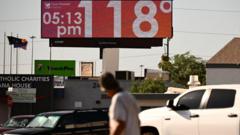
Urban climate adaptation strategies face a fundamental physics constraint: extreme heat operates as a silent, distributed killer that exploits structural vulnerabilities in public infrastructure and socioeconomic distribution systems. The standard playbook for municipal heat mitigation—characterized by reactive emergency water distribution and isolated tree-planting initiatives—fails because it treats a systemic thermodynamic crisis as a series of localized logistical inconveniences. To systematically eliminate urban heat mortality, municipal governments must transition from ad-hoc emergency management to a highly structured framework of thermodynamic governance, material optimization, and targeted exposure reduction.
The primary barrier to effective municipal heat response is the failure to quantify the relationship between thermal exposure, built environments, and human physiology. Municipalities must analyze the urban landscape through precise frameworks that isolate the drivers of ambient temperature elevation and map their cascading impacts on vulnerable populations.
The Core Pillars of Thermodynamic Governance
A rigorous municipal strategy for mitigating heat mortality requires a division between long-term environmental modifications and real-time human preservation systems. True systemic resilience relies on three distinct operational layers.
1. Macro-Level Urban Albedo Optimization
The built environment acts as a thermal battery, storing solar radiation during peak daylight hours and discharging it into the ambient air at night. This mechanism drives the urban heat island effect, preventing cities from cooling down overnight and compounding cardiovascular stress on the human body. Optimizing macro-level albedo involves the widespread application of reflective coatings on horizontal surfaces. Implementing cool pavement technologies on residential streets alters the surface energy balance, reducing solar absorption and lowering surface temperatures by up to 10 to 15 degrees Fahrenheit under peak solar load.
However, surface-level interventions possess built-in thermodynamic tradeoffs. Reflective street coatings scatter solar radiation rather than neutralizing it. If applied along dense pedestrian corridors without adequate overhead canopy, the redirected thermal energy bounces into adjacent vertical building facades or directly onto pedestrians, increasing the mean radiant temperature experienced by humans at street level. For this reason, a high-authority albedo strategy prioritizes roof structures over road surfaces. Mandatory high-albedo roofing ordinances ensure that heat is reflected cleanly back into the upper atmosphere, bypassing the pedestrian plane entirely and reducing the cooling load of individual structures.
2. Micro-Climate Shade Infrastructure
Shade is the most effective variable for reducing the human-perceived thermal load in real time. While air temperature remains relatively uniform across short distances, the mean radiant temperature drops drastically when solar radiation is physically blocked. Micro-climate intervention requires a calculated mix of engineered and natural canopies.
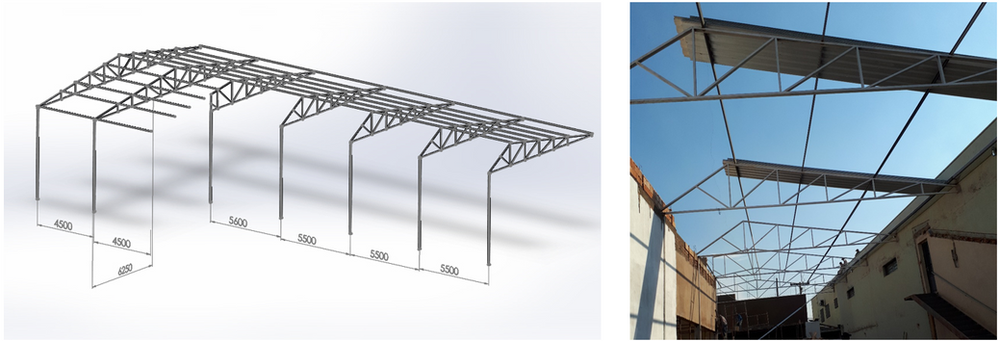
- Engineered Shade Structures: Mechanical canopies, bus shelters with integrated photovoltaic solar panels, and architectural overhangs provide immediate, predictable relief along transit corridors. These structures act as reliable safety valves for commuters, preventing acute heat exhaustion during transit bottlenecks.
- Targeted Urban Forestry: Planting high-canopy, drought-tolerant vegetation introduces natural shading. In arid or hyper-arid environments, however, the biological constraints of vegetation introduce a secondary bottleneck: the water-energy nexus.
3. Hyper-Local Tactical Intervention
Even the most sophisticated built environment cannot fully protect transient or unhoused populations during sustained extreme heat events. Hyper-local tactical intervention covers the logistics of direct human preservation: expanding a regional heat-relief network of cooling centers, operating mobile hydration distribution units, and deploying active street-level outreach teams. The operational efficacy of this pillar depends on deployment velocity and accurate vulnerability mapping.
The Cost Function of Arid-Zone Forestry
Many municipal sustainability plans cite a standard percentage increase in tree canopy as a primary metric of success. This reveals a critical misunderstanding of arid-zone thermodynamics and ecosystem trade-offs. In dry climates, the survival and cooling efficiency of an urban forest are governed by a rigid cost-benefit equation that balances thermal reduction against water resource depletion.
                     [Urban Forestry Framework]
                                 │
            ┌────────────────────┴────────────────────┐
            ▼                                         ▼
   [Thermal Reduction]                       [Resource Constraints]
   • Shading Effectiveness                   • Stomatal Shutdown Threshold
   • Evaporative Transpiration               • Infinite Irrigation Loop
In humid regions, trees cool the air through both shading and transpiration—the release of water vapor through leaf stomata, which acts as a natural evaporative cooler. In hyper-arid cities, the atmospheric demand for moisture is so extreme that many tree species cross a critical biological threshold: they close their stomata during the hottest hours of the day to prevent lethal desiccation. This stomatal shutdown cuts off evaporative cooling exactly when the city needs it most, reducing the tree's cooling performance by up to 40% compared to temperate climates. The tree becomes a purely mechanical shade object, but one that carries a heavy resource debt.
To maintain the vitality of these urban forests, municipalities enter an expensive irrigation loop. Sustaining a massive tree canopy in a desert city requires diverting vast quantities of scarce municipal water resources. This creates a direct policy contradiction for regions managing systemic, long-term drought.
To bypass this bottleneck, municipal arboriculture must pivot toward structural innovation. Deep-pipe irrigation and specialized nurseries that cultivate long taproots allow saplings to access deeper, natural water tables, decreasing their reliance on surface-level municipal water systems. Green stormwater infrastructure, such as curb cuts and engineered bioswales, redirects unpredictable stormwater runoff directly into sub-surface root zones, lowering the net external water cost of the urban canopy.
The Infrastructure of Exposure: Mapping Socioeconomic Thermal Divergence
Heat mortality does not occur at random across a municipal grid; it tracks tightly with built-in economic disparities. The systemic variance in micro-climate temperatures across different neighborhoods highlights a direct link between historical zoning and real-time thermal risk.
                [Socioeconomic Thermal Divergence]
                                │
        ┌───────────────────────┴───────────────────────┐
        ▼                                               ▼
[Low-Income Quadrants]                        [High-Income Quadrants]
• High thermal mass materials                 • Low thermal mass materials
• Low tree canopy / high exposure             • High tree canopy / mature shade
• Deficient residential HVAC                  • Efficient residential HVAC
Low-income quadrants regularly experience daytime surface temperatures significantly higher than wealthier neighborhoods within the same city municipality. This divergence is driven by two specific compounding structural deficits.
High Thermal Mass vs. Low Canopy Density
Lower-income areas feature a high concentration of high-thermal-mass building materials, such as asphalt parking lots, unshaded concrete pathways, and dark composite roofing. Concurrently, these neighborhoods show a profound deficit in mature tree canopy or engineered shade infrastructure. The result is an environment that aggressively absorbs solar radiation during the day and continuously radiates that thermal energy back onto residents.
The Residential HVAC Deficit
The internal environment of lower-income households frequently mirrors the hostility of the external micro-climate. While affluent areas feature modern, energy-efficient HVAC units backed by insulation that prevents thermal infiltration, vulnerable populations often rely on outdated, low-efficiency wall units or evaporative coolers. When ambient temperatures exceed 110 degrees Fahrenheit, evaporative cooling systems lose their efficiency, driving indoor temperatures up to dangerous levels.
This creates a severe structural bottleneck: lower-income residents face higher outdoor thermal exposure, yet they lack an affordable, energy-secure indoor refuge due to high utility costs and inefficient cooling hardware.
Operational Bottlenecks in Real-Time Heat Relief
The most immediate failure point in municipal heat mitigation plans is the structural design and operational availability of public cooling networks. While setting up libraries and community centers as cooling shelters looks comprehensive on a map, the actual utility of these spaces is severely limited by operational restrictions.
The primary limitation is temporal misalignment. The standard operating hours of municipal cooling centers reflect bureaucratic schedules rather than thermodynamic realities. Most centers open at 9:00 AM and close by 6:00 PM, completely shutting down on weekends and public holidays.
Because the urban heat island effect keeps nighttime ambient temperatures at dangerous levels, the period of highest physical vulnerability for unhoused or under-cooled populations occurs between 8:00 PM and 5:00 AM. Closing shelters during these hours leaves vulnerable groups exposed during the peak periods of cumulative thermal stress.
The second limitation is geographic and psychological accessibility. An unhoused individual experiencing early-stage heat exhaustion cannot easily travel multiple miles across unshaded concrete pathways to reach a centralized cooling asset. Furthermore, institutional rules—such as bans on pets, storage carts, and personal belongings—force individuals to choose between asset protection and thermal safety.
               [Real-Time Heat Relief Bottlenecks]
                                │
        ┌───────────────────────┴───────────────────────┐
        ▼                                               ▼
[Temporal Misalignment]                        [Access Restrictions]
• Standard 9-to-5 operating hours             • Long distances over unshaded paths
• Closed during peak nighttime heat           • Restrictions on pets and belongings
To break this bottleneck, cities must shift from static public spaces to dedicated 24-hour low-barrier shelters, positioned explicitly within high-exposure, lower-income zones.
Operationalizing Predictive Heat Metrics
To build a truly predictive heat response system, municipalities must phase out blunt meteorological tools and adopt dynamic, health-indexed risk evaluation systems. Standard heat indices rely primarily on ambient air temperature and relative humidity measured at central airport weather stations, completely ignoring the micro-climate variations that define urban environments.
Cities should integrate systems like the National Weather Service HeatRisk evaluation tool. This framework shifts the focus from raw temperatures to public health risk thresholds, accounting for:
- Climatological Anomalies: How unusual is the heat event relative to local historical baselines?
- Sustained Heat Duration: Incorporating both daytime maximums and nighttime minimums to capture cumulative physical stress.
- Vulnerability Stratification: Identifying how different tiers of heat severity impact specific demographics, such as outdoor workers, infants, and the elderly.
By structuring municipal resources around health-indexed predictive metrics, cities can automate their emergency response triggers. When a specific risk tier is reached, the system automatically opens emergency funding, scales up street-level outreach, extends cooling center hours, and deploys mobile hydration teams to designated hot spots. This transforms a chaotic, manual emergency response into an objective, data-driven civil defense mechanism.
Deploying the Civil Engineering Matrix
The transition from a reactive municipal posture to a resilient urban ecosystem requires executing a series of coordinated civil engineering interventions. Rather than applying generic green initiatives, cities must deploy specific physical modifications matched directly to the environmental constraints of their region.
                     [Civil Engineering Matrix]
                                 │
        ┌────────────────────────┼────────────────────────┐
        ▼                        ▼                        ▼
[Building Envelope]     [Pedestrian Networks]     [Surface Infrastructure]
• Electrochromic Glazing • Shaded Cool Corridors  • White Reflective Roofs
• Thermal Mass Facades  • Prefab Mechanical Shade • Selective Permeable Pavement
Building Envelope Engineering
Buildings must be transformed from passive energy drains into active thermal barriers. Incorporating electrochromic glazing on high-exposure window surfaces allows glass to dynamically alter its tint based on real-time solar intensity, reducing solar heat gain and lowering building energy demand. For public and high-occupancy structures, exterior facades should feature calculated geometric self-shading profiles that block intense, low-angle afternoon sun while preserving natural ventilation pathways.
Pedestrian Transit Networks
Municipalities must build dedicated networks of shaded cool corridors along heavily trafficked pedestrian and transit pathways. Each corridor should combine engineered mechanical structures with deep-root, native desert trees to guarantee a continuous line of sight shade. Every transit stop within these corridors must feature a standard, enclosed shelter with reflective roof coatings, integrated hydration assets, and passive ventilation systems.
Surface Infrastructure Modification
Cities must update their building codes to require high-albedo, white reflective coatings on all new commercial and multi-family roof replacements. This simple change shifts the burden of reducing urban heat storage from public spending onto standard property maintenance cycles. On the ground, cool pavement applications should be limited to wider residential streets that feature mature, overhanging tree canopies. This ensures that reflected radiation does not rebound into pedestrians, maximizing the cooling effect while protecting public health.