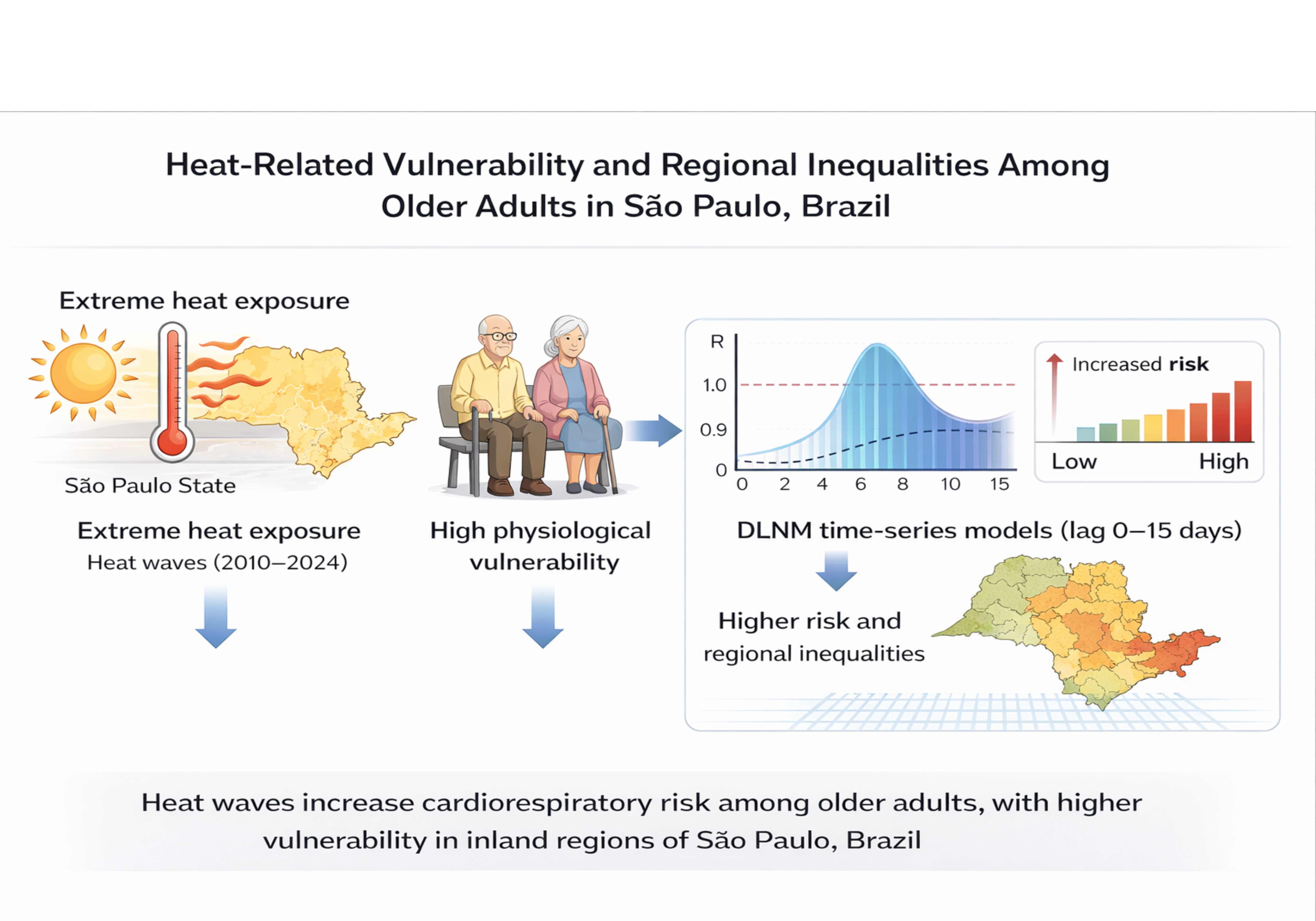
Biological decline is not a linear process, but for the human thermoregulatory system, the decline following age 60 constitutes a catastrophic breakdown in environmental adaptation. Recent data indicates that previous benchmarks for "dangerous heat"—standardized for younger, physiologically resilient cohorts—have chronically underestimated the mortality risk for older adults. By recalibrating thermal exposure limits specifically to age-stratified biology, researchers have identified that the threshold for critical heat stress occurs at significantly lower temperatures than modern climate models previously accounted for.
The Physiology of Thermal Failure
The human body maintains homeostasis through a precise, high-performance cooling loop. In younger subjects, this loop relies on three primary mechanisms: elevated stroke volume, increased cutaneous blood flow, and robust eccrine sweat gland output. Aging induces a systematic decoupling of these mechanisms, creating a terminal deficit in the body's heat-exchange capacity.
- Vascular Stagnation: With age, the cardiovascular system faces reduced β-adrenergic responsiveness. This impairs the left ventricle’s ability to increase cardiac output under stress. As a result, the body cannot adequately pump blood to the periphery to facilitate heat dissipation.
- Vasodilation Attenuation: The skin’s ability to act as a heat exchanger is hindered by decreased nitric oxide (NO) bioavailability and the upregulation of vasoconstrictive enzymes. The loss of NO—a potent vasodilator—means the skin vessels fail to dilate sufficiently to dump core heat into the environment.
- Sudoriferous Decline: Eccrine sweat gland output diminishes significantly with age. Because evaporative cooling is the most efficient method for shedding heat in high-temperature environments, this reduction effectively removes the primary cooling valve of the human system.
These physiological shifts mean that when an older adult encounters a thermal load, their "engine" is already running at a lower efficiency, and the "radiator" is partially clogged.
The Multiplier Effect of Exogenous Factors
The systemic danger is not merely biological but exacerbated by environmental and pharmacological interactions. A high-authority view of thermal risk must categorize these as independent variables that compound the baseline vulnerability.
- Pharmacological Interference: Many common medications for chronic conditions—including diuretics, beta-blockers, and anti-cholinergics—interfere with the body’s ability to modulate internal temperature or manage fluid balance. A patient on a diuretic is significantly more susceptible to dehydration, which directly lowers plasma volume, further impeding the body’s ability to circulate blood to the skin for cooling.
- Cognitive and Behavioral Lag: Diminished interoception—the ability to perceive one’s internal state—means older individuals often fail to recognize early-onset dehydration or thermal distress. When this is paired with cognitive decline (e.g., various forms of dementia), the individual loses the capability to perform basic compensatory actions, such as seeking shade, increasing water intake, or activating climate control.
- The Urban Heat Island (UHI) Bottleneck: Thermal persistence, particularly at night, prevents the body from "resetting." In dense urban environments, the retention of heat by infrastructure ensures that nighttime lows do not offer the necessary respite. This lack of recovery leads to a cumulative stress load, where each day of a heat wave builds upon the last, eventually crossing the threshold into organ failure.
Recalibrating the Risk Threshold
Traditional climate projections applied universal thresholds, effectively assuming all human biology responds to caloric heat gain in the same manner. This is a fundamental flaw in predictive modeling. Adjusting for age-stratified vulnerability reveals that while a younger adult might maintain thermal equilibrium at 4°C of global warming, an older adult experiences the same level of lethal stress at only 1.5°C.
This finding invalidates current public health policies that use broad-based heat warnings. If 22% of the global older population is now expected to face at least 180 hours of dangerous heat annually under moderate warming scenarios, the deployment of emergency medical infrastructure must shift from reactive to prophylactic.
Strategic Implementation for Risk Mitigation
To address this systemic failure, organizational and individual responses must pivot toward structural intervention:
- Operationalize Predictive Mapping: Public health agencies should integrate Medicare beneficiary data with real-time meteorological monitoring to identify "high-density risk zones." This allows for the preemptive allocation of medical resources and cooling infrastructure before heat events crest.
- Pharmacological Audits: Clinical practice must mandate a "heat-sensitivity review" for any patient over the age of 60 currently prescribed medications that influence blood volume or thermoregulation. Patients identified as high-risk should receive non-pharmacological cooling protocols as part of their standard care plan during summer months.
- Environmental Load Shedding: The most effective intervention is the physical reduction of ambient heat. The reliance on individual air conditioning is fragile, as shown by mortality data where units exist but remain inactive due to cost or mechanical failure. Municipal strategy should prioritize the hardening of "cool hubs"—public infrastructure designed to maintain survival-level temperatures during grid strain—specifically located within high-density aging populations.
The focus must remain on the mechanics of heat exchange and the failure points of the human cardiovascular system. Heat-related death in the elderly is rarely a sudden event; it is a predictable, manageable, and systemic failure of the body to dump heat, exacerbated by environmental conditions. Moving forward, the efficacy of any safety program will be measured solely by the reduction of internal core temperature through external environmental intervention.