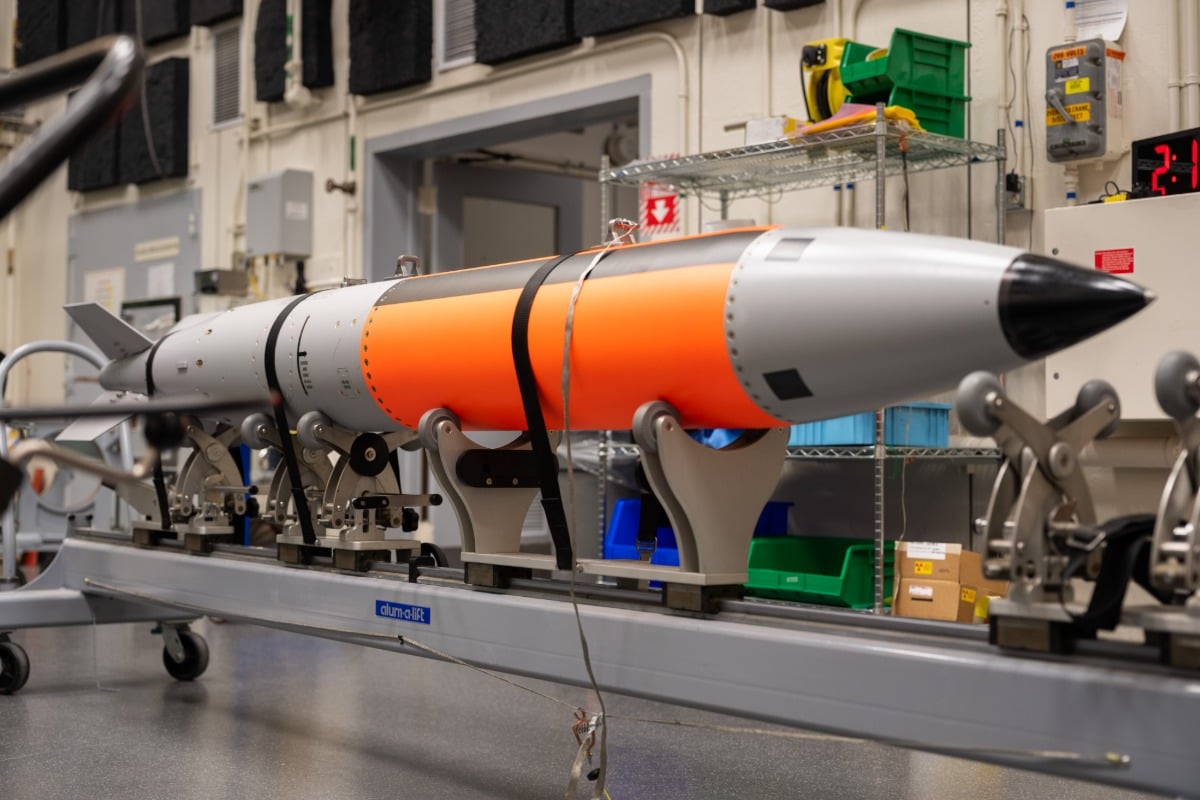
The press release from the National Nuclear Security Administration arrived with the flat, sanitized cadence of standard bureaucratic triumph. It spoke of milestones achieved, supply chain efficiencies realized, and fiscal quarters cleared with room to spare. America’s newest nuclear bomb, the public was informed, is running ahead of schedule.
In Washington, this is counted as a victory. In a town obsessed with cost overruns and sluggish defense acquisitions, delivering a weapon of mass destruction ahead of the promised timeline is the ultimate corporate gold star. But if you step away from the PowerPoint presentations and travel to the high-plains desert where these machines are actually pieced together, the phrase ahead of schedule takes on a entirely different weight.
Silence dominates the assembly bays. It is not the chaotic, sparked-filled clatter of an automotive plant. Here, technicians wear anti-static smocks and move with the deliberate, agonizing slowness of surgeons. A single dropped screw is not an inconvenience; it is a catastrophic safety violation. For decades, the work of maintaining and updating the American nuclear stockpile was a slow, agonizing crawl, hampered by aging infrastructure and the lingering existential malaise of the post-Cold War era.
That crawl has ended. The machinery is humming again.
To understand what it means to accelerate the production of a nuclear weapon, consider a hypothetical technician named Sarah. She works at the Pantex Plant northeast of Amarillo, Texas, a sprawling, heavily guarded fortress surrounded by flat brown fields and grazing cattle. Sarah does not think about geopolitics every morning when she clocks in. She thinks about tolerances. She thinks about micrometers. She spends her day wrestling with the paradox of her profession: she is building something designed to ensure it never has to be used, yet it must function with flawless, apocalyptic certainty if called upon.
For years, Sarah’s workflow was defined by waiting. Waiting for parts. Waiting for safety clearances. Waiting for political winds to shift in Washington. But recently, the rhythm changed. The parts started arriving early. The testing facilities at Sandia and Los Alamos skipped ahead on their calendars. The assembly lines began moving with an unfamiliar, aggressive momentum.
This new weapon is not a relic of the mid-twentieth century. It is a modernized variant, a sleek fusion of decades-old physics and modern digital architecture. The engineering feat required to pull this off ahead of schedule is staggering. Nuclear weapons are terrifyingly complex systems. They are not simple blocks of explosives; they are intricate Swiss watches packed with volatile chemicals, precision-engineered plastics, and radioactive cores that degrade over time. Every component must withstand the violent vibrations of a supersonic flight, the freezing temperatures of high altitude, and the intense radiation of a modern battlefield.
When the Pentagon announces that such a device is ready early, it means the entire industrial apparatus of the United States has quietly shifted into a higher gear. It means the specialized factories that forge the specialized metals, the laboratories that write the firing codes, and the logistics networks that transport classified materials have all synchronized their watches.
But why the rush?
The answer lies in the shifting reality of global deterrence. For thirty years, America operated under the assumption that the nuclear chessboard was static. The weapons built during the Reagan administration were deemed sufficient, patched up through periodic "Life Extension Programs" that acted like a series of expensive oil changes for a fleet of aging muscle cars. The goal was stability through preservation.
That assumption has evaporated. The world did not stop evolving, and neither did the arsenals of competing powers. The acceleration of the American program is a direct, calculated response to an environment where the old rules of deterrence no longer seem to hold. It is a signal sent in the language of logistics. By proving that it can build and deploy a new generation of warheads ahead of schedule, the United States is attempting to demonstrate that its industrial base can outpace its rivals.
Yet, there is a profound human cost to this acceleration. The pressure on the workforce is immense. When you speed up the production of a digital medical device, a software bug might cause a system crash. When you speed up the production of a nuclear gravity bomb, the margin for error is zero. The psychological toll on the people holding the wrenches is invisible to the public, but it is deeply felt within the community of builders who inhabit these secure facilities.
They live with the knowledge of what they are creating. A modern nuclear weapon does not just destroy a target; it rewrites the geography of a region. It vaporizes concrete, turns soil to glass, and leaves a legacy of radiation that outlives the political regimes that authorized its deployment. The people who assemble these weapons are not monsters; they are highly skilled citizens, neighbors, and parents who have convinced themselves that their work is the only thing standing between the civilized world and total annihilation.
Consider the sheer scale of the logistical dance required to beat a federal deadline. Thousands of individual components must converge from different corners of the country. A delay in a specialized capacitor factory in New England could stall the entire program. A shipping bottleneck in New Mexico could throw the timeline off by months. To beat the schedule means every single one of those nodes functioned flawlessly, moving with an efficiency that defies the usual stereotypes of government bureaucracy.
It is easy to get lost in the statistics of megatons, CEP accuracy, and budget appropriations. The defense community loves acronyms because they strip the blood and fire out of the conversation. They talk about "yield flexibility" and "assured destruction capabilities" because it sounds like a corporate strategy meeting.
But the reality remains simple. We are building faster. We are sharpening the sword with a speed we haven't seen since the height of the arms race.
The achievement is undeniably impressive from an engineering standpoint. It proves that the American manufacturing sector, when properly funded and pushed by national security mandates, can still achieve remarkable feats of coordination. It shows that the rust can be scraped off the old machine, and that the gears can turn with terrifying efficiency when the stakes are high enough.
The true question is not whether we can build these weapons faster, but what happens next now that we have proven we can. The acceleration of a nuclear program is an action that demands a reaction from the rest of the world. Deterrence is a mirror game; when one side moves quicker, the other side watches, panics, and begins to speed up its own assembly lines.
The press releases will continue to praise the efficiency of the program, celebrating the budgets managed and the deadlines smashed. The politicians will take credit for a defense apparatus that delivers on its promises.
Meanwhile, in the quiet bays of the Texas panhandle, the technicians will continue their work. They will pick up the next component. They will check the tolerances down to the fraction of a millimeter. They will tighten the screws, seal the casings, and send the completed machines out into the world, ahead of schedule, waiting for a day that everyone hopes will never come.