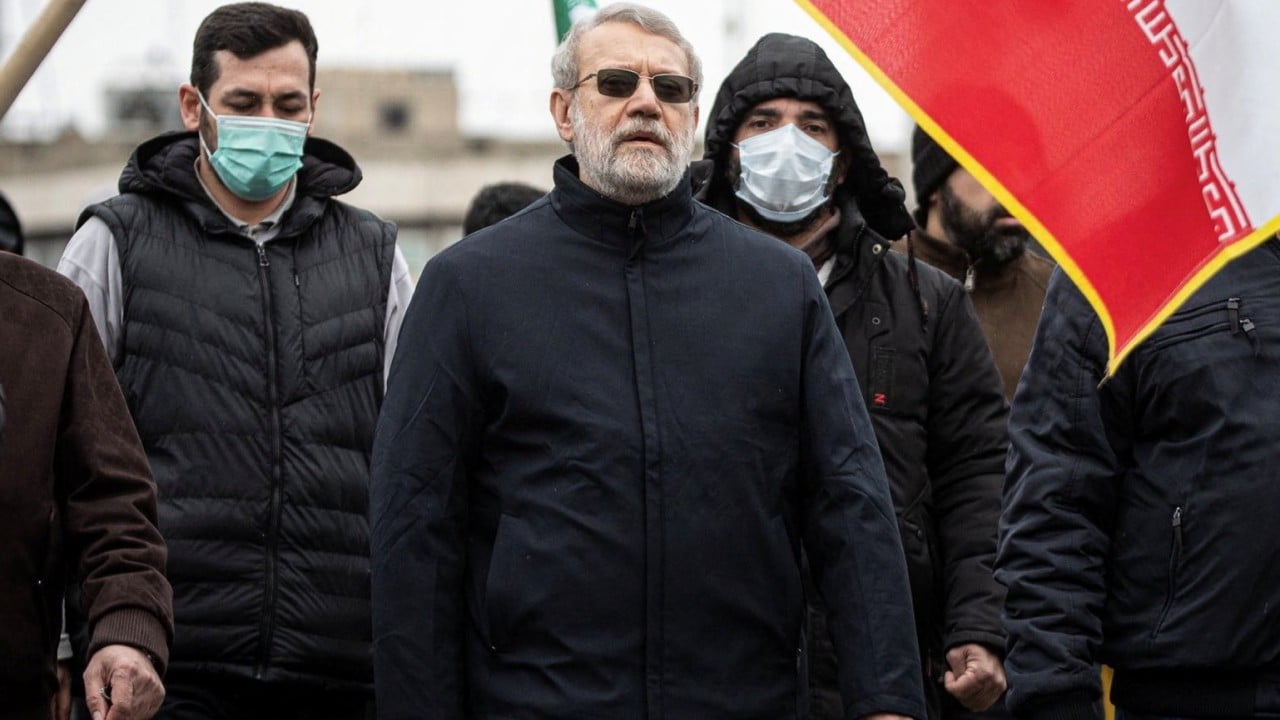
The targeted killing of Ali Larijani, a titan of the Iranian political establishment and a key bridge between the clerical elite and the security apparatus, marks the definitive end of the "shadow war" era. For decades, Tehran and Jerusalem played a bloody game of chess through proxies and covert sabotage. That game is over. By eliminating a figure of Larijani’s stature while simultaneously signaling that Supreme Leader Ali Khamenei is the ultimate target, Israel has moved from containment to active dismantling. This is not just another assassination in a long string of tactical strikes; it is a fundamental restructuring of the Middle Eastern power dynamic that leaves the Islamic Republic with no good options and a rapidly diminishing window for survival.
The core of the current crisis lies in the total failure of the Iranian "Ring of Fire" strategy. For twenty years, Tehran spent billions to surround Israel with armed militias, believing this would provide a conventional shield against direct attacks on Iranian soil or leadership. That shield didn't just crack; it evaporated. With Hezbollah’s command structure shattered and Hamas reduced to an insurgency, the deterrent value of these groups has hit zero. Israel is now betting that the Iranian regime is a hollowed-out shell, unable to protect its most senior officials even within the heart of Tehran.
The Intelligence Breach That Cannot Be Fixed
Every successful strike of this magnitude points to a systemic rot within the Islamic Revolutionary Guard Corps (IRGC). You do not kill a man like Larijani—a former speaker of parliament, a nuclear negotiator, and a top advisor to the Supreme Leader—without precise, real-time data that could only come from the highest levels of the Iranian state. This is the nightmare keeping the mullahs awake. It isn't just that Israel has better technology; it’s that Israel has better access.
The paranoia now Rippling through the corridors of power in Tehran is more damaging than the missiles themselves. When a regime built on ideological purity and internal surveillance realizes its inner circle is compromised, it begins to eat itself. We are seeing a purge in real-time. Security officials are being interrogated, communications are being dark-coded, and yet the strikes continue. This suggests that the breach isn't a single "mole" but a widespread collapse of loyalty among an elite that no longer believes in the longevity of the system.
The End of the Strategic Patience Doctrine
For years, Iran’s mantra was "strategic patience." They would take a hit, offer a fiery speech for the domestic cameras, and wait for a more opportune moment to strike back through a proxy. That doctrine is dead. Israel has called the bluff. By naming Khamenei as a potential target, the Israeli government is forcing Tehran into a binary choice that both lead to catastrophe.
If Iran retaliates with a full-scale direct ballistic missile attack, it provides the justification for a massive Israeli and potentially American strike on Iran’s nuclear facilities and oil infrastructure. If Iran does nothing, it admits to its own people and its remaining regional allies that the Supreme Leader is a paper tiger. In the brutal logic of Middle Eastern geopolitics, once you are perceived as weak, you are hunted.
The death of Larijani is particularly stinging because he represented the "pragmatic" wing of the hardliners. He was a man who understood how to talk to the West while maintaining the regime’s revolutionary credentials. His removal leaves the regime in the hands of the most radical, least experienced elements of the IRGC—men who are more likely to make a fatal miscalculation out of desperation.
The Supreme Leader in the Crosshairs
The psychological warfare being waged right now is unprecedented. Israel isn't just killing generals; they are broadcasting the fact that they know exactly where the Supreme Leader sleeps. This is a deliberate "decapitation" strategy intended to trigger a coup or a total systemic collapse from within.
When a state loses the ability to protect its most sacred figures, the social contract of a dictatorship fails. The IRGC’s primary job is not to defend Iran’s borders, but to defend the Revolution. If it cannot do that, its reason for existence disappears. We are seeing the beginning of a massive internal power struggle. Who takes over if Khamenei is sidelined? Larijani was a top contender to manage a transition. With him gone, the path to succession is a blood-soaked vacuum.
The Myth of the Unstoppable Proxy
The world is finally seeing the limitations of the proxy war model. Hezbollah was supposed to be the "insurance policy" for the Iranian nuclear program. But a proxy is only effective if it can survive the first contact. In a matter of weeks, Israel demonstrated that a high-tech military with superior intelligence can dismantle decades of proxy-building in a fraction of the time it took to create them.
The IRGC is now faced with a bitter reality. They have outsourced their security to groups in Lebanon, Syria, and Yemen, only to find that when the fire reached Tehran, those groups were too busy fighting for their own survival to help. This realization is causing a fundamental shift in how Arab capitals view the region. Countries like Saudi Arabia and the UAE are watching closely. They see an Iran that is loud but vulnerable, and an Israel that is aggressive and precise.
Economic Strangulation as a Silent Assassin
While the world focuses on the explosions, the Iranian economy is the silent casualty of this escalation. The rial is in freefall. Every time a high-ranking official is killed, more capital flees the country. The regime cannot afford a war, yet it cannot afford the appearance of peace.
The "revenge" promised by the IRGC leadership is a currency that has been devalued by overuse. They have vowed revenge for Soleimani, for Haniyeh, and now for Larijani. But revenge requires capability. Without a reliable air force or a modern navy, Iran is limited to missiles that are increasingly intercepted by the most sophisticated multi-layered defense system in history.
The Intelligence Industrial Complex
The sheer scale of the Israeli intelligence operation suggests a multi-year infiltration of the Iranian supply chain. It’s not just about human spies. It’s about the hardware. Every piece of sensitive equipment smuggled into Iran to bypass sanctions—servers, communication devices, even medical equipment for the elite—is a potential Trojan horse.
The Larijani hit was likely the result of a "pattern of life" analysis so granular that it could identify the exact moment he was most vulnerable, even in a hardened facility. This level of technical dominance makes traditional counter-intelligence nearly impossible. You cannot defend against an enemy that is already inside your hardware.
A New Map of the Middle East
We are witnessing the birth of a new regional order where the old rules of engagement have been shredded. The "red lines" that governed the last forty years are gone. Israel has decided that the cost of a direct confrontation now is lower than the cost of a nuclear Iran later.
This isn't just about security; it's about the total removal of the Iranian threat as a factor in regional politics. If Israel succeeds in neutralizing the IRGC leadership, the entire architecture of the Middle East changes. Syria becomes an orphan. Hezbollah becomes a localized militia. The Houthis become an isolated nuisance rather than a strategic threat to global shipping.
The High Stakes of the Final Move
The danger of this moment cannot be overstated. A cornered regime is a dangerous one. If the clerical leadership believes their end is inevitable, they may attempt a "Samson Option"—a desperate, all-out attack designed to take their enemies down with them. This is the gamble Israel is taking. They are betting that the IRGC is more interested in self-preservation than martyrdom.
History shows that when an authoritarian system begins to fracture, it happens slowly at first, and then all at once. The assassination of Ali Larijani is the "slowly" phase coming to an end. The "all at once" phase is now on the horizon. The regime in Tehran is running out of people to blame and places to hide.
The next few weeks will determine if the Islamic Republic can evolve to survive or if it will be dismantled piece by piece by a state that has decided the time for talk is over. The silence from certain quarters in Tehran speaks louder than the public vows of vengeance. It is the silence of a leadership that realizes the hunter has become the hunted.
Watch the movement of the IRGC's elite units and the travel schedules of the remaining top-tier leadership. If they begin to go underground or move to secondary command sites, it’s a sign that they know the next strike is already programmed. The target isn't just a person anymore; it's the entire structure of the state. Would you like me to analyze the specific vulnerabilities of the Iranian succession plan in light of these recent losses?